
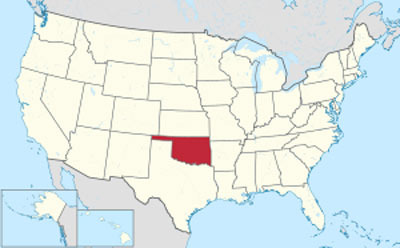
Oklahoma is a state located in the American Midwest, rich in Native American history and traces of western pioneering. Today, let's take a brief look at the major historical flow of Oklahoma.
Land of Native Americans
Oklahoma was land inhabited by various Native American tribes long before Europeans arrived. Especially from the early 19th century, the U.S. government forcibly relocated Native Americans living in the East through the 'Indian Removal Act,' during which several tribes such as the Cherokee, Choctaw, Chickasaw, Creek, and Seminole moved to the Oklahoma region to establish new homes. The infamous 'Trail of Tears' that occurred during this time is also deeply connected to this area.
Territorial Designation and Pioneering Era
In 1803, after the United States purchased the Louisiana Territory from France, part of that land became Oklahoma. From the mid-19th century, the U.S. government created Native American reservations, many of which occupy what is now Oklahoma. Then, on April 22, 1889, the famous 'Land Run' occurred, where the U.S. government opened central Oklahoma to white settlers, leading many to rush in and claim land. This day marked the beginning of the emergence of cities and towns in the Oklahoma area.
Territorial Period and Statehood
The 'Indian Territory' as a Native American reservation and the 'Oklahoma Territory' where settlers flocked existed separately. However, as the movement to merge the two areas accelerated, Oklahoma was officially admitted as the 46th state of the United States on November 16, 1907.
Oil Era and Economic Development
In the early 20th century, the discovery of oil led to a sudden oil boom in Oklahoma. As a result, cities like Tulsa and Oklahoma City rapidly developed, and the oil industry thrived to the point of being called the 'Oil Capital of the World.' However, when oil prices fell, the local economy suffered significant blows, leading to a history of economic ups and downs.
Dust Bowl Era
During the Great Depression in the 1930s, a severe drought, soil erosion, and sandstorms combined to create the 'Dust Bowl' phenomenon that swept through the central United States. States including Oklahoma saw farms devastated, and many people lost their jobs, leading to a mass migration. The novel 'The Grapes of Wrath' vividly depicts the struggles of Oklahoma farmers during that time.
Modern Oklahoma
As industries diversified, sectors such as aerospace, high technology, and healthcare have developed alongside agriculture and the oil and gas industry. Additionally, the culture of Native American tribes remains deeply rooted, and casino and resort businesses operated by tribal governments have become significant. The state capital is Oklahoma City, with Tulsa recognized as a major city.
Cultural Characteristics
Oklahoma is a unique region where one can experience both the spirit of western pioneering and Native American culture. Rodeos and cowboy culture still exist, and various Native American festivals and art events are held. It is also considered one of the homes of country music, attracting music fans.
In summary, Oklahoma can be seen as a state that encapsulates the tumultuous moments of modern American history, from the era of Native American reservations to the pioneering age, the oil boom, and the Dust Bowl. Today, as various industries grow, it is transforming into a new place, yet the Native American history and the spirit of western pioneering that reside in the land remain alive, making it a very interesting location. If you are planning to travel or reside here, you will find great enjoyment in exploring its unique history and culture.






 daisypat |
 Chimhanbang Korea ACU |
 Trustworthy Faces |
 US Regional Information Blog |
  dralix58 |
  Gorama Round |
  Skydiving |
  dreamport |
  Yellow Snowman |
  Toaster Pizza Magic Show |
  velvetnom |
  Anytime Journey |
  Mrs. Duluth |
  jaxter |
  Atlanta Mama |
  Baguette Blog |
  US Embassy |
  Korean Mom |
  My NYC |
  moo moo |
  Mr Oh |
  forevergee |
  festival |
  manchester |