
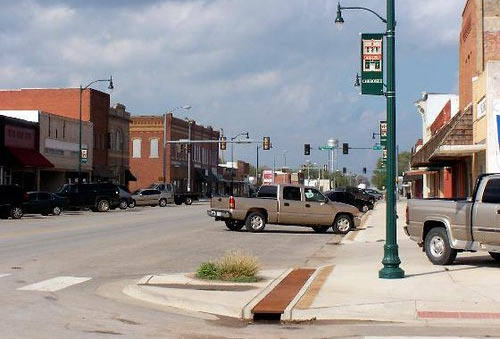
People in Oklahoma City are commonly referred to as 'Okies'.
Originally, it was a term for Oklahoma migrants who left for California in search of jobs during the Great Depression, but now it is used as a nickname symbolizing regional identity. Many proudly say, "I'm an Okie."
Oklahoma City residents have typical Southern U.S. traits. Although the city has grown, it still retains a human warmth, with a culture of greeting and helping one another.
Even at auto repair shops or cafes, many people initiate conversations with questions like, "Where are you from?" or "Isn't the weather nice today?" Thanks to this sentiment, outsiders can quickly feel at ease. At the same time, there is a strong conservative value system, placing importance on family, religion, military, and tradition.
As of 2025, the population of Oklahoma City is about 720,000, making it one of the top 20 largest cities in the U.S. It is a large city but still retains the leisure and humanity characteristic of smaller towns. The average household income is around $65,000, slightly below the national average, but the low housing and living costs result in a relatively high perceived income.
There is a significant middle class working in energy, aviation, logistics, and healthcare industries, and the self-employment rate is quite high. Education levels are stable, and as the proportion of younger generations increases, jobs in startups and IT sectors are gradually growing. In the downtown area, Bricktown, bars, restaurants, and music venues are increasing, helping Oklahoma City shed its image as a 'boring city.'
This region originally grew through the oil industry, but recently the economic base has diversified into aviation, healthcare, and energy technology industries. There are more family-owned small businesses than large corporations, and jobs are relatively stable. The cost of living is lower than the U.S. average, making it less burdensome for young couples and retirees. The climate features long, hot summers that are not humid, and short, mild winters.
However, tornadoes occur frequently enough to be considered a natural phenomenon symbolizing Oklahoma City. Residents naturally evacuate when alarms sound, and it is common for homes to have underground shelters. This environment may have contributed to the resilience of the people. Generally, they possess an optimistic and pragmatic mindset, and even when work is tough, they have the leisure to exchange jokes.
There is a saying that "Oklahoma people smile even when storms come," indicating that a positive attitude is deeply rooted. Transportation is simple, and parking is ample, resulting in a slower pace of life compared to larger cities. Instead, the dining culture is well-developed, with many barbecue and steak restaurants, as well as Southern-style home-cooked meals made from local produce.
Overall, the racial composition is predominantly white, but the Hispanic and Asian populations are steadily increasing, and the downtown area is becoming increasingly multicultural. A city where traditional values and new trends coexist naturally, that is the current state of Oklahoma City.





 daisypat |
 Chimhanbang Korea ACU |
 Trustworthy Faces |
 US Regional Information Blog |
  dralix58 |
  Gorama Round |
  Skydiving |
  dreamport |
  Yellow Snowman |
  Toaster Pizza Magic Show |
  velvetnom |
  Anytime Journey |
  Mrs. Duluth |
  jaxter |
  Atlanta Mama |
  Baguette Blog |
  US Embassy |
  Korean Mom |
  My NYC |
  moo moo |
  Mr Oh |
  forevergee |
  festival |
  manchester |