

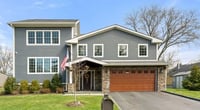
Recently, looking at the market, more families are starting to shift from renting in Frederick to considering buying. The burden of rising rent at each renewal, combined with the perception that home prices are still more affordable compared to other areas near Washington DC, is driving this change. According to Zillow, the average home price in Frederick is $435,707, which is a 2.8 percent increase from the previous year.
Based on this price, here are the scenarios for down payments:
- 3.5 percent: $15,250
- 5 percent: $21,785
- 10 percent: $43,571
- 20 percent: $87,141
If you go in with less than 20 percent, PMI will be added to your monthly loan repayment. Once you reach 20 percent, this cost disappears. Among the cases I've looked at, some started with 5 percent and accepted PMI to enter the market early, while others rented for an additional 1 to 2 years to save up more than 10 percent. The right choice depends on comparing the rate of rent increases with the rate of savings. If rents are rising around 5 percent annually, it often makes more sense to transition to buying sooner.
The average effective property tax rate in Maryland is around 1.00 percent. Frederick County may differ slightly from this average, so it's advisable to check your actual bill. The way to increase approval rates operates independently of the down payment amount. A credit score above 780 corresponds to an average fixed rate of 6.59 percent, while a score in the 740s is about 6.75 percent, and in the 700s, it's 6.91 percent. This difference is directly reflected in your monthly repayment amount. A DTI of 43 percent or lower, and a housing cost ratio of 28 percent or lower, is favorable for loan institution assessments. Getting pre-approved can help when making offers and budgeting.
Among the cases I've reviewed, there was one where a down payment was lowered to 3.5 percent to enter with an FHA loan, and then the terms were refinanced a few years later. The conventional 3 percent option applies to first-time homebuyers or those with an area median income of 80 percent or less, and the better your credit score, the more advantageous this route becomes. Regardless of the choice, until you reach 20 percent, PMI costs will be included in your monthly repayment.
Some families moving to Frederick often find that their budget, based on the lower property tax rates of their previous residence, changes right before closing. Calculating the actual monthly housing costs, including property taxes and insurance, in advance can help reduce these discrepancies.
The Maryland mortgage program offers first-time homebuyers $10,000 or 3 to 6 percent of the loan amount as a 0 percent interest second loan. This program lowers the practical entry barriers for families with limited initial cash. However, it comes with requirements for homebuyer education and income limits. Frederick is also a popular area among Korean families due to its school district. School district boundaries change frequently, so it's advisable to check the assigned school for the specific address before purchasing. The interest rate lock period is also something to keep in mind. After an offer is accepted, it's good to confirm how long you can lock in the rate with the lender. If the lock period expires and closing is delayed, the interest rate may be recalculated. Home inspection and appraisal costs should also be prepared separately before closing. It's advisable to avoid new loans or job changes before closing, and to set aside reserve funds. For example, for a family with a monthly income of $7,000, the amount available for monthly debt repayment based on a DTI of 43 percent is about $3,010. Narrowing it down to a front-end DTI of 28 percent allows for a housing cost allocation of up to $1,960. Comparing this amount with rent can help determine the timing for transitioning to buying. This article is not investment or legal advice, and consulting a professional before making any actual contracts is recommended.
 ChubbyDad
 midnightfoxwalker1956






 moo moo |
 ultron78 |
 garlic bread |
 Sugar Cream Door Bulletproof Noodles |
 urbanmint |
 Scade Studio |
 Mr. Torres |
  kiwiii |
 dynamite |
 mygoddess blog |
  heartbreaker |
  Giant Squid and Sweet Potato Soup |
  Valley Hong |
  The Gelaton |
  Twist Kim |
  berlon93 |
  Physical Laws and Science |
  good thinking |
  Solo Yolo |
  Mr Oh |
  laro90 |
  San Diego TOP Idol |
  Round and Round Children's Song Kingdom |
  American Golf Course Travelogue |
  MEDBIO American Doctor Blog |
  Hot Seat Driver |
  bryvexi |
  koala organic farm |
  riverstone |
  My Antonio |