

Hartford, the capital of Connecticut, is a city that occupies a unique position in American history and economy.
It is particularly known as a center of the insurance industry worldwide.
The nickname "The Insurance Capital of the World" was not given for no reason.
Major insurance companies like Aetna, Travelers, and Hartford Financial have their headquarters here, and until the mid-20th century, the finance and insurance sectors helped maintain a robust middle class in the city. Thanks to stable jobs and high tax revenues, Hartford was regarded as a 'small but strong economic city.'
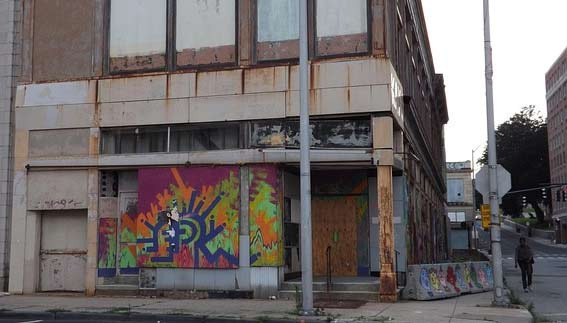
However, walking through Hartford today, the shadows of decline are more noticeable than the brilliance of its heyday.
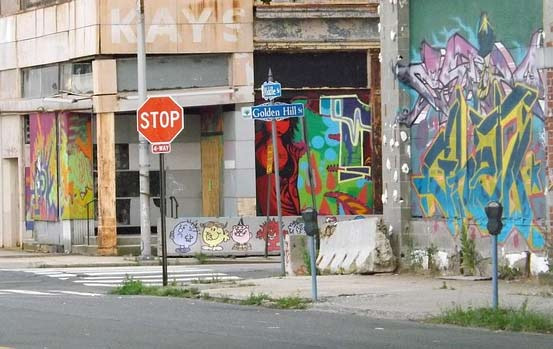
The city's finances are plagued by chronic deficits, and especially in residential areas adjacent to downtown, slum conditions have become a serious issue. What was once an area of upscale apartments and vibrant shopping streets has now turned into a zone of vacant buildings, dilapidated homes, and rising crime rates.
One of the frequently mentioned factors explaining Hartford's decline is the phenomenon of white flight.
In the 1960s and 70s, middle-class white families moved to the suburbs, leaving behind a void filled by low-income residents, gradually reducing the city's tax base. With taxes decreasing while costs for public safety, education, and welfare increased, a vicious cycle of financial decline ensued.
As a result, companies still have their headquarters in Hartford, but a significant number of actual employees commute from the suburbs.
While there is some vibrancy during the day, it is said that after work hours, downtown transforms into a ghost town.
Another issue is the delay in urban redevelopment.
Unlike other East Coast cities like Boston or New York, which continuously attract reinvestment and refine their urban image, Hartford has become overly dependent on the insurance industry and has failed to diversify its economy.
With a lack of new economic drivers such as IT, startup support, and tourism, young people are leaving for jobs in Boston or New York. A city with a declining young population naturally loses vitality, leaving behind only aging buildings and vacant storefronts.
This situation is intertwined with crime issues. Hartford is considered one of the cities with high crime rates in Connecticut, particularly with ongoing drug trafficking and burglary crimes.
In slum areas, rising unemployment and declining education levels occur simultaneously, perpetuating a social vicious cycle. Because of these issues, residents living in the suburbs are reluctant to visit downtown Hartford, resulting in a further contraction of the urban economy.
Nevertheless, Hartford is not a city that has completely lost hope. In recent years, the Connecticut state government and city authorities have been promoting various projects for urban revitalization.
These include attempts to attract younger generations through arts and cultural events, public housing improvement projects, and tax incentives for startups. Additionally, there are ongoing efforts to expand into emerging fields such as data analytics and fintech derived from the insurance industry, giving new meaning to the traditional title of "insurance capital."
Ultimately, Hartford's challenge lies in recognizing the reality that "the city cannot be sustained by insurance alone" and in creating a sustainable urban reconstruction model based on diverse industries and demographics.
How to revitalize the aging downtown area while maintaining its reputation as the center of the global insurance industry will be the key point.







 ultron78 |
 garlic bread |
 Sugar Cream Door Bulletproof Noodles |
 urbanmint |
 |
| 
 Jin Soo V |
 Buckwheat Muktudari Notebook |


 forevergee |
  festival |
  manchester |
  constant |
  Leapfrog Move |
  vibranto |
  Tora Tora |
  yellowbutter |
  Dolly |
  US Embassy |
  NYC saladbar |
  Finding Superfoods |
  lightyear |
  song bang |
  vexomo |
  Indiana Jones |
  meloncat |
  novapixel |
  mortrix |
  Esther 1983 |