

Just as Hartford is nicknamed the 'Insurance Capital of the World,' Connecticut is also a hub for the insurance industry.
Perhaps because of this, there is an illusion that the health insurance system operates more smoothly. However, once you step into an emergency room, that illusion shatters immediately. Whether you have insurance or not, the 'emergency room bill shock' is a reality that no one can completely avoid.
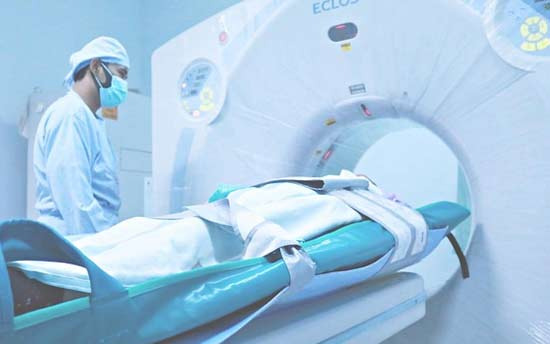
Let's assume you enter an emergency room in Connecticut and get a CT scan for a simple headache. Even for a seemingly trivial test, your heart starts racing when you see the numbers on the bill. An average of $3,000 to $5,000. This is the amount before insurance. Fortunately, it decreases with insurance, but the barriers of copay and deductible stand in your way. For example, if your deductible is $2,000 per year, just getting that one CT scan could nearly max it out.
Ironically, even while complaining about the high costs in Connecticut, when you see the emergency room costs in New York or New Jersey, you might think, "Ah, maybe I'm lucky to live in Connecticut after all?"
If you get a CT scan in a New York City emergency room, the bill typically starts at $5,000 to $8,000. In a large hospital right in the heart of Manhattan, there are even jokes about a 'ten-thousand-dollar CT.' New Jersey is similar. The larger the university hospital, the higher the costs. Even just waiting in the emergency room incurs a basic fee of several hundred dollars labeled as 'emergency room usage fee.'
Of course, having insurance does alleviate some of these costs, but the problem is that the 'some' is much less than we imagine. Until you meet your deductible, you bear the full burden, and even after that, copays or coinsurance remain. Thus, insured patients also end up exclaiming, "Why are my hospital bills so high even with insurance?"
At this point, a question arises. "So, doesn't going to the emergency room with insurance still cost a lot?" Yes, it does.
American health insurance is more like a 'discount coupon.' It provides a shield that allows you not to pay the full price on the label, but it is not a magic wand that exempts you entirely. Without insurance, a single CT scan can cost $8,000; with insurance, your out-of-pocket cost is $1,000 to $2,000. In this comparison, insurance offers 'relative salvation' but is certainly not 'absolute salvation.'
Moreover, states like Connecticut have relatively high income levels, so insurance premiums are also significant. Monthly premiums can often reach $600 to $800. After paying that amount every month, you still find yourself sighing when you receive the bill in the emergency room, leading one to wonder if the system is truly functioning well.
In summary, whether in Connecticut, New York, or New Jersey, emergency rooms and CT scans are never cheap.
Insurance merely serves to 'take a step back from the brink of bankruptcy.' In other words, even with insurance, you cannot be completely free from the emergency room. The only difference is that without insurance, you might have to sell your house because of that one CT scan.
Ultimately, true freedom in America may not come from insurance but from maintaining health and avoiding the emergency room as much as possible.
It's a sad but true reality of the American system.







 neroyo |
 nivex85 |
 Old English |
 nixxon |
 LIZ Legal Information Blog |
 Jin Soo V |
 Buckwheat Muktudari Notebook |


 manchester |
  constant |
  Leapfrog Move |
  vibranto |
  Tora Tora |
  yellowbutter |
  Dolly |
  US Embassy |
  NYC saladbar |
  Finding Superfoods |
  lightyear |
  song bang |
  vexomo |
  Indiana Jones |
  meloncat |
  novapixel |
  mortrix |
  Esther 1983 |
  fortbliss |
  Moscow Kim |