

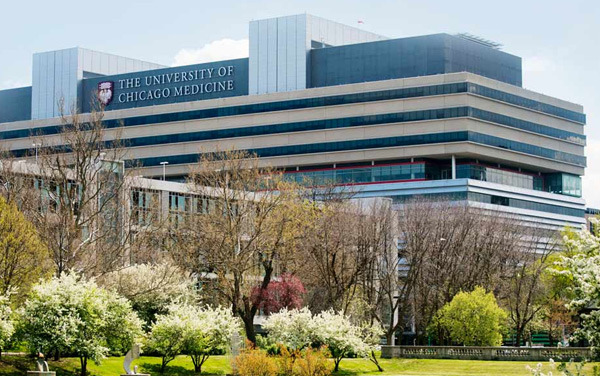
When talking about hospitals in Chicago, a well-known one is the University of Chicago Medicine.
It is located in the South Side of Chicago, specifically in Hyde Park.
At first glance, it may seem like just another typical university hospital found in major American cities, but in reality, it is one of the top academic medical institutions in the country.
The University of Chicago itself has produced over 100 Nobel Prize winners, so its expertise is deeply integrated into its medical services.
https://www.uchicagomedicine.org
Looking at the structure of this hospital, it is not just an adult hospital; it also houses Comer Children's Hospital, a pediatric specialty hospital, on the same campus.
This is a significant advantage for families needing care, as children can see pediatric specialists while parents can receive adult care in the same location.
Additionally, there are several outpatient clinics operating in the South Side and suburbs, so basic care is accessible without needing to visit the main hospital.
The real reason this hospital is highly regarded is different. There are many hospitals in the U.S. that handle common illnesses.
This hospital specializes in treating "complex cases."
Patients from across the country come here for issues like cancer, gastrointestinal diseases, endocrinology, immunology, and genetic disorders.
In particular, many patients who have not found answers at other hospitals come here as a last resort.
The reason is simple: there are many clinical trials. In other words, there is a high chance of accessing new treatment options that are not yet widely used.
This can be a risk for some, but for others, it represents a final opportunity.
Another characteristic of this hospital is its team-based approach to care. Instead of a single doctor making decisions, multiple specialists collaborate on cases.
This is often referred to as a multidisciplinary team approach, but it can be understood simply as "multiple experts filtering out what one person might miss."
Thus, the more complex the case, the more this system shines.
The location is also worth mentioning. Hyde Park is about 7 miles south of downtown.
For those coming from the north or suburbs, it can honestly feel "a bit far."
However, once you get there, it's not as bad as you might think. Using the CTA or Metra makes transportation manageable, and Hyde Park itself has a stable atmosphere centered around the university.
There are many concerns about safety, with worries like, "Isn't it dangerous because it's the South Side?" but this neighborhood is more of an exception.
From the perspective of the Korean community, there is another advantage. There are some Korean doctors available, and interpretation services are provided.
This can be quite significant, especially for those who find medical consultations in English daunting.
Moreover, realistically, larger hospitals tend to see many patients seeking second opinions.
Cases that ended ambiguously at other hospitals are often re-evaluated here.
In summary, this hospital can be described as "a place where research and treatment happen almost simultaneously."
The results from the lab today can lead to treatment options for patients tomorrow.
Knowing about such a hospital while living in Chicago makes a considerable difference.
Even if you don't think about it regularly, when the need arises, you can recall, "Oh, I had this option too," having that card in your hand.







 neroyo |
 nivex85 |
 Old English |
 nixxon |
 LIZ Legal Information Blog |
 Illinois Mom |
 Rice Shop Uncle BLOG |
 Khan Film Blog Production |
 Enjoyable American Life Diary |
 Nanana Nanana Nanana |
  draxen |
  gallery |
  milkyotter |
  Zoom Zoom Zoom |
  Minnesota Lakes and Clouds |
  noraro |
  tervox95 |
  vale vale |
  yentra |
  Golden life |
  andrew park |
  Peter Pan Pet |
  Balan |
  Cali M Law Group |
  Dreams Come True as Desired |
  coloradoman |
  Living Economy Information Blog |
  rustley |