

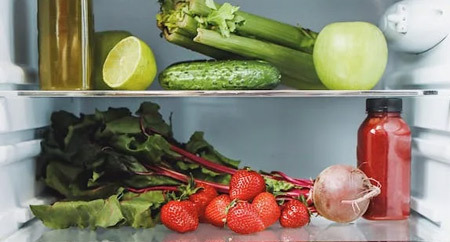
Tips to Keep Vegetables Fresh in the Refrigerator
-
Use bags with breathing holes
– If you leave them in the tightly sealed plastic bags from the store, they will spoil quickly, so please make small holes with a zipper bag or paper towel to let them breathe. -
Remove moisture + maintain humidity
– After washing, gently pat off the water droplets, and wrapping them in a paper towel can prevent both excess moisture and dryness. -
Keep vegetable drawer temperature at 1 ~ 4 ℃
– The temperature should be slightly above 0 degrees, which is the storage temperature for kimchi, to prevent the vegetable tissues from freezing. If it's too low, leafy greens will freeze and turn black, and if it's too high, aging will progress quickly. -
Store strong breathing vegetables separately
– For items like broccoli and asparagus that have 'strong breathing', storing them upright in a separate container will reduce ethylene gas buildup and prolong freshness. -
Separate roots and leaves
– If you bought carrots, radishes, or beets with the leaves still attached, please cut the leaves off first. If the leaves continue to absorb moisture, the roots will wilt quickly.
Foods Whose Taste and Texture Decrease When Refrigerated
-
Tomatoes
– When the temperature drops below 10 ℃, the enzymes that create sweetness and aroma stop working. It's sufficient to ripen them at room temperature and chill slightly just before eating. -
Potatoes
– At refrigerator temperatures, starch converts to sugar, resulting in a sweet taste, but they turn brown when cooked. Storing them in a cool, dark place is the right answer. -
Onions and garlic
– When exposed to refrigerator humidity, they can mold or become damp. Store them in a mesh bag in a well-ventilated area. -
Bananas
– The skin quickly turns black in cold air. It's safe to keep them at room temperature until brown spots appear, and after ripening, it's better to freeze them for later use. -
Bread
– At low temperatures, starch aging accelerates, making it dry. Only keep the amount you will eat within a few days, and seal the rest well for storage in the freezer.
While the refrigerator seems like a miracle worker when needed, in fact, each ingredient has a 'preferred environment' that varies quite a bit.
Remember that simply placing the vegetables you bought today in bags with breathing holes, and keeping tomatoes or potatoes in a shaded corner of the kitchen can significantly enhance their taste.







 Tora Tora |
 neroyo |
 nivex85 |
 Old English |
 nixxon |
 humpday sonata |
 Piano Teacher Blog |
 Kkikki Ppappa Shout Out Loud |
 U.S. Weather Bureau News |
 American Airlines Mileage |
  road98 |
  Churros Train Conductor |
  gleeful |
  Burbank Lee |
  Olivia's Blog |
  Bushing Around Life |
  Active |
  Cherokee Rose |
  Kor. Master |
  Holey Moley |
  Conflite Teacher |
  Hodong Prince Over Flex |
  Mist inn |
  citrus pop |
  Onion Ring |
  phoenixia |
  viewtop |
  loverun |
  Kim Do Sun |
  SEVEN SEVEN |