

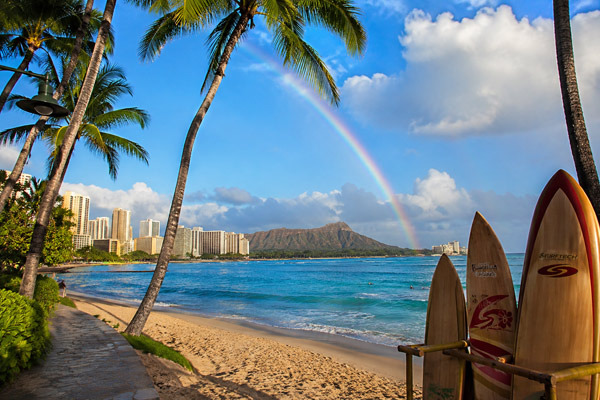
$21.75 Billion Flow: Understanding Hawaii's Economy Through Tourist Spending
In 2025, the number of tourists visiting Hawaii is expected to reach an astonishing 9,642,991. The total amount they spend while staying on the islands is a remarkable $21.75 billion. This means that, on average, each tourist spends over $2,255 in Hawaii, placing it among the highest per capita spending compared to any other tourist destination in the world.
So where does this enormous sum of money go? By tracking the specific sectors where tourists are most likely to spend, such as accommodation, food, shopping, and activities, we can see the unique economic structure and survival methods of Hawaii's island community.
1. The Absolute Dominator of Spending: Accommodation Costs
The sector that takes the largest share of tourists' wallets is undoubtedly accommodation. Due to its geographical characteristics as an island with limited land, the supply of accommodations is insufficient compared to demand. Particularly on the island of Oahu, where Waikiki Beach is located, short-term rentals and Airbnb occupancy rates soar to as high as 89% during peak tourist seasons. This means that 9 out of 10 rooms are fully booked.
This strong demand drives up accommodation prices. From large luxury resorts in Waikiki to condo hotels in Ka'anapali and Wailea, as well as short-term rental houses throughout the island, the accommodation sector takes the most significant portion of the entire $21.75 billion pie. It is not an exaggeration to say that nearly half of a Hawaii travel budget is spent on securing a place to stay.
2. Culinary Delights and Entertainment: Food and Beverage Spending
After paying a hefty sum for accommodation, tourists face the reality of high dining costs. The cost of food and beverages in Hawaii is noticeably higher compared to major cities on the mainland. This is because 80-90% of food ingredients must be shipped from the mainland or overseas, which adds logistics costs directly to food prices.
Restaurants located on Waikiki's main street or in famous resort towns have significant dinner prices, but tourists willingly accept this under the guise of a 'special experience in a vacation destination.' Additionally, high-priced entertainment options, such as the traditional Hawaiian Luau show, which combines Polynesian cultural performances with buffet dinners, also contribute significantly to food and beverage spending. The enjoyment of delicious food and drinks firmly holds the second spot in tourist spending rankings.
3. The Surge of Experiential Consumption: Activities and Tours
Recent tourism trends are shifting from simple sightseeing to 'experiential activities.' Thanks to its natural environment, Hawaii has a highly developed market for these experiential activities.
Snorkeling tours at Molokini or Hanauma Bay
Surfing lessons to learn from the rough waves of the North Shore
Helicopter tours to view Kauai's Napali Coast or Maui's volcano from the sky
Deep-sea fishing tours to catch big fish in the middle of the Pacific
These 'exclusive experiences that can only be done in Hawaii' are high-value products that require significant spending. Tourists open their wallets generously for activities to create unforgettable memories.
4. From Souvenirs to High-End: Shopping Culture
The spectrum of shopping in Hawaii is very broad and diverse. Basic souvenirs include local specialties like aloha shirts, macadamia nut chocolates, and world-renowned Kona coffee.
However, the real big spenders in Hawaii's shopping economy are wealthy individuals from Asia and the mainland who visit specifically for luxury shopping. It is no coincidence that Kalakaua Avenue in Waikiki and Ala Moana Center are lined with flagship stores of world-class high-end brands. The relatively low sales tax rate in Hawaii compared to other states in the U.S. is also a significant attraction for luxury shoppers.
5. The Significance of the $21.75 Billion Flow for Local Residents
So what does this enormous $21.75 billion trickle-down effect mean for the true owners of the islands, the local residents?
Analyzing the flow of money reveals that large global hotel chains and mainland-based corporations take a significant portion of the profits. However, when we delve deeper into the specific areas of accommodation, activities, food, and shopping, there are clearly niche markets where local businesses can participate and survive.
Independent restaurants and food trucks: Local chefs using fresh ingredients from Hawaii in their independent restaurants and food trucks return a portion of food spending back to the local community.
Independent guides and instructors: Local surfing instructors, hiking guides, and operators of small snorkeling boats earn direct income through activity spending.
Small bed and breakfasts and management: Small short-term accommodations that operate legally within regulations and the local cleaning and maintenance companies that manage them receive a share of accommodation capital.
Ultimately, how effectively and fairly the annual $21.75 billion in tourism capital is distributed to local businesses, rather than flowing entirely into the pockets of large corporations, is the key to determining the actual living standards and wages of the people of Hawaii, as well as their sustainable quality of life. When tourists support local businesses, the lives of the people living there can become as enriched as Hawaii's beautiful nature.
 PuddingLover
 Walker1976
 OhMyOz
 KoreaSpirit





 Montgomery Mom |
 Anjollinya Blog |
 Taco Seattle |
 Mr Song Song |
 Living Economy Information Blog |
 HAWAII Korean Church News |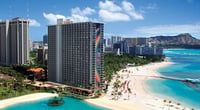
 Hawaii Fox |

 Hawaii Tourist Information |
 Unknown Dog Walk blog |
  newyorker 101 |
  coffeee |
  |
|  Christopher |
  sylven |
  Sammy Beach |
  Bliss O |
  blue ocean |
  greenlight |
  Watanaka Karametibaksa |
  castle |
  xelton52 |
  carefree |
  vrixen73 |
  AZ Road Master |
  Victory 1988 |
  summita |
  business lim |
  Colorado Lee |
  Make My Day |