
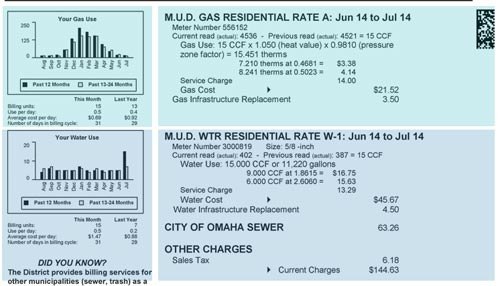
When living in Omaha, utility costs, especially electric and heating bills, can vary significantly by season.
The surge in electricity usage during the summer due to air conditioning and the heating fuel costs in winter represent a considerable portion of household expenses. We have summarized the actual utility costs experienced by Omaha residents by season.
The main electricity provider in Omaha is the Omaha Public Power District (OPPD). OPPD is a local utility company that supplies electricity to Omaha and most of the surrounding areas, and its rate structure combines a base fee with usage-based charges.
The average monthly electricity usage for a typical household varies greatly by season. During seasons with low heating and cooling demands, such as spring and fall, monthly electric bills often range from $80 to $120. However, during the peak summer months (June to August), bills can commonly rise to between $200 and $350, and in some cases, exceed $400 depending on the size of the home and insulation conditions.
The primary reason for the high summer electric bills is Omaha's hot and humid summer weather. July and August often see temperatures soaring above 30 degrees Celsius, and with high humidity, there are days when air conditioning needs to run all day long.
OPPD operates a Demand Response Program that encourages reducing electricity consumption during peak summer hours (3 PM to 7 PM), and participants can receive bill savings under certain conditions. It is widely shared among Omaha residents that using energy-efficient air conditioners (SEER 15 or higher) and smart thermostats (like Nest or Ecobee) can effectively reduce summer electric bills.
Winter heating costs vary significantly depending on the fuel used. Most homes in Omaha use natural gas heating, supplied by gas companies such as Black Hills Energy or the Metropolitan Utilities District (MUD).
Winter gas bills typically range from $150 to $250 per month between December and February, and in years with prolonged cold spells or many days below -10 degrees Celsius, bills can exceed $300.
Older homes may have inadequate insulation, leading to higher gas consumption, and improvements such as window sealing, attic insulation reinforcement, and regular boiler maintenance are known to help reduce heating costs.
For homes or apartments using electric heating, winter electric bills can also be quite high. While electric heat pumps can be more efficient than gas heating, their efficiency drops significantly in Omaha's extreme cold (below -10 degrees Celsius), leading many to use supplemental electric heaters.
There are reports from the Omaha community of residents experiencing electric bills over $400. OPPD and MUD also provide some assistance for reducing winter utility burdens through energy support programs for low-income households (like LIHEAP).
Practical methods for reducing utility costs in Omaha include using smart thermostats, replacing with LED lighting, using Energy Star certified appliances, sealing gaps in windows and door frames, and installing solar panels (utilizing OPPD's solar connection program). Both OPPD and MUD publish information on energy efficiency improvement support programs and incentives on their official websites, and the city of Omaha has also operated low-interest loan programs for improving residential energy efficiency.
 MoonRiver





 Premium Gas Camp |
 CA Real Estate |
 cheesepup |
 breezem |
 yentra |
 NE Hodori Preik |
 Nebraska Center Director TOP |
 lunexa |
 moomoon |
 Healthy Local Fresh Information |
  molten |
  Way to easy |
  intact |
  Always Dreaming of Big Success |
  happy 9 |
  Park M.Y. |
  tredon |
  Poppin News |
  metsoo |
  dewyo |
  Casa Mia |
  Asparagus Blog |
  dorange |
  hiddenkong |
  some fame |
  Godory Life |
  Lime Juice |
  French fries |
  Rynex |