

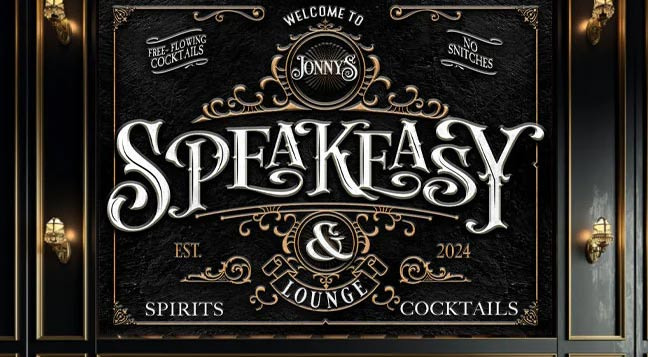
"Knock on the secret door, where whiskey flows."
In the 1920s America, it appeared to be an era of 'purity and morality', but beneath the surface, there was a secret heat and illegal pleasures overflowing.
At the center of this was the Speakeasy, an illegal bar meaning 'speak quietly'.
Without a formal entrance, one had to speak a password to enter through the back door of a barbershop, the basement of a laundry, or sometimes inside a flower shop. These bars were a paradise for those who enjoyed the forbidden.
Jazz music, dancing, cocktails, and laughter. Alcohol flowed in speakeasies just like before Prohibition.
So, why did such bars emerge? And why did America prohibit alcohol in the first place?
Today, we will trace the journey from the birth to the fall of Prohibition, one of the dark chapters in modern American history.
How Did Prohibition Begin?
Looking back, the start of Prohibition was a 'moral movement'.
From the late 19th century, a wave of social reform swept through America.
Alongside the abolition of slavery, women's suffrage, and labor movements, the 'Temperance Movement' began to spread nationwide.
Alcohol was perceived as the cause of domestic violence, unemployment, and crime, led by Christian groups, especially Methodists and Baptists. In the 1870s, the 'Women's Christian Temperance Union (WCTU)' was formed to actively promote the temperance movement.
They pushed for Prohibition as part of the 'women's liberation movement', claiming, "Husbands destroy families when they are drunk."
With the conviction that "alcohol is the root of all problems!", they began passing local ordinances to prohibit alcohol sales.
Surprisingly, businesses, especially in the steel and automotive industries, also supported Prohibition.
They wanted workers to be sober and diligent in their jobs to increase productivity.
Industrial magnates like Henry Ford were active supporters of the temperance movement.
National Prohibition
Compared to the existing Puritan lifestyle of American culture, many German, Irish, and Italian immigrants who came to America were normalizing alcohol culture, which combined with anti-immigrant sentiment, leading to the argument that "Prohibition is necessary to preserve American traditions."
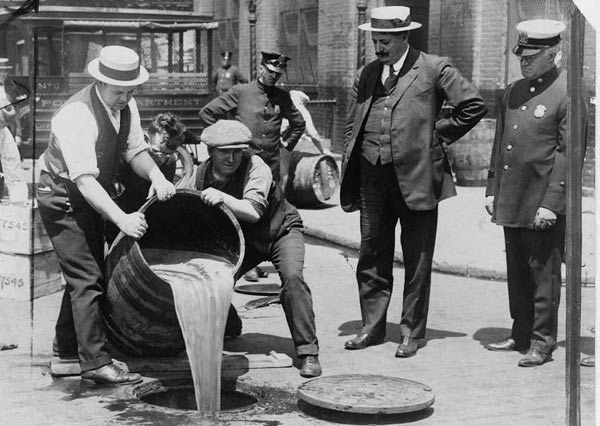
After this complex understanding, the 18th Amendment was passed in 1919, officially making America a 'country where alcohol is illegal'.
On January 17, 1920, the Volstead Act was enacted, prohibiting the manufacture, distribution, and sale of all alcoholic beverages. However, medical alcohol and religious purposes (such as sacramental wine) were exceptions.
The birth of a country without alcohol, "Dry America".
Thus began the 'Prohibition Era'.
Prohibition Led to Increased Consumption — Reasons for Its Failure
People's desire for alcohol did not disappear with a law. Instead, alcohol became a more dangerous and enticing forbidden fruit.
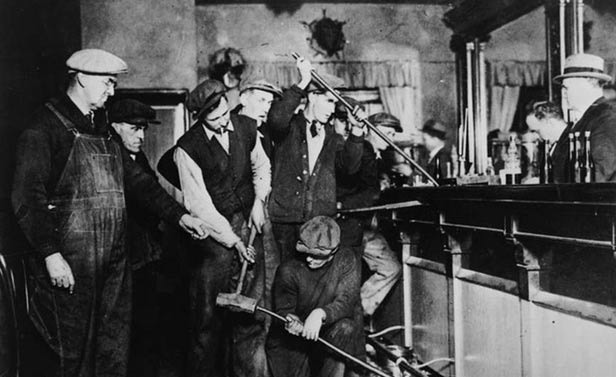
The thrill of drinking secretly and the sense of rebellion. The increase of speakeasies: it is said that there were over 30,000 in just one city, New York.
What was once 'drinking openly' began to transform into 'drinking secretly as a luxury entertainment'.
Explosive Growth of the Moonshine Industry
As alcohol was prohibited, illegal production and smuggling surged.
'Moonshine': illegally made liquor produced secretly in rural areas at night.
'Rum Runners': organizations that smuggled alcohol from the Caribbean by sea.
'Bootlegging': a method of hiding bottles of alcohol in boots for transport.
This alcohol trade began to intertwine with organized crime, with gangsters like Al Capone at the center.
He distributed over 1,000 gallons of alcohol daily in Chicago, earning millions of dollars each year, and bribed police and politicians to paralyze the judicial system.
Police Corruption and the Erosion of Law
Police and officials accepted bribes from gangs and turned a blind eye, or even openly protected speakeasies.
Investigative agencies faced budget and manpower shortages. The effort to enforce Prohibition laws was unrealistic. Even honest citizens began to spread the perception that 'a little bit is okay.'
As a result, a social atmosphere was created where it was natural for laws to be broken, leading to a loss of trust in national authority.
Economic Loss and Tax Issues
The alcohol industry was connected not just to drinking but to numerous economic activities such as production, distribution, sales, and taxes. Prohibition caused tens of thousands of job losses, and the government lost revenue from alcohol taxes, facing budget crises. After the Great Depression (1929), the need for tax revenue emerged, ultimately leading to the economic impact of Prohibition, which sparked widespread dissatisfaction in society.
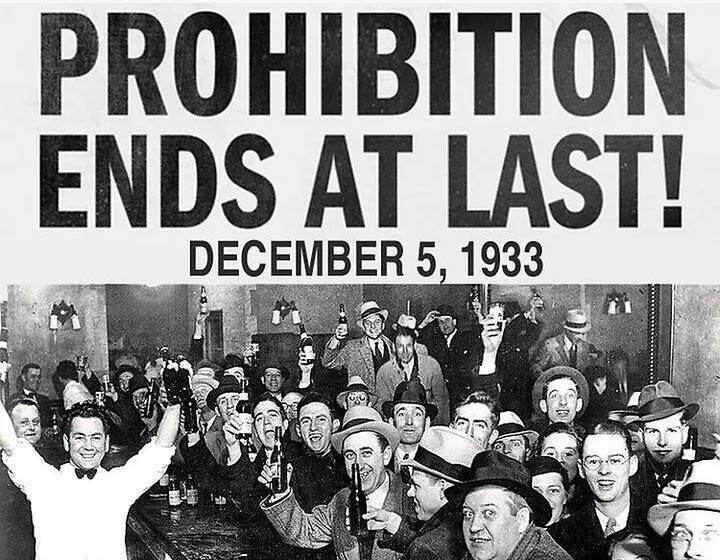
Repeal of Prohibition
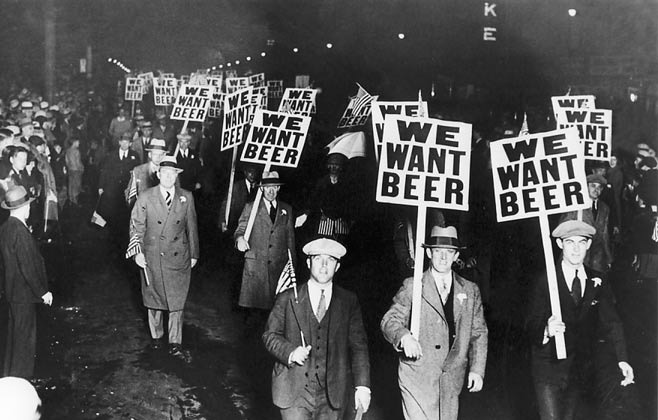
As a law based on morality led to increased crime, corruption, and chaos, in 1933, President Franklin D. Roosevelt officially repealed Prohibition through the 21st Amendment.
This is the only case in American history where a constitutional amendment was repealed.
Prohibition ended after 13 years, the alcohol industry quickly recovered, the government regained tax revenue, and speakeasies became legends.
The history of Prohibition is not simply about whether one can drink or not.
This event contains lessons about human nature, social desires, and the gap between law and reality.
Although Prohibition has disappeared, speakeasies are still being recreated as retro bars across America.
Ironically, the culture that the law tried to suppress has returned as an even more intense legend.


 El Dorado |
 lightyear |
 Moscow Kim |
 coloradoman |
 Montgomery Mom |
 Helpful Life Stories |
 American Man in a Mask |
 Hajiwon Blog Hair Salon |
 Make My Day |
 TEXAS Fishing Boat |
  Tonky |
  viroma |
  cookie |
  Live and that's it |
  Alright Twain |
  eatontown blog |
  HAWAII Korean Church News |
  Amore |
  linex |
  Balancework |
  laro90 |
  MEDBIO American Doctor Blog |
  SWAT TEAM BLK |
  DREAM BIG |
  frostbite |
  330 Forever My Love |
  dralix58 |
  Gorama Round |
  Skydiving |