

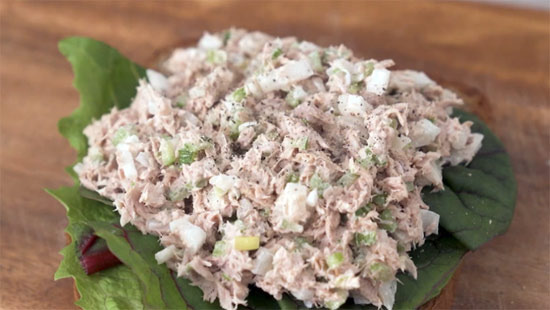
Whenever canned tuna is mentioned, opinions are always divided.
Some people dislike it just from the smell, while others appreciate it for being convenient, inexpensive, and high in protein.
I'm definitely in the latter group.
When you're busy managing a household, nothing is as filling and useful as canned tuna.
It may seem common, but it's practically a treasure trove of nutrition.
One can contains over 40g of protein and is rich in omega-3 fatty acids, which are good for the brain.
It also provides iron, zinc, potassium, magnesium, selenium, phosphorus, and vitamins B6 and B12, making it almost a complete multivitamin.
Moreover, with low saturated fat, it's good for heart health, so it's less burdensome to eat instead of meat.
American canned tuna comes in various types, including products packed in water, olive oil, or vegetable oil, and even low-sodium versions.
However, since many products are made from albacore (white tuna), which may have relatively high mercury levels, it's safer to choose light tuna products when consuming frequently.
Above all, American canned tuna can be stored at room temperature for a long time, making it a popular choice for camping or emergency food, and it fits seamlessly into Korean cuisine, making it a practical choice.
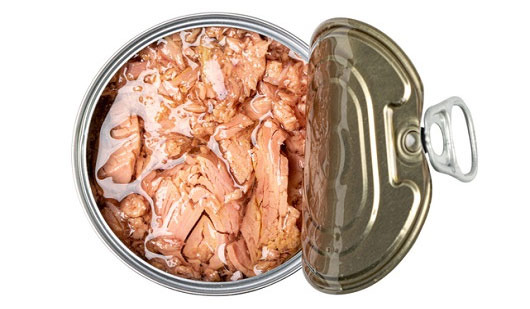
In the past, I only thought of sandwiches when it came to tuna, but these days I've tried various things.
If you mix it with tofu and fry it, you get tuna tofu pancakes, which are perfect as a side dish.
Also, if you sauté garlic in olive oil and add tuna to make pasta, the light yet savory flavor is the best.
As a Korean, adding tuna to kimchi stew is the ultimate truth.
The oil from the broth enhances the umami flavor, and when eaten with hot rice, it becomes a rice thief.These days, what I often make is a salad topping.
If you flake the tuna and mix it with lemon juice, olive oil, and pepper, you can enjoy a restaurant-quality salad at home.
Since it's already cooked, you can just open it and use it, so even beginners in cooking won't fail, and it can be a meal when served over rice with kimchi.
Not only sandwiches but also pasta, pancakes, salads, stews, and fried rice can all be covered, making it incredibly versatile.
Whether it's Korean or American, just having a few cans at home is reassuring.






 Moscow Kim |
 Seattle - Emerald City |
 self-evaluation |
 Sandiego Auntie |
 Karina's Blog |
 victoria 68 |
 Hawaii Tourist Information |

 TEX MEX STAR |
 Vacation on Hawaii |
  US Embassy |
  Korean Mom |
  My NYC |
  moo moo |
  Mr Oh |
  forevergee |
  festival |
  manchester |
  constant |
  Leapfrog Move |
  vibranto |
  Tora Tora |
  yellowbutter |
  Dolly |
  NYC saladbar |
  Finding Superfoods |
  lightyear |
  song bang |
  vexomo |
  Indiana Jones |