

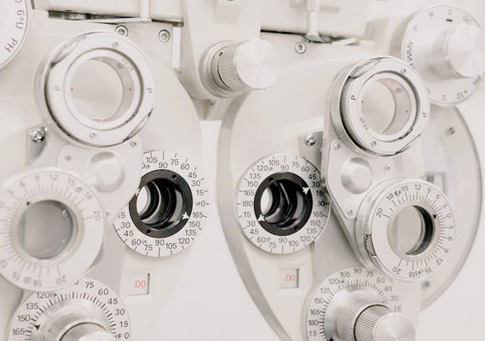
It has already been over twenty years since LASIK became popular.
LASIK involves making a small incision in the cornea and using a laser to reshape its thickness to change the refraction of light.
In simple terms, it is the principle of refining the 'lens surface' of the eye to achieve proper focus.
If you are nearsighted, the cornea is flattened, and if you have astigmatism, the asymmetry is adjusted to correct vision.
The procedure is quick, and recovery is fast, which has led to its popularity, but there are also potential side effects.
Since the cornea is thinned, dry eye syndrome is common, and glare and halos can occur at night.
When LASIK first became popular, many people came to the clinic with excitement and fear, but now it has become so common that even middle and high school students are considering LASIK.
However, there is a technology that is quietly but seriously being discussed in the medical field these days.
The unfamiliar name is 'Retinal Adjustment Technology.'
Unlike LASIK, which reshapes the cornea to change refraction, retinal adjustment aims to improve the responsiveness of the retina itself, where photoreceptors are gathered, to control vision.
Research is being conducted to enhance focal resolution by finely adjusting the density, arrangement, and signal transmission efficiency of the cells that receive light. Methods such as laser stimulation, microcurrent control, and nanoparticle-based cell rearrangement are being considered and are gaining attention as future technologies.
There is also hope for the improvement of conditions like presbyopia and macular degeneration, but there is a risk of photoreceptor damage, making safety and clinical validation essential.
If this technology is truly realized, I believe it will be a significant turning point in the field of vision correction.
Of course, it is still in the research stage, and it will take time before commercialization, but the direction is intriguing.
LASIK ultimately changes the shape of the cornea to adjust the refraction of light, while retinal adjustment technology aims to manipulate the density, sensitivity, and arrangement of the retinal receptors, which are more critical areas.
It's like improving the sensor directly rather than just fixing an old camera lens.
If this becomes possible, there may also be a way to address age-related presbyopia in a similar manner. Currently, multifocal lens implants or reading glasses are the answers, but in the future, we may enter an era where retinal responses are corrected through lasers or microelectrical stimulation.
Of course, there are realistic concerns. The retina is much more sensitive and complex than the cornea, and improper handling can lead to irreversible damage.
Therefore, for this technology to be commercialized, there are many hurdles to overcome, such as safety validation, long-term tracking data, and cost issues.
Nevertheless, medicine has always advanced by making what seemed impossible possible. When I was a resident, artificial pancreases sounded like a fantasy, but now they are being used by actual patients.
Perhaps in about ten years, instead of asking, "Did you have LASIK?" we might be asking, "Did you get retinal tuning?"
Technology eventually becomes part of everyday life. And when that change approaches, someone needs to explain it simply so that patients can understand and prepare.
Today, after finishing outpatient services, I looked out the window and saw patients wearing glasses leaving the hospital.
Will they have another option besides LASIK in a few years? I am curious about that future.







 lightyear |
 Moscow Kim |
 coloradoman |
 Montgomery Mom |
 GOGO SING |
 Lululala |
 Gook Rule |
 Georgia 88 |
 Dragon Lee |
 Blondee |
  dralix58 |
  Gorama Round |
  Skydiving |
  dreamport |
  Yellow Snowman |
  Toaster Pizza Magic Show |
  velvetnom |
  Anytime Journey |
  Mrs. Duluth |
  jaxter |
  Atlanta Mama |
  Baguette Blog |
  US Embassy |
  Korean Mom |
  My NYC |
  moo moo |
  Mr Oh |
  forevergee |
  festival |
  manchester |