

I often receive the question, 'Why is Israel constantly in conflict?'
The conflicts in Israel cannot be explained simply as political or diplomatic issues.
The roots lie in the thousands of years of exile, return, and identity restoration of the people, and in the spiritual pillar of Zionism that has supported it.
In this article, I aim to unravel the complex realities that underpin Zionism's formation, as well as Israel's current conflict with Palestine and the increasingly intense confrontation with Iran.
The Roots of Diaspora and National Identity
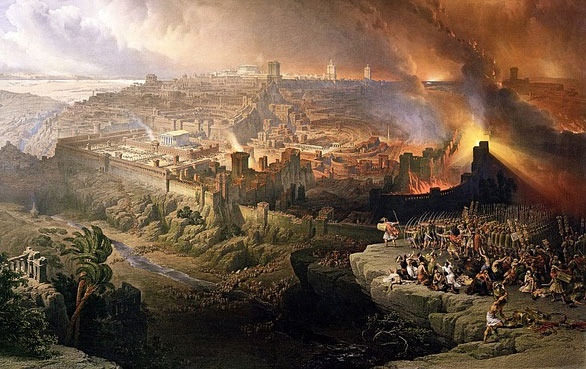
After the Babylonian Exile in the 6th century BC and the destruction of the Jerusalem Temple by Rome in the 1st century AD, the Jewish people were exiled from the land of Palestine (the 'Zion' of the Bible) and scattered across the globe. This is referred to as the 'Diaspora.'
However, for thousands of years, Jews have maintained their language (Hebrew), religion (Judaism), and customs while holding onto the religious and national dream of 'returning to Zion.' This is where the roots of Zionism grow. Zionism was not merely a declaration to reclaim territory, but a declaration to "restore the identity and dignity of the nation."
The Emergence of Modern Zionism – Theodor Herzl and the Jewish State
By the end of the 19th century, Europe was no longer a safe place for Jews.
With anti-Semitism, riots (Pogroms), and discrimination becoming everyday occurrences, Theodor Herzl, a Jewish journalist from Austria, proposed the establishment of an independent Jewish state, stating that "Jews should no longer depend on other nations."
He published 'The Jewish State (Der Judenstaat)' in 1896, and the following year, at the First Zionist Congress held in Basel, Switzerland, Zionism was formalized as an international movement. They designated Palestine as the primary candidate for the Jewish state and began a serious return movement.
The Return of Jews, the Holocaust, and Nation-Building
The 1917 Balfour Declaration supported the establishment of a Jewish state, and Jews from Europe and Russia began to migrate to Palestine, establishing a social foundation.
However, this process initiated conflicts with the Arab residents already living in the land.
Then, World War II and the Nazi genocide of Jews (the Holocaust) brought a decisive turning point to the Zionist movement. The tragedy that claimed the lives of six million Jews imprinted the need for "a state for Jews" in the international community, leading to the declaration of independence by Israel on May 14, 1948.
The Diversity of Zionism and the Instinct for National Survival
Zionism is not a single ideology. Political Zionism is the central ideology of Herzl's state-building movement, while Cultural Zionism emphasizes the construction of a 'spiritual center' as proposed by Ahad Ha'am. Socialist Zionism emphasizes communal life based on kibbutzim, and Religious Zionism aims to realize the restoration of biblical Zion in reality. Revisionist Zionism has become the foundation of the current Likud party, representing a hardline conservative stance. All these diverse forms of Zionism ultimately stem from one common sentiment.
"We will never be persecuted again."
This becomes the foundation of all of Israel's security policies, diplomatic strategies, defense systems, and national education.
Today's Confrontation with Iran – An Extension of Survival-Based Zionism
This spirit of Zionism is also evident in the conflict with Iran.
Iran is one of the countries that does not recognize the very existence of Israel and has labeled Israel as the 'cancer of the Middle East' according to its Shia Islamic revolutionary ideology.
Iran's attempts to develop nuclear weapons or militarily support Hezbollah in Lebanon and Hamas in Gaza are rooted not merely in geopolitical interests but in a religious and ideological conflict that denies the legitimacy of the state of Israel.
In response to these threats, Israel has asserted its 'right to preemptive self-defense' and has retaliated through various means, including cyberattacks (Suxnet), direct airstrikes, and assassinations against Iranian nuclear facilities. Behind all these actions lies the instinct for national survival of Zionism after the Holocaust, which states, "We will never again be caught defenseless."
Zionism is Still Ongoing
Today, Zionism remains at the center of Israeli society amidst ongoing debates for and against it. For Palestinians, Zionism symbolizes occupation and separation, but for Jews, it is seen as the restoration of history and dignity, and the minimum rights for national survival.
Zionism is not merely a slogan for the construction of a Jewish state; it explains why Israel is so sensitive, resolute, and firm.
And those roots are still alive in constant tension and dialogue between Iran, Gaza, the Lebanese border, the UN Security Council, and even among the Jewish diaspora.
Not an ideology, but the language of survival.
That is why Zionism remains strongly alive in Israel today.






 El Dorado |
 lightyear |
 Moscow Kim |
 coloradoman |
 Montgomery Mom |
 maryland park |
 mygoddess blog |
 Information on All Regions of the United States |

 frostpup |
  Tonky |
  viroma |
  cookie |
  Live and that's it |
  Alright Twain |
  eatontown blog |
  HAWAII Korean Church News |
  Amore |
  linex |
  Balancework |
  laro90 |
  MEDBIO American Doctor Blog |
  SWAT TEAM BLK |
  DREAM BIG |
  frostbite |
  330 Forever My Love |
  dralix58 |
  Gorama Round |
  Skydiving |