

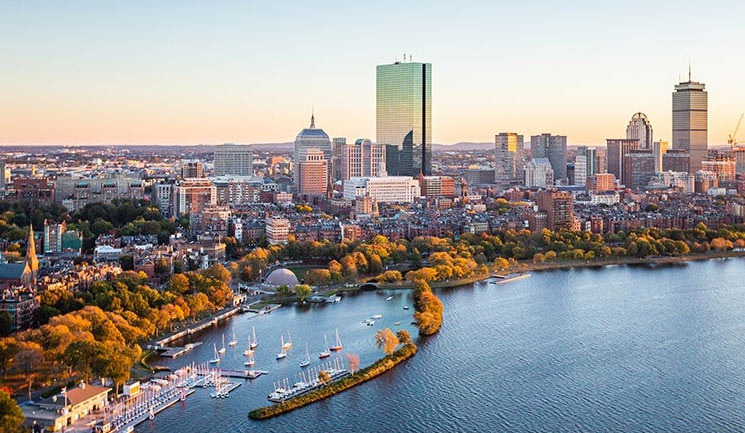
In my opinion, Boston may not be a large city, but in terms of economic competitiveness, it stands alongside New York and San Francisco as a representative city of innovation in the U.S.
The finance, biotech, healthcare, education, and IT industries are interconnected, leading to a constant emergence of new technologies and companies, which is its most significant feature.
Many people complain about the high cost of living here, but it is also a city rich in high-paying jobs centered around professional fields.
The core industries of Boston's economy are biotech and life sciences.
In particular, Kendall Square is known as the 'capital of global biotech,' home to numerous global pharmaceutical companies and life science startups.
Here, research facilities of global companies like Moderna, Biogen, Vertex Pharmaceuticals, Novartis, and Pfizer are located.
Moderna, in particular, has grown into a global company through the development of the COVID-19 mRNA vaccine, with its headquarters located in Cambridge.
The growth of these industries is supported by world-class research institutions. Research results from the Massachusetts Institute of Technology and Harvard Medical School lead to startups, venture capital investments, and a virtuous cycle of growth into global companies. In fact, Kendall Square is considered one of the most active regions for venture capital investment in the world.
The finance industry is also a key pillar of Boston's economy. While New York is centered around investment banking, Boston has strengths in asset management and pension fund management.
For example, Fidelity Investments is one of the largest asset management firms in the world, managing trillions of dollars in assets. Additionally, State Street Corporation is a global financial company providing asset custody and management services for institutional investors. Many investment firms, accounting firms, and consulting companies also have their headquarters or large offices in Boston.
Education is another crucial industry supporting Boston's economy. There are over 50 colleges and universities in the Boston and Cambridge area, with student populations reaching hundreds of thousands.
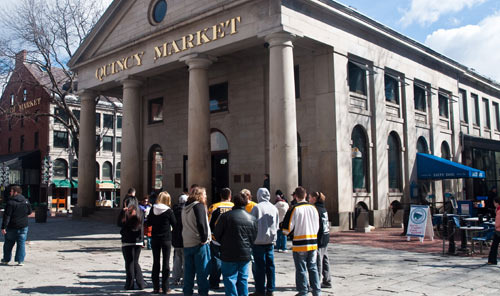
Harvard University, Massachusetts Institute of Technology, Boston University, and Northeastern University serve as educational institutions while also being major employers in the region. They create various jobs, including professors, researchers, administrative staff, technical staff, and facility management personnel.
The healthcare industry is also indispensable. World-class hospitals such as Massachusetts General Hospital, Brigham and Women's Hospital, Boston Children's Hospital, and Beth Israel Deaconess Medical Center are all located in Boston. These hospitals not only provide medical care but also actively conduct clinical trials and medical research, employing tens of thousands of healthcare professionals and researchers.
Recently, the IT industry has been growing rapidly. In particular, the Seaport District has established itself as a new technology hub in Boston. Global companies like Google, Amazon, and Salesforce are expanding their research and engineering teams, leading to a steady increase in demand for software developers, AI specialists, and data analysts.
This industrial structure offers various opportunities for the Korean community as well. In the healthcare sector, doctors, nurses, pharmacists, and researchers are actively engaged, while Korean scientists and PhD researchers are consistently entering biotech companies. There is also a high demand for software engineers and data scientists in the IT sector.
Meanwhile, self-employment is concentrated around Allston, Brookline, and Cambridge. Service industries targeting Koreans, such as Korean restaurants, cafes, beauty salons, tutoring centers, and grocery stores, are consistently operating, with international students, researchers, and professionals as the main customer base.
Of course, Boston has a very high cost of living. Housing costs, food expenses, and health insurance premiums are all higher than the U.S. average. However, the presence of high-paying jobs centered around professional fields that can bear the high cost of living is the biggest difference compared to other cities.
Ultimately, the competitiveness of Boston's economy lies in its unique industrial ecosystem, where research originating from universities leads to hospitals and biotech companies, which in turn connects to venture investment, finance, and global companies. Thanks to this virtuous cycle, Boston is still regarded as one of the most innovative cities in the world and is expected to emerge as a key city leading the fields of biotech, healthcare, artificial intelligence, and advanced technology in the future.
 QuantumLove
 YuzuTeaSurf






 NEXT ROUND |
 Encyclopedia of New York and Surrounding Areas |
 washington mom |
 California Dreamer |
 NO CAP LIFE |
 tiramisu |
 gumdrop |
 Tart Tart |
 Investment Information News Update |
  San Gabriel Mountains |
  quanta7 |
  Fransco Family |
  leonee |
  Augusta 90 |
  Project Tomorrow |
  DOCTOR MED |
  Say IT Now |
  Alpha and Omega World |
  Always Dreaming of Big Success |
  Helpful Life Stories |
  Healthy Local Fresh Information |
  molten |
  Way to easy |
  intact |
  happy 9 |
  Park M.Y. |
  tredon |
  Poppin News |