

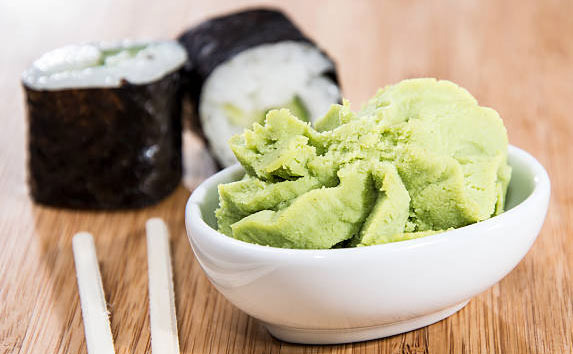
Wasabi is native to the mountainous regions of Japan, but recently, wasabi cultivation has also been taking place in the United States.
In the U.S., wasabi can only be grown in limited areas because it requires specific environmental conditions to thrive. Wasabi is a plant that prefers cool and humid climates, and it needs mountainous regions with flowing clear water.
The largest wasabi cultivation areas in the U.S. are in Oregon and Washington.
These regions have climates suitable for wasabi cultivation and provide an ideal environment for growing wasabi, especially because they can utilize alkaline clean water.
The Rogue River Valley in Oregon and the Quinault Valley in Washington are areas where wasabi farms are concentrated.
Wasabi cultivation in the U.S. began several decades ago, with some of the most famous farms being companies like "Oregon Wasabi." These companies use their own hydroponic systems to grow wasabi, allowing them to produce high-quality wasabi without being affected by climate and environmental factors. In particular, wasabi grown through hydroponics boasts a richer flavor because it grows in clean water at a consistent temperature.
Wasabi cultivation is a very challenging process. Wasabi requires cold temperatures, abundant humidity, and clean flowing water. The optimal temperature for photosynthesis is between 8 and 20 degrees Celsius, necessitating agricultural techniques to maintain this range.
Since wasabi requires clean flowing water that is often found in its native habitat, this poses a more difficult challenge compared to typical crops. In particular, wasabi that grows in Japan takes 2 to 3 years to reach maturity, and a similar timeframe is required in the U.S.
The wasabi produced in the U.S. has reached a quality level comparable to that of Japanese wasabi, and as demand increases, more farms are entering the wasabi cultivation business. However, due to limited production, wasabi is still sold at a high price and is primarily used in upscale restaurants in the U.S.
In the U.S., wasabi is mainly grown in Oregon and Washington, and many agricultural techniques are needed to produce high-quality wasabi. Nevertheless, wasabi remains a premium ingredient, and the high price is due to the difficulty and time required for its cultivation.





 Moscow Kim |
 coloradoman |
 Montgomery Mom |
 GOGO SING |
 Hajiwon Blog Hair Salon |
 healthy |
 Static |
 newyorker 101 |
 Belgray Miscellany |
 Moo Tang Clan |
  Korean Mom |
  My NYC |
  moo moo |
  Mr Oh |
  forevergee |
  festival |
  manchester |
  constant |
  Leapfrog Move |
  vibranto |
  Tora Tora |
  yellowbutter |
  Dolly |
  US Embassy |
  NYC saladbar |
  Finding Superfoods |
  lightyear |
  song bang |
  vexomo |
  Indiana Jones |