

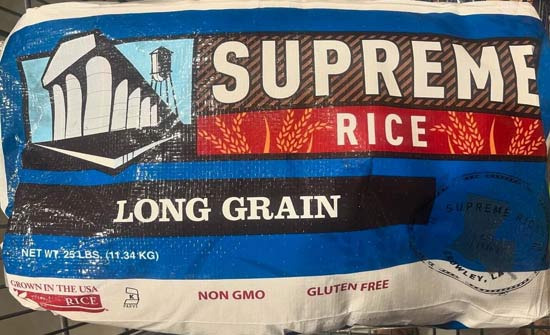
These days, as I approach 50, the hardest thing is that no matter how much I eat, I keep wanting more rice.
There's a saying that Koreans live on rice, and it's true. I have always loved Korean white rice.
Just a bowl of freshly cooked sticky rice with a bit of kimchi is enough to finish a meal. The problem is that when I eat like that, I keep craving more rice.
Especially since coming to the U.S., my activity level has decreased, I'm getting older, and during health check-ups, blood sugar concerns have started to come up, which makes me anxious.
So, I decided to challenge myself with dry long grain rice. As everyone knows, when you switch from cooking white rice to long grain rice, you honestly think, "Is this even rice?"
It lacks stickiness, is dry, and there's hardly any joy in just eating rice.
But the funny thing is, that can actually be an advantage.
Korean white rice is so delicious that you can keep eating it even without side dishes. After one bowl, you want to go for a little more.
However, with long grain rice, after a few spoonfuls, your eating pace slows down. It takes longer to chew, and there's no overwhelming urge to keep eating just because it's so tasty.
In fact, I've heard that long grain rice has a different structure compared to the sticky short-grain rice we usually eat.
Due to the difference in starch structure, it digests relatively slowly, which can help blood sugar levels rise more gradually.
That's why many people managing diabetes or controlling their weight intentionally seek it out.
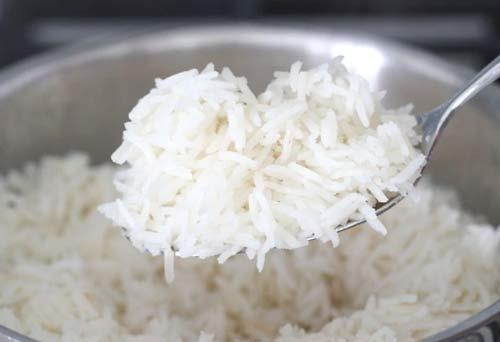
Of course, it doesn't have some dramatic effect like a medication, but psychologically, it feels like the situations where "the rice is so delicious that I overeat" are reduced.
Especially among middle-aged Koreans in the U.S., managing blood sugar is a really important issue.
In Korea, there are a variety of side dishes and people walk a lot, but once you come to the U.S. and live a car-centric lifestyle, your body can get heavy quickly.
At some point, I started feeling sleepy after eating rice, craving sweets, and my belly kept growing, but I couldn't give up rice.
So, I thought about changing the rice itself to something a little less appealing.
However, people with weak stomachs might feel bloated, and many find it too dry to adapt.
Especially those who drink less water may experience constipation, so it's essential to include vegetables and water.
And just because it's long grain doesn't mean it's automatically healthy. If it's completely white rice, it's still carbohydrates.
It's better to mix in brown rice, which is high in fiber, or to include dietary fiber in your meals.
Still, I definitely feel it. If rice is too delicious, Koreans will keep eating endlessly.
With long grain rice, it's easier to eat moderately and stop. Dieting ultimately comes down to a battle of habits and environment, and since the rice itself is less appealing, it feels a bit easier to control overall meal portions.
Honestly, giving up Korean rice is still not easy. Sometimes when I heat up a pack of instant rice, just the smell makes me happy.
But as I get older, I realize that health ultimately comes down to eating habits.
So these days, I'm trying to shift my focus from "deliciously eating a lot of rice" to "rice that makes me eat a little less."
 SilentGoddess
 BraveWarriors
 NYStoryMaker







 Study Abroad Life Know-How Tips |
 Best Frozen Yogurt |
 Mr Cleveland |
 solvix18 |
 RV Samuel's Dad |
 Gimmi207 Blog |
 Kitchen Ideas |
 business lim |
 Desert King |
 USA East News, Information |
  Kondae Garusong Blog |
  quiet river |
  shinee cho |
  alamo |
  Lol Life |
  Waiting for Godot |
  parlon |
  Say Yes in English |
  Sayonara H |
  rigid |
  Ohio Ohayoung Hello |
  U.S. Military Recruitment Information |
  You Turn Me On |
  DaeBak Electronics CNET |
  Anjollinya Blog |
  solid90 |
  elion |
  xylora |
  cheesepup |