

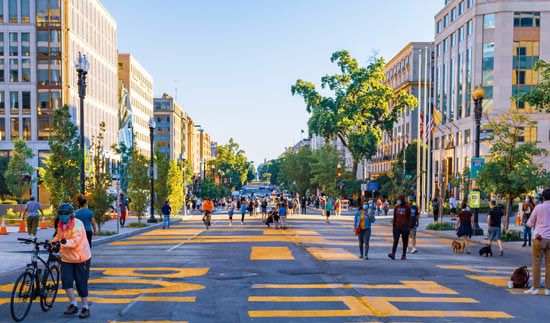
Washington DC can feel like a paradise for immigrants at times and like hell at others.
Both are true. Understanding the structure of this city reveals ways to maximize the advantages and minimize the drawbacks. I will share the realities of the DC area from an immigrant's perspective.
Let's start with the advantages. First, this city is relatively forgiving of language barriers. The DC metro area, including Maryland and Northern Virginia, is one of the most multilingual regions in the United States. Large communities of Ethiopians, Salvadorans, Koreans, Vietnamese, and Indians have formed, and this diversity operates positively in daily life. Supermarkets stock ingredients from various countries, hospitals can connect to interpretation services relatively easily, and there are many businesses run by immigrants.
Second, thanks to the industry structure linked to the federal government, there are various employment pathways for immigrants. There is a trend of actively hiring skilled immigrants in fields such as IT, cybersecurity, healthcare, and defense contracting. If you are a green card holder or a citizen, you can also apply directly to federal agencies. Many first-generation Korean immigrants work for or run federal government IT project contractors. Having education and skills is an important factor for immigrants as it opens up many career development opportunities.
Third, there is relatively strong institutional support for immigrant rights. Both Maryland and DC have relatively immigrant-friendly state policies. DC allocates a separate budget for legal support for immigrants, and nonprofit organizations run programs to assist with visa, green card, and naturalization processes. The Korean community also frequently holds seminars with immigration law specialists.
However, the drawbacks are clear. The high cost of living is an unavoidable reality. Rent, food, and transportation costs all exceed the national average. Managing these expenses before income stabilizes in the early stages of immigration can be challenging. Especially for those with children, living near good school districts can easily push rent over $2,000 a month. If initial funds are limited, it may be necessary to live in the outskirts at first and gradually move closer.
Transportation infrastructure is also a downside. While there is the Metro (WMATA), the routes are limited compared to other major U.S. cities, and if you live in an area without subway access, having a car becomes essential. If you face restrictions on obtaining a driver's license due to visa or green card issues, everyday mobility becomes a problem. There are bus routes, but the intervals are long, and travel times are much longer than by car. Living in the outskirts of DC without a car is practically difficult.
Finally, while DC offers many opportunities for immigrants, I want to emphasize that having a network is essential to seize those opportunities. In DC, 'who you know' is as important as 'what you know.' This is also true within the Korean community. The sooner you connect with networks such as churches, alumni groups, and the Korean Chamber of Commerce when settling in, the faster your integration will be. Understanding that relationships turn into information, and information turns into opportunities is key to immigrant life in DC.
 dreamer1981
 GarlicNinja
 mooncloudtraveler2015





 moo moo |
 ultron78 |
 garlic bread |
 Sugar Cream Door Bulletproof Noodles |
 urbanmint |
 El Dorado |
 washington mom |
 Another Eden Channel BLOG |
 American Travel Cruise Information |
  Eldorado 88 |
  vanilla |
  norvexi |
  Lunch and Dinner Mexican Taco |
  skykong |
  My Circle |
  novapixel |
  urban legend |
  coolriver |
  Good Neighborhood, Wealthy District Information |
  Ro Ro Car |
  Amber H |
  new sugar |
  Palm 1000 |
  loran |
  donutfield |
  Tennis City |
  sunny7 |
  Questions about firearms while living in America |
  Shoot Me |
  mochifox |