

When talking about Fort Worth, Texas, one cannot overlook the image of cattle moving through the dust.
The roots of modern Fort Worth are undoubtedly found in the history of "cowboys and cattle."
In the late 19th century, Longhorn cattle raised in Texas were moved in the hundreds of thousands to northern markets.
At that time, since the railroads were not fully connected, cowboys had to drive the cattle hundreds of miles. This cattle movement route was called a "Cattle Drive." One of the famous routes was the Chisholm Trail.
Fort Worth was a city located right along this cattle drive route. Therefore, people at the time referred to Fort Worth as "Cowtown." It was an important stopover for herds coming from southern ranches before heading to the railroad towns in Kansas. This was the place where cowboys would drive the cattle for days, rest, trade, drink, and then head north again.
Thus, even today, the symbol of Fort Worth remains the cowboy culture and the image of cattle.
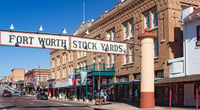
At the center of this is the Fort Worth Stockyards. This place was once an actual market where cattle trading took place, but it has now transformed into a tourist destination. At designated times, people wearing cowboy hats drive Longhorn cattle with long horns slowly through the streets. Tourists watch this spectacle from both sides of the road, feeling as if the landscape of Texas from 150 years ago has briefly come to life.
The Longhorn itself was also an important figure in Texas history. The Texas Longhorn is known as a representative livestock symbolizing the American West's pioneering era. As the name suggests, its most notable feature is its very long horns. Typically, cattle horns are relatively short or curve upward, but Longhorn horns extend long to the sides.
As adults, the distance between the tips of their horns can grow from 6 feet (about 1.8m) to over 7 feet. Some records even report individuals with horns close to 10 feet long. The horns of Longhorns are not just long; they also create a unique curve that spreads wide and slightly curves upward. From a distance, they can appear wing-like. Because of this feature, the shape of Longhorn horns is sometimes used as a symbol in Texas.
They are generally slimmer than regular beef cattle and are known for their long legs and excellent mobility. Originally adapted to survive in dry and harsh environments like the Texas plains, they are relatively resilient to heat and drought. Thanks to this strong survival ability, Longhorns were the breed primarily used by cowboys in the 19th century for long-distance cattle drives.
Thus, they were well-suited for raising in the vast Texas plains. Old photographs show scenes of long herds moving as far as the eye can see. The dust rising and cowboys riding horses to drive the cattle has become a representative image of Texas.
Fort Worth has grown into a modern city, but it has preserved this cowboy image quite well.
In fact, some people jokingly say, "Dallas is an eastern-style city, and Fort Worth is the real Texas city."
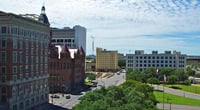
So when you visit Fort Worth, you can see the modern cityscape with many glass buildings alongside cowboy culture. On one side, there are large corporate buildings, and just a short distance away, you can see scenes of Longhorns walking through the streets as a tourist attraction.
In short, there was a time when hundreds of cattle stirred up dust as they passed through the plains, and the city that grew along that route is Fort Worth.




 ollege Mom |
 Helpful Life Stories |
 prixon74 |
 Balancework |
 Make My Day |
 Texas Migration Story |
 horse |
 jaxter |
 mariashin |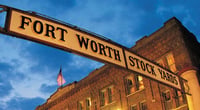
 MBTI Detective Agency |
  My Circle |
  novapixel |
  urban legend |
  coolriver |
  Good Neighborhood, Wealthy District Information |
  Ro Ro Car |
  Amber H |
  new sugar |
  Palm 1000 |
  loran |
  donutfield |
  Tennis City |
  sunny7 |
  Questions about firearms while living in America |
  Shoot Me |
  mochifox |
  zucchini |
  Anna Life |
  Exciting FM Radio |
  pet dog |