

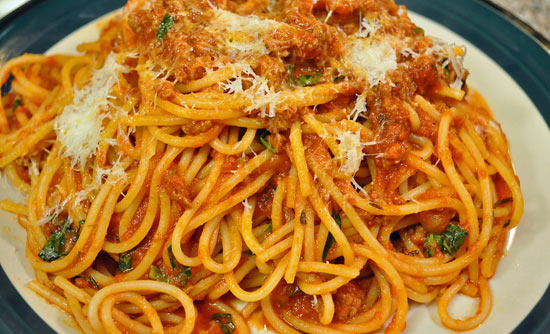
This spaghetti recipe, which I often make when I have time, has become a comfortable style after trying it a few times.
The ingredients are not complicated, and you can make it with what you have at home.
Just keep one key point in mind, and it will taste as good as what you get outside.
The base is olive oil. Tomato sauce is good, but this is the cleanest option for frequent cooking.
First, chop a generous amount of garlic. Slice the garlic thinly and sauté it slowly in olive oil.
Controlling the heat is important. If the heat is too high, the garlic will burn and taste bitter, so the key is to extract the aroma slowly over medium heat.
Once the garlic aroma starts to rise, add pepperoncino. This will enhance the flavor significantly.
If you like it spicy, you can add a bit more. Up to this point is the basic base. In fact, if you make this part well, you are already halfway to success.
Next, alternate between using bacon or shrimp. Adding bacon deepens the flavor, while shrimp gives a lighter and cleaner taste. For bacon, drain a little of the fat first, and for shrimp, it's important not to cook it for too long.
When boiling the pasta, be sure to add salt to the water, and it should be a bit saltier than you might think. This is how the pasta gets seasoned.
Typically, add about one tablespoon of salt for every liter of water.
Cook the pasta until it is slightly underdone before removing it. After all, it will be cooked a bit more in the pan later.
Now, here's the important step. Transfer the pasta directly to the pan and add about a ladle of pasta water as well.
This is the key. The starch in the pasta water helps the sauce and oil mix together naturally.
If you just add oil, it can separate, but adding pasta water makes it creamy and cohesive.
At this point, slightly increase the heat and mix quickly. Continuously toss the pasta to absorb the sauce.
If needed, add a little more pasta water. During this process, taste it. If it's lacking, you can add just a tiny bit of salt.
Finally, just before turning off the heat, sprinkle a little parsley or cheese. Be careful not to add too much cheese, as it can become heavy.
The great thing about this recipe is that the chance of failure is low.
If you get the garlic, olive oil, and pasta water right, it will generally taste good.
In the end, homemade pasta feels more convenient and delicious than what you get outside, which is the best part.
 CalorieGhost






 Karina's Blog |
 Texas Real Estate Blog |
 Seattle - Emerald City |
 Yahoo LALA |
 Ishiyoung Forever 208 |
 DelphiaMo |
 festive |
 American General Knowledge Expert |
 Pennsylvania Information News |
 werehere |
  problemo |
  galaxy88 |
  breezelove |
  Minnesota Sonata N |
  hazelnut |
  Korean News American Blog |
  AH LALA |
  Savion |
  pintos |
  Good Good |
  oh my salami |
  Lemonade Cider Planning Director |
  Way to easy |
  American Hardcore Band |
  Dala Dala |
  Pointy |
  Springs Korea |
  nixon |