
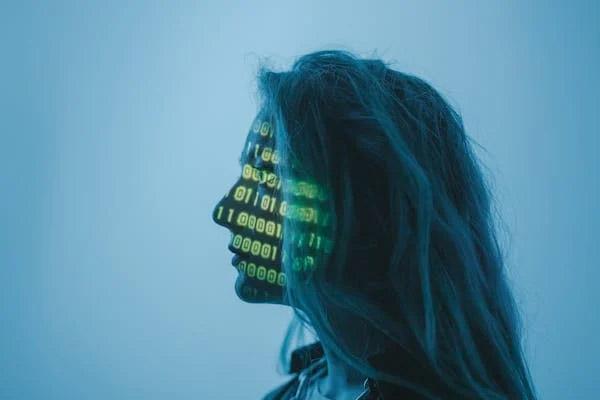
Binary is a system that represents numbers and information in two states: 0 and 1.
As the fundamental method for processing and storing data in modern computers, binary is highly efficient and powerful, but attempting a philosophical explanation of its limitations can lead to interesting discussions.
The limitations of binary can lead to profound questions about human existence and ways of thinking, going beyond mere mathematical constraints.
First, binary is a system that attempts to express everything using two values: 0 and 1. However, this system is limited in accurately representing everything, especially continuous phenomena.
For example, to express continuous and changing concepts such as color, temperature, and emotions in binary, they must be quantized into discrete values. In this process, subtle differences in information may be lost.
When expressing analog elements like color in binary, it is difficult to capture all the subtle differences accurately.
The limitations of such quantization raise important philosophical questions about how binary restrictively represents a continuous and complex world.
Second, binary is a very logical and mechanical system.
However, human thought possesses complexities and ambiguities that cannot be easily explained by binary.
Humans make decisions and develop thoughts based on emotions, intuition, and ambiguity.
Binary struggles to encapsulate these subjective and complex experiences.
Human experiences such as ethical dilemmas or artistic expressions have characteristics that are too complex and multilayered to be simply divided into 0 and 1.
This highlights the limitations of binary in adequately reflecting humanity, emotions, and the essence of existence.
Third, because binary divides information discretely, it has limitations in grasping continuity or organic relationships.
Human existence and experience possess very continuous and organic characteristics.
Emotions or thoughts exist as flows rather than being divided into fixed stages.
Binary views this flow as a disconnected state and attempts to distinguish the world into 0 and 1. This creates problems in adequately reflecting the complexity and interconnectedness of human experience.
This disconnection may be unsatisfactory from a philosophical perspective that values overall relatedness.
Fourth, while binary relies on logical structures and deterministic thinking, humans can think in non-binary or ambiguous ways.
For example, people often make decisions in uncertain and ambiguous situations known as 'gray zones.'
Binary finds it difficult to embrace such uncertainties. From a philosophical standpoint, this shows that concepts like 'truth' or 'existence' cannot simply be expressed as 0 and 1.
The depth and complexity of human existence encompass many aspects that binary cannot sufficiently explain.
This leads to issues such as 'the relativity of truth,' emphasizing the limitations of binary in encompassing human experience.
Ultimately, while binary is a technically efficient and powerful tool, it has limitations in fully capturing the depth of human existence and thought.
The simplified model of binary struggles to adequately reflect the complexity and diversity of human experience.
As beings who experience and understand the world through non-binary elements such as emotions, intuition, imagination, and ethical choices, we need thinking that transcends the limitations of binary.
From a philosophical perspective, the limitations of binary can serve as an important starting point for understanding the complexity of human existence and the depth of thought.







 Weekend Movie Blog |
 Beauty, Health, Lifestyle Blog |

 coloradoman |
 Superman Cat Blog |
 novapixel |
  Korean Mom |
  My NYC |
  moo moo |
  Mr Oh |
  forevergee |
  festival |
  manchester |
  constant |
  Leapfrog Move |
  vibranto |
  Tora Tora |
  yellowbutter |
  Dolly |
  US Embassy |
  NYC saladbar |
  Finding Superfoods |
  lightyear |
  song bang |
  vexomo |
  Indiana Jones |