
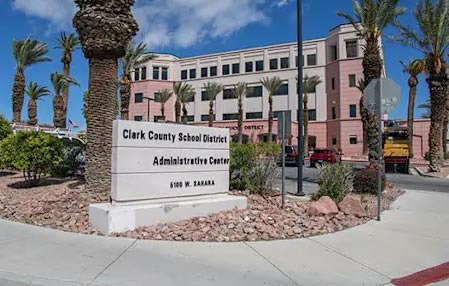
Public schools throughout Clark County, including Las Vegas, are governed by the Clark County School District (CCSD). CCSD is the fifth largest school district in the United States, serving over 300,000 students and employing more than 40,000 staff members. There are over 300 schools under its jurisdiction, consisting of elementary, middle, and high schools. The district headquarters is located at 5100 W. Sahara Ave., Las Vegas.
CCSD operates under a superintendent system led by Superintendent Jesus Jara, with a Board of Trustees consisting of seven members who determine educational policies. The academic performance of schools in the Las Vegas area is often rated somewhat lower than the national average; however, recent efforts have been made to enhance educational diversity and quality through the expansion of magnet schools and charter schools. Programs such as STEM-focused magnet programs, arts-specialized schools, and bilingual education programs are in place.
Property taxes in the Las Vegas area are levied according to Nevada state law. The property tax rate in Nevada is relatively low compared to other states in the U.S. The effective property tax rate in Clark County is approximately 0.5% of the assessed value for residential properties. Property taxes are based on the 'Assessed Value,' which is set at about 35% of the market value. Therefore, for a home with a market value of $500,000, the assessed value would be approximately $175,000, to which the tax rate is applied.
Nevada does not have a state income tax, but it has a relatively high sales tax rate. The sales tax rate in Clark County is about 8.375%. A portion of this tax goes to the state government, some to the county government, and some is allocated for special purposes such as school support. Gaming taxes from casinos and hotels also constitute a significant part of Nevada's tax revenue, contributing to the education budget.
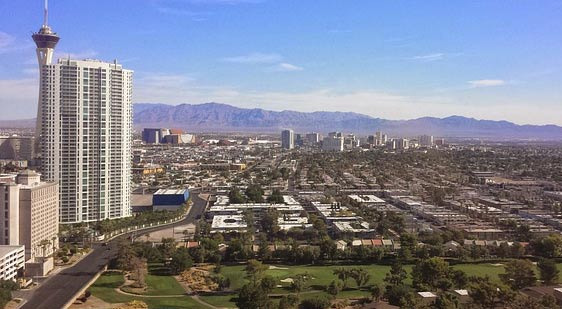
The annual budget for Clark County exceeds $6 billion. Major expenditures include public safety (police, fire), transportation infrastructure, social services, and parks and recreation. CCSD's annual budget is around $3 billion, a significant portion of which is spent on teacher salaries and school operating costs. Thanks to the structure where casino gaming revenue contributes to the school budget, Nevada has maintained relatively stable educational funding.
Homeowners in the Las Vegas area often bear HOA (Homeowners Association) fees in addition to property taxes. In planned communities such as Summerlin, Green Valley in Henderson, and Lake Las Vegas, HOA fees can range from $100 to several hundred dollars per month. HOAs provide services such as maintenance of common facilities, landscaping, and security. Since HOA regulations vary by community, it is important to check them carefully before moving in.
Additional educational expenses include costs for private schools or special programs to compensate for quality differences among school districts. The Las Vegas area offers various private school options, including Catholic, Lutheran, and non-religious private schools. The school districts in Henderson and Summerlin are known for having a high concentration of Korean students and are recognized for their relatively high academic achievement within CCSD.
The public university in the Las Vegas area is the University of Nevada, Las Vegas (UNLV). Located east of Las Vegas, UNLV is a large public university with over 30,000 students enrolled. Its Hospitality Management program is particularly renowned for its practical education linked to the tourism industry in Las Vegas. Additionally, the College of Southern Nevada (CSN) operates several campuses as a community college.
Property tax payments are processed through the Clark County Treasurer's Office. Property taxes are typically payable in two installments per year, with the first installment due in August and the second in January. Payments can be made online (clarkcountynv.gov), by mail, or in person. There is also a property tax exemption program for seniors, disabled individuals, and veterans, so those who qualify should check their eligibility.
Nevada's corporate tax environment is also relatively favorable. There is no corporate income tax, and no personal income tax, leading to a steady influx of businesses and individuals relocating from neighboring states like California and Arizona. However, a Commerce Tax was introduced in 2015, requiring businesses with total revenue exceeding $4 million to pay a tax at a certain rate. This tax structure in Las Vegas is an important consideration for those contemplating business expansion or relocation.
 Dream Box
 DharmaPlay







 Vacation on Hawaii |
 morvex37 |
 Ari Songhan American Immigration Life |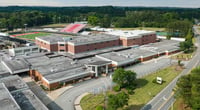
 Bearded Strawberry Smoothie |
 Heart Ticker |
 Anova US Beauty Information |
 US Legal Consultation on Trials |
 vegas mom |
 celion78 |
  vanilla |
  selvon |
  brownie |
  Star Blog |
  The Day the Sun Rises |
  sweetpop |
  California Kangaroo |
  zanero |
  station |
  Static |
  Star Way |
  American Blog Forge |
  MMORPG Games |
  Then you must be spring |
  Spicy Immigration Life |
  zenvor16 |
  The 2000 |
  toclick |
  wexlin84 |
  Hairy Poppins |