

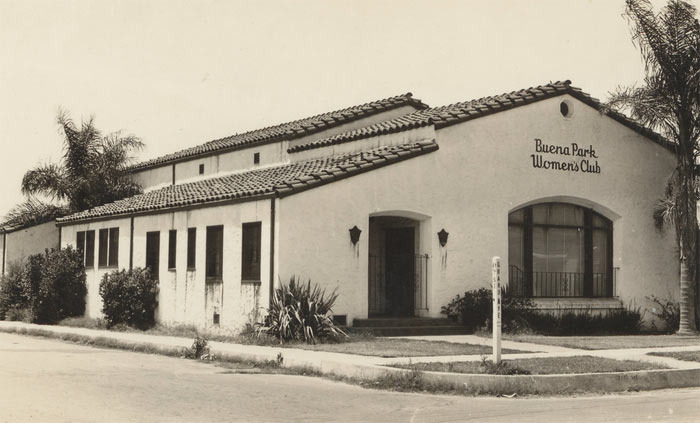
In the 1930s, Buena Park was literally a quiet town centered around agriculture.
Even what we know today as 'Knott's Berry Farm' was just a small farm run by a family, not an amusement park.
The main industries in Buena Park during the 1930s were berry farming and dairy farming. In particular, there were large farms around Buena Vista Street and Beach Blvd., and most residents made a living as family farmers.
The soil was fertile, and the weather was mild like today, allowing crops such as strawberries, blueberries, and raspberries to thrive. It was during this time that farmer Walter Knott and his wife Cordelia emerged.
In the early 1930s, Walter Knott began cultivating a new variety of berry called boysenberry on his farm. This unique fruit, a hybrid of raspberry, blackberry, and loganberry, became popular for its sweet yet tangy flavor.
This marked the beginning of what is now Knott's Berry Farm. At that time, Walter and Cordelia set up a small stand next to the farm to sell fresh berries and jams, and they also offered guests homemade chicken dinners. The popularity of this chicken dinner soared, leading people to line up at the farm to wait for it.
However, the 1930s were a time when the entire United States was under the shadow of the Great Depression. Southern California also faced a sharp rise in unemployment and a collapse in agricultural prices, causing many farms to struggle. Buena Park was no exception, but farmers like the Knott family creatively overcame the crisis and became the backbone of the local economy. People began to visit Knott's Farm not just to buy fruit, but as a picnic destination, and the town slowly regained its vitality.
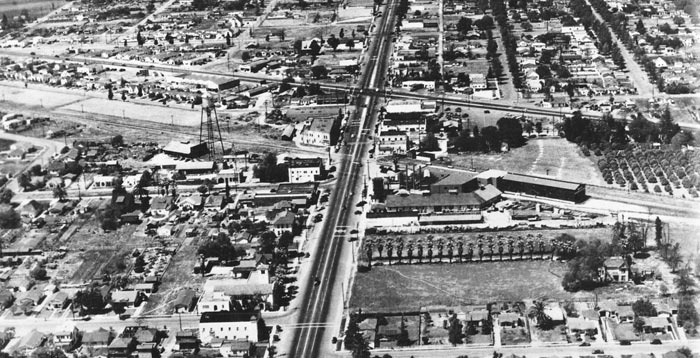
By the late 1930s, Buena Park developed into a transportation hub connecting Los Angeles and Anaheim. The Pacific Electric Railway, which opened in the late 1920s, passed near Buena Park, increasing the number of people traveling between the city and the suburbs. As a result, Buena Park occupied a unique position as a rural area connected to the city.
At that time, Buena Park did not have a large population. It was a small community of a few hundred households, and most residents knew each other. Churches, schools, and markets played central roles in the town, and on Sundays, produce exchanges took place in front of the church.
During the week, children played together in the schoolyard, and a warm community atmosphere was maintained where residents helped each other. There were no high-rise buildings or large shopping centers like today, but it was a time filled with neighborly affection.
As the late 1930s approached, the appearance of Buena Park began to change gradually. As California transitioned to a car-centered society, major roads like Beach Blvd. were expanded, and small housing developments began to emerge around the farms. However, the center of the town remained agriculture, and the Knott family's farm was seen as a symbol of hope for the people.
The success of Knott's Farm during this period inspired other farmers as well. It demonstrated the importance of creating a place with a story, rather than just selling crops. This pioneering spirit later contributed to the development of the area into an amusement park and the growth of Buena Park as an 'entertainment city.'
Today, Buena Park has grown into a city filled with Knott's Berry Farm, Disneyland, and various themed restaurants and shopping malls. However, if you trace its roots, the simple rural landscape of the 1930s and the story of families overcoming crises together still live on.





 moo moo |
 ultron78 |
 garlic bread |
 Sugar Cream Door Bulletproof Noodles |
 urbanmint |
 Pirate Ship Popcorn Maker |
 Total Beauty |
 Baguette Blog |
 California Information News |
 ROLDU WAY |
  dralix58 |
  Gorama Round |
  Skydiving |
  dreamport |
  Yellow Snowman |
  Toaster Pizza Magic Show |
  velvetnom |
  Anytime Journey |
  Mrs. Duluth |
  jaxter |
  Atlanta Mama |
  US Embassy |
  Korean Mom |
  My NYC |
  Mr Oh |
  forevergee |
  festival |
  manchester |