

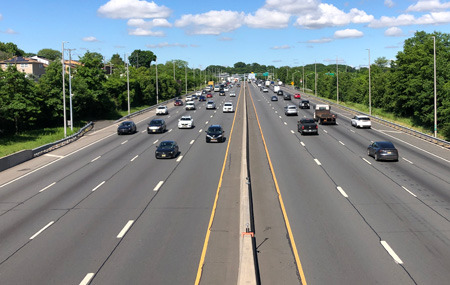
Living in New York State, it is very important to understand the laws related to drinking and driving.
Especially in Staten Island, where public transportation is less convenient compared to other boroughs of New York, there is a higher reliance on personal vehicles, which can expose residents to the temptation of driving after drinking. New York's drunk driving laws are very strict, and violations can lead to serious legal and social consequences, so it is essential to be informed in advance. This article will explore New York's DWI (Driving While Intoxicated) laws and penalties, as well as the drinking culture in Staten Island.
First, let's clarify some key terms related to drunk driving in New York State and the Blood Alcohol Concentration (BAC) standards. New York operates two main levels of violations. First, DWAI (Driving While Ability Impaired) applies when the BAC is between 0.05% and 0.07%, indicating a slight impairment in driving ability. Second, DWI (Driving While Intoxicated) applies when the BAC is 0.08% or higher, constituting a serious drunk driving offense. For commercial vehicle drivers, DWI applies at a BAC of 0.04% or higher, and for minors under 21, a BAC of 0.02% or higher results in penalties under the Zero Tolerance Law.
Looking at the penalties for DWAI, the first offense can result in a fine of up to $500, up to 15 days in jail, and a 90-day license suspension. For a first-time DWI offense, the penalties can include a fine of up to $1,000, up to 1 year in jail, and a license suspension of 6 months to 1 year. Aggravated DWI applies when the BAC is 0.18% or higher, and even for first-time offenders, it can result in a fine of up to $2,500, up to 1 year in jail, and a 1-year license suspension. For repeat offenders, penalties are significantly increased; a second offense within 10 years can classify the DWI as a felony, leading to a maximum of 4 years in prison, a fine of up to $5,000, and the possibility of a lengthy license revocation.
One important aspect to be particularly cautious about regarding drunk driving penalties in New York is the refusal to take a breath test. Under the "Implied Consent Law," which you implicitly agree to when obtaining a driver's license in New York, refusing a breath test when requested by the police incurs additional penalties. If you refuse the test, your license will be immediately suspended for 1 year, and you will face an additional fine of $500. Even if you refuse the test, you can still be charged with drunk driving based on other evidence (driving behavior, bloodshot eyes, slurred speech, etc.).
If you are convicted of drunk driving, there are not only immediate fines and jail time but also long-term and extensive consequences. First, your car insurance premiums will increase significantly, and some insurers may refuse to renew your policy altogether. During job applications, a drunk driving conviction may show up on a criminal background check, leading to disadvantages, especially in driving jobs or positions requiring specific licenses. Additionally, a drunk driving conviction can negatively impact immigration visas, permanent residency, and citizenship processes, so it is crucial for immigrants to be particularly cautious.
During the license suspension period, if you need to drive for essential purposes, you can apply for a Conditional License. A conditional license allows driving only for limited purposes such as commuting to work, medical visits, or attending educational institutions, and completion of a Drinking Driver Program (DDP) is a requirement. The DDP is a 7-week program offered by state-approved agencies that educates participants about the risks of drinking and driving. Completing the program may result in a reduction of the license suspension period.
In Staten Island, the drinking culture is similar to other New York boroughs, with social drinking common in pubs, bars, and restaurants. Due to the significant Italian and Irish populations in Staten Island, local pub and restaurant bar culture is well-developed. To legally purchase and consume alcohol in New York State, you must be at least 21 years old, and drinking in public places is generally prohibited. When buying alcohol in restaurants or bars, ID checks are strictly enforced, and using a fake ID can lead to separate legal consequences.
The best way to prevent drunk driving is to use a designated driver or public transportation. In Staten Island, ride-sharing services like Uber and Lyft are well-operated, so it is wise to use these services or designate a driver after drinking. The belief that walking a little or waiting a while will make you okay to drive is a very dangerous misconception. Just one mistake can threaten your life and the lives of others, leaving you with a permanent legal record. It is important to develop the habit of planning your return home safely in advance to ensure a pleasant gathering ends safely.
 PodongDad
 SmoothieRider
 vibecitybuilder1981
 BedIsSafe





 quanta7 |
 Helpful Life Stories |
 wendra |
 moonshine 7 |
 golfmaster |
  crystalo |
 lavender |

 Vivid Information US News |
 Belgray Miscellany |
  Round and Round Children's Song Kingdom |
  Mia Flori |
  nova nova |
  healthy |
  leaves |
  sparkling |
  maryland park |
  persiste |
  conte |
  blueman |
  Going Once |
  Eldorado 88 |
  cherrydino |
  garlic bread |
  middlekick |
  Moscow Kim |
  nivex85 |
  Tomato Health Club blog |
  horse |