
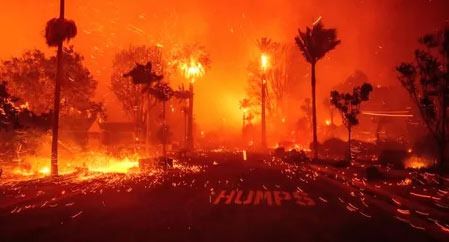
The LA fire spread uncontrollably due to natural climate characteristics, strong winds, dry vegetation, and high temperatures.
There is a need for measures as the unusual temperatures and repetitive patterns of heavy rain and drought caused by climate change are likely to lead to more wildfires in the future. Between 2022 and 2023, heavy rains caused rapid vegetation growth, but as the climate dried out again, this vegetation completely withered, becoming fuel for the wildfires.
In particular, management of vegetation in wildfire-prone areas, strengthening of wind response systems, and evacuation plans for residents are being emphasized.
The large wildfires in LA have left tremendous damage and remain a significant challenge for residents and authorities.
- Palisades Fire: This fire, which occurred west of LA, has burned 23,448 acres (about 95 km²) and is currently 68% contained.
- Eaton Fire: This fire, which occurred east of LA, has destroyed 14,021 acres (about 57 km²) and is 91% contained.
This fire has resulted in 28 deaths, the destruction or damage of 16,000 buildings, and approximately 180,000 people have been issued evacuation orders.
In particular, the private weather forecasting company AccuWeather estimates that the economic losses and damage from this fire could reach about $250 billion (approximately 360 trillion won). This figure includes the value of lost buildings, recovery costs, environmental restoration, and economic losses for residents, significantly impacting the local economy.
Authorities are working to completely extinguish the fire through the cooperation of firefighters and volunteers, while emphasizing ongoing warnings and safety measures for residents.
This large wildfire in the LA area is a representative case where natural factors and climatic characteristics combined to exacerbate the damage.
Key Factors Contributing to the Spread of Wildfires
Santa Ana Winds
- The Santa Ana winds, characterized by being easterly and continental, are very dry and strong winds that helped spread the fire significantly.
- While strong winds occur intermittently throughout the year, when they blow strongly at the onset of a wildfire, the situation can rapidly deteriorate.
Mediterranean Climate and Dry Environment
- The LA area is located at the intersection of Mediterranean and desert climates, experiencing dry weather frequently throughout the year.
- In particular, mild and clear weather persists even in winter, leading to dry air and vegetation, increasing the risk of wildfires.
Vegetation as Fuel
- Heavy rains between 2022 and 2023 caused rapid vegetation growth, but as the climate dried out again, this vegetation completely withered, becoming fuel for the wildfires.
- This environment, combined with strong winds, created conditions for the flames to spread rapidly.
High Temperatures
- Southern California often experiences daytime temperatures exceeding 40 degrees Celsius in the summer, leading to conditions where plants cannot survive and wither.
- These conditions are one of the main factors increasing the likelihood and spread rate of wildfires.
Damage in Densely Populated Areas
- This fire has particularly spread to residential areas in the densely populated LA metropolitan area.
- As the wildfire struck homes and infrastructure, the damage increased, along with recovery costs and time.







 Weekend Movie Blog |
 Beauty, Health, Lifestyle Blog |
 coloradoman |
 Superman Cat Blog |
 Awesome Blog |
  Finding Superfoods |
  lightyear |
  song bang |
  vexomo |
  Indiana Jones |
  meloncat |
  novapixel |
  mortrix |
  Esther 1983 |
  fortbliss |
  Moscow Kim |
  My Two Way |
  toastyfox |
  FLORIDA Acus |
  tracker |
  TONTON COFFEE |
  sunrise |
  ultron78 |
  uplifted |
  Folding Instructions |