
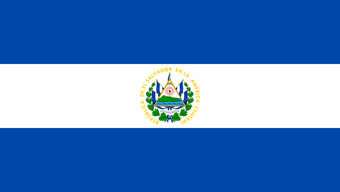
El Salvador is the smallest country in Central America, with a rich history and complex social background.
Ancient History: El Salvador has remnants and traditions related to the Maya civilization. In particular, the UNESCO World Heritage site Joya de Cerén is known as "the Pompeii of the Americas" and is an important place to glimpse the daily life of the Maya civilization.
Spanish Colonial Era: In 1524, Spanish explorer Pedro de Alvarado conquered the area that is now El Salvador. This region was under Spanish rule for about 300 years, developing an agriculture-based economy.
Independence: In 1821, El Salvador gained independence from Spain along with other Central American countries. It was declared a fully independent nation in 1841.
Modern History: In the 20th century, civil war (1980-1992) broke out due to economic disparity and political instability. The civil war resulted in approximately 75,000 deaths and ended with a peace agreement in 1992. Today, it maintains a democratic system, but issues with gangs and economic challenges persist.
Population of El Salvador
- Total population: approximately 6.5 million (as of 2025).
- Main city: The capital, San Salvador, is the largest city and a major economic and cultural center.
- Ethnic composition: The majority are mestizo (mixed European and indigenous descent, about 86%), with a small number of indigenous and European populations.
- Language: Spanish is the official language.
- Religion: Roman Catholicism is traditionally dominant, but the number of Protestant believers is increasing.
El Salvador is classified as a lower-middle-income country.
- GDP per capita: approximately $4,500-$5,000 (as of 2025, higher in PPP terms).
- Main economic industries: Coffee, sugar, textiles, and electronics exports are major industries, and recently, efforts have been made to promote Bitcoin policies and the tourism industry.
- Remittance dependence: Remittances sent by Salvadoran immigrants living abroad account for about 20% of GDP, serving as a primary source of income for many households.
- Poverty rate: About 25% of El Salvador's population lives below the poverty line, and economic inequality remains a significant issue.
El Salvador is a small country with unique charm, boasting beautiful beaches, active volcanoes, and rich culture. While there are security issues and economic challenges, President Nayib Bukele's strong reform policies and global Bitcoin experiments show potential for the future.






 Weekend Movie Blog |
 Beauty, Health, Lifestyle Blog |
 coloradoman |
 Superman Cat Blog |
 Noodle Noodle |
  Tonky |
  viroma |
  cookie |
  Live and that's it |
  Alright Twain |
  eatontown blog |
  HAWAII Korean Church News |
  Amore |
  linex |
  Balancework |
  laro90 |
  MEDBIO American Doctor Blog |
  SWAT TEAM BLK |
  DREAM BIG |
  frostbite |
  330 Forever My Love |
  El Dorado |
  dralix58 |
  Gorama Round |
  Skydiving |