

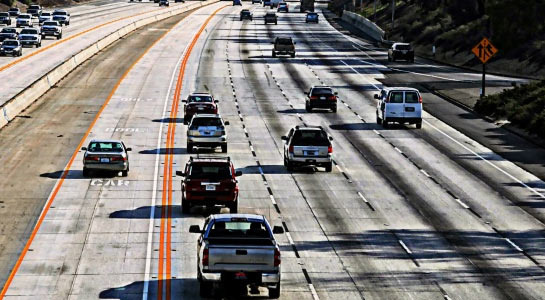
Having lived in Atlanta for over 10 years, I've taken countless long-distance drives.
Through this experience, I've learned what to prepare for and how to save money while driving long distances.
However, these days, I still see too many people leaving without any preparation.
They mindlessly fill up at expensive gas stations right off the highway, pay tolls in cash, and drive over 80 miles per hour.
Then they complain, "Why is gas so expensive?" It's not that it's expensive; it's that you're paying too much.
Based on data, here are ways to actually reduce long-distance driving costs in the U.S. as of 2026.
Is there anyone who doesn't use GasBuddy?This app helps you find the cheapest gas station based on your current location.
Don't use gas stations right next to the freeway. If you go just 5 minutes into the city, gas can be 30 to 50 cents cheaper per gallon. Over a long distance, this adds up significantly.
If you're a Costco member, always check Costco gas stations first. They're usually 15 to 20 cents cheaper per gallon. Also, the Upside app offers cashback, and it can be surprisingly rewarding. Once you install it, you'll benefit.
Be mindful of state lines. Gas taxes vary by state in the U.S.
For example, Illinois has high taxes while Iowa has low ones. Missouri is also quite affordable, comparable to Texas.
When planning your long-distance route, just deciding "which state to fill up in" can save you over $10 at a time.
Driving at 65 miles per hour is the optimal point for fuel efficiency. If you increase to 75 miles per hour, fuel consumption increases by over 10%. At 80 miles per hour or more, you might as well be pouring gas on the road.
Cruise control is not just a convenience feature. On flat highways, if traffic is light, always turn it on. Eliminating acceleration and deceleration can significantly improve fuel efficiency.
Check your tire pressure. It may seem tedious, but being just 5 PSI low can reduce fuel efficiency by 1 to 2%. Make it a habit to invest 5 minutes before a long trip to check your tire pressure.
There are still people who pay with cash or use Toll-By-Plate. Toll-By-Plate not only lacks discounts but also incurs additional fees. It's essentially a penalty. If you don't have E-ZPass, get one immediately. It's accepted in several states in the East, and one transponder applies discounted rates. If you're in the West, check the systems like FasTrak in each state. This is not optional; it's essential.
Also, use the "avoid tolls" option on Google Maps or Waze. If it takes an extra 10 to 15 minutes but saves you $5 to $15, that's a decision each person has to make. Personally, I would usually take the longer route.
As for a few minor saving tips, if your trunk is full of stuff, it decreases fuel efficiency. Remove unnecessary items.
These things may seem small individually. But when combined, they can lead to over $50 in savings on a round trip.
Long-distance driving in the U.S. is now about systems, not just instincts. Use apps, calculate routes, obey speed limits, and keep your E-ZPass handy. If this seems bothersome, you're just spending more money; if it's second nature, you'll save every time.
Even on the same road, some people spend $50 more. Is that difference due to skill or habit? I believe it's both.
 OkCafeCat





 Anjollinya Blog |
 Taco Seattle |
 Mr Song Song |
 Living Economy Information Blog |
 Blog Korea |
 Always Atlanta |
 moonshine 7 |
 Dingho and USA News |
 SPACE SHIP |
 Gimmi207 Blog |
  coloradoman |
  lumora |
  Valley Bang |
  pravix22 |
  Cohesive Kong |
  werehere |
  problemo |
  galaxy88 |
  breezelove |
  Minnesota Sonata N |
  hazelnut |
  Korean News American Blog |
  AH LALA |
  Savion |
  pintos |
  Good Good |
  oh my salami |
  Lemonade Cider Planning Director |
  Way to easy |