

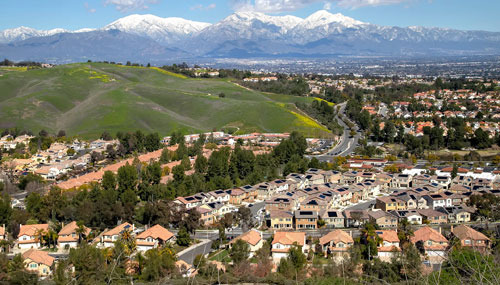
Chino has a mix of Hispanic, Asian, and White residents, making it less noticeable for immigrants and reducing the feeling of being an outsider.
Secondly, the cost of living is lower compared to LA. Housing, dining, and various service costs are cheaper than those in coastal cities of LA. Thirdly, there is a good educational infrastructure. The CVUSD schools are of decent quality, and there are educational options nearby such as Cal Poly Pomona, University of La Verne, and Chaffey College. Fourthly, there is easy access to nature. Prado Regional Park, Chino Hills State Park, and Big Bear Lake are all close by.
Now, let me honestly share some downsides. First, living without a car is really inconvenient. Public transportation is very limited.
Secondly, the summer heat can be intense. The inland climate is 10 to 15 degrees hotter than the LA coast, and it's hard to live without air conditioning.
Thirdly, the air quality is poor. Due to the characteristics of the Inland Empire, there are days with severe smog.
Fourthly, the density of Korean culture is low. The Korean community is smaller compared to Rowland Heights or Koreatown.
Someone recently sent me a DM sharing that if they had known the pros and cons before immigrating to Chino, their first six months would have been much easier. This is why information that combines data and real experiences is the most valuable.
Ah, yes, of course. There is no perfect place to immigrate. But knowing a bit about Chino beforehand makes it quite a decent choice.
 WinterCreate
 bluecloudexplorer2019
 Diadromes






 Agenda Center |
 Texas Migration Story |
 Moo Tang Clan |
 Peter Pan Pet |
 timemachine |
 Shoot Me |
 DREAM BIG |
 U.S. Weather Bureau News |
  Cap Com |
 Raccoon Ramen Night |
  There Are Such Things in the World |
  digital |
  Starry Eyes |
  Desert King |
  Texas Real Estate Blog |
  U.S. Retirement Pension Information |
  Seattle - Emerald City |
  Unknown Dog Walk blog |
  California Dreamer |
  Bearded Strawberry Smoothie |
  JESIKYEOALBA BLOG |
  Heart Ticker |
  Jellia Angel |
  Khan Film Blog Production |
  yenne |
  neroyo |