


To get straight to the point, the average rent for a 1-bedroom apartment in Chicago (Chicago, IL) is between $2,000 and $2,300.
Due to the significant regional variations typical of large cities, it is essential to look at neighborhood-specific prices rather than just relying on the average.
The rent difference between downtown (Loop, River North, Streeterville) and the outskirts is one of the most notable characteristics of Chicago. New high-rise 1-bedrooms in the Loop or River North often range from $2,600 to $3,000, while in the western or southern outskirts of Chicago, you can easily find listings in the $1,400 range. The gap between downtown and the outskirts can exceed $1,000, making neighborhood choice a crucial factor in your rental budget.
Studios are generally about $300 to $450 cheaper than 1-bedrooms, while 2-bedrooms are typically $400 to $600 more expensive than 1-bedrooms. Sharing a 2-bedroom with a roommate is a practical option that often helps reduce costs per person.
Looking at the rental trend over the past year, Chicago has shown a gradual upward trend. While it is not as steep as in New York or Los Angeles, the continued supply of new rentals downtown, coupled with steady demand, has resulted in annual increases of about 3-5%. Regionally, popular areas on the North Side tend to show relatively larger increases.
When compared to nearby cities, Chicago's position becomes clearer. Suburbs like Evanston or Oak Park are cheaper than downtown but are at a higher mid-range compared to the western outskirts of Chicago. Compared to other Midwestern cities like Milwaukee or Indianapolis, Chicago is distinctly higher, ranking among the top rental markets in the Midwest.
Areas with a high concentration of Korean residents include Albany Park (known as the Korean Town area around Lawrence Avenue) and the Arlington Heights commuting zone on the North Side. The rent for a 1-bedroom near Albany Park is around $1,500 to $1,700, which is significantly cheaper than downtown while also providing good access to Korean markets and restaurants, making it a preferred area for residents.
From the perspective of Korean households, if you consider both access to the Korean community and budget, it seems wise to prioritize Albany Park or the nearby Lawrence Avenue area. Conversely, if access to downtown workplaces is important, looking into relatively emerging development areas like the West Loop or South Loop could be a good option. Checking public transportation (CTA) routes can also help you find areas that satisfy both budget and commuting time.
In summary, Chicago is a large city market with significant rental variations by area, and it has shown a steady but gradual increase over the past year. Given the large gap between downtown and the outskirts, it is advisable to compare prices across multiple neighborhoods when checking actual listings.
 MagicSummit78
 Beer Man






 |
| 
 Premium Gas Camp |
 CA Real Estate |
 cheesepup |
 breezem |
 Rice Shop Uncle BLOG |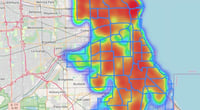

 Illinois Mom |
 Electricity Field Certification Collector |
 Illinois Park Sung-Soo Blog |
  U donn |
  Sarah's Blog |
  Holy Cow |
  monster |
  houston mama |
  Reggae Party |
  Thou Thou |
  Tennessee Land |
  custardnew |
  Chimhanbang Korea ACU |
  See South Carolina |
  dorex |
  Taek Jun |
  Choi Cho |
  Anova US Beauty Information |
  whiskerbread |
  Yo Lock Me Up |
  pecantop |
  self-evaluation |