

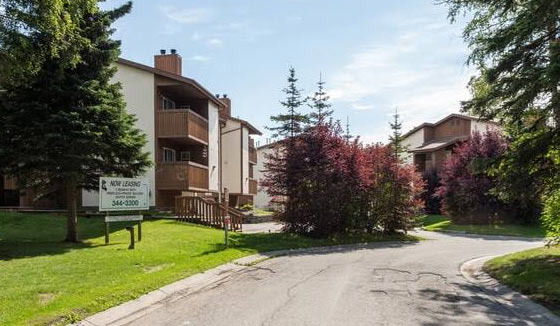
Alaska often moves differently from the market trends of the other 48 states.
With long winters and a low influx of new residents, supply and demand fluctuations are relatively mild, making it a region where the data can reveal clearer answers upon closer examination.
According to Zillow, as of May 2026, the median home price in Anchorage is around $428,000. This figure represents an increase of about 3.1% compared to the same period last year, indicating a steady upward trend. Rental data varies by source, but Zillow reports a median rent of $1,800 for all units, while Zumper lists it at $1,750, and for two-bedroom units, actual transactions are closer to around $1,550.
Calculating the Price-to-Rent Ratio with these figures gives us 428,000 divided by (1,550 times 12), which results in approximately 23.0. Generally, a ratio above 21 is interpreted as favoring renting, and Anchorage is slightly above that threshold. This can be read as an indication that renting is relatively cheaper compared to buying.
It's also important to compare the actual monthly payment burden. Assuming a 20% down payment and a 30-year fixed rate of 6.75%, the loan principal and interest would be about $2,221, and when property taxes and insurance are added, the total monthly amount rises to around $2,700.
Considering that a two-bedroom rental under the same conditions is around $1,550, this results in a difference of over $1,100 each month.
One should also consider the opportunity cost of putting the approximately $85,000 down payment into an index fund like the S&P 500.
Assuming an average annual return of 7%, this investment could generate significant returns each year, leading to a trend in recent years where choosing to rent and investing the difference has gained attention.
Compared to nearby areas, Anchorage is still relatively affordable compared to major West Coast cities like Seattle or Portland, but within Alaska, it is a major city with limited rental inventory. For Korean households, it seems stable to adapt to the area by renting for the first 1-2 years and then considering buying once school districts and job locations are confirmed.
In summary, since Anchorage's Price-to-Rent Ratio exceeds 21, it is judged to be a market leaning towards renting in the short term. However, given that inventory in Alaska is often limited, households that are certain about long-term residency should also consider not delaying their buying timing too much.
 SunFullJoy
 FungusLegend







 |
| 
 Premium Gas Camp |
 CA Real Estate |
 cheesepup |
 breezem |
 AL ALASKA |
 Sunny's Travel in America |
 Alaska Kim |

 Jelly Planet |
  Sammy Beach |
  Bliss O |
  blue ocean |
  greenlight |
  Watanaka Karametibaksa |
  castle |
  xelton52 |
  carefree |
  vrixen73 |
  AZ Road Master |
  Victory 1988 |
  summita |
  business lim |
  Colorado Lee |
  Make My Day |
  Fros Pro |
  lioness |
  La Bean |
  American History This and That |
  Monte Sori |