

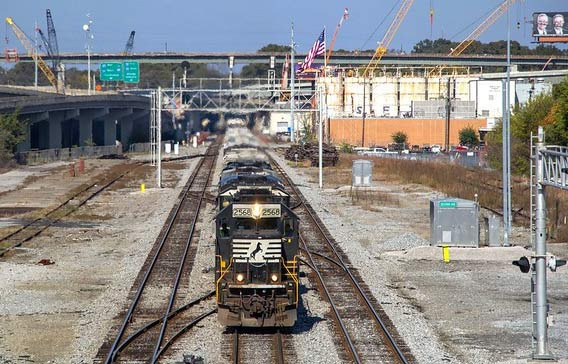
Birmingham has an interesting name, derived from the British steel city of Birmingham, and while the spelling is the same, it is pronounced "Birmingham". Locally, it is often simply referred to as "B-Ham".
Birmingham rapidly grew in the late 19th century alongside the steel industry. Alabama had all three major resources for steel—iron ore, coal, and limestone—located close together, making it an ideal location for industrial development. At one point, it was even nicknamed "The Pittsburgh of the South". Until the mid-20th century, the steel industry supported the city's economy, and during this time, Birmingham established itself as the largest city in Alabama.
However, as the industrial structure changed, the steel industry declined, and population outflow followed. In recent decades, it has fallen behind Huntsville and Montgomery in population rankings, but when including the Birmingham metropolitan area, it still has the largest population. Particularly, the Birmingham metropolitan area, which includes surrounding cities like Hoover, Bessemer, and Mountain Brook, is like the heart of Alabama's economy. To compare this structure in a Korean context, the city of Birmingham itself is akin to the jurisdiction of Seoul City Hall, while the surrounding cities play roles similar to the 'districts' of Seoul.
Today, Birmingham has transformed into a hub for healthcare, finance, and education. Notably, the University of Alabama at Birmingham (UAB) operates a world-renowned medical school and hospital, attracting many patients and researchers. Economically, the healthcare and bio industries have filled the void left by the steel industry. As a result, Birmingham is still regarded as the most modern city in Alabama.
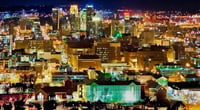
Looking at the city's landscape, it boasts an impressive skyline, being home to the most skyscrapers in Alabama. The mix of historic buildings and modern structures showcases both the "old industrial city of the South" and the "new economic center". Notably, downtown features the Civic Center, Regions Field (baseball stadium), and football stadiums, which are places that convey the city's vibrancy.
Another important aspect is that Birmingham was one of the centers of the American civil rights movement. In the 1960s, many citizens, including Martin Luther King Jr., fought against racial discrimination, and the historical traces of this struggle remain in museums and memorials today. Thus, Birmingham is not just an industrial city but also an important stage in the history of American democracy and human rights.
From a living perspective, Birmingham, as a large city, offers a variety of amenities and cultural spaces while maintaining relatively low living costs. Housing prices and the cost of living are much lower compared to major cities like New York or California, making it an attractive place for families or retirees seeking a stable life. The warm climate and friendly people typical of the South are also advantages. Just a short distance from the city center, green mountains, forests, and parks provide a great setting for a relaxing weekend.
Birmingham is a city that is re-emerging in healthcare, finance, and education. Historically, it was a stage for the civil rights movement, and now it continues to play a central role in Alabama's economy and culture as the largest metropolitan area. Therefore, even though it has fallen in population rankings, the reason Birmingham cannot be overlooked when discussing Alabama is clear.




 ultron78 |
 garlic bread |
 Sugar Cream Door Bulletproof Noodles |
 urbanmint |
 |
| 
 Information on All Regions of the United States |
  Alabama Bang |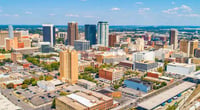


 Skyline |
  Korean Mom |
  My NYC |
  moo moo |
  Mr Oh |
  forevergee |
  festival |
  manchester |
  constant |
  Leapfrog Move |
  vibranto |
  Tora Tora |
  yellowbutter |
  Dolly |
  US Embassy |
  NYC saladbar |
  Finding Superfoods |
  lightyear |
  song bang |
  vexomo |
  Indiana Jones |