

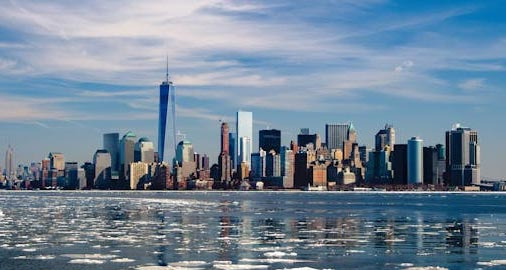
The Hudson River is an important river that runs through New York State, starting from a small lake in the northern Adirondack Mountains and flowing south through New York before ultimately reaching the Atlantic Ocean.
The river's name comes from the English explorer Henry Hudson, who explored this river in 1609 and played a significant role in the exploration of the North American continent. Named after him, this river was an important transportation route at the time and is still considered a vital physical and economic resource for New York City and its surrounding areas today.
The main points in time when the Hudson River actually froze are primarily records from the early 19th century and earlier.
Here are some important historical events related to the Hudson River.
1779: During the American Revolutionary War, there is a record of the Hudson River completely freezing over. At that time, American and British armies were fighting each other, and the river froze, allowing troops to cross over the ice. This was a very rare occurrence and shocked people at the time.
Early 19th century: In the early 1800s, the Hudson River often froze during winter. There were recorded cold winters in New York, and that year, thick ice allowed boats to travel over the ice. While this was not common for people at the time, crossing the frozen Hudson River was often witnessed during winter.
The Great Blizzard of 1888: There is also a record of the Hudson River freezing during the Great Blizzard of 1888. This blizzard hit the eastern United States and New York City, causing the ice on the river to thicken, allowing people and animals to cross the river.
Incidents of the Hudson River freezing occurred during very cold winters over a century ago, and due to climate change as we know it today, such events are unlikely to happen again. In recent decades, the Hudson River has rarely frozen.
The likelihood of the Hudson River freezing in the future winters is very low. There are several reasons for this:
Climate change: In recent decades, winter temperatures have risen due to climate change. In the past, it was common for the Hudson River to freeze every winter, but now, as average temperatures have increased, such occurrences have become rare. As warming progresses, winter temperatures often do not drop low enough for the river to freeze.
Urbanization and the heat island effect: New York City and its surrounding areas are highly urbanized, leading to a strong heat island effect. This results in relatively higher temperatures during winter compared to other areas, making it even less likely for the Hudson River to freeze.
Characteristics of the Hudson River: The Hudson River is shallow and wide, so it requires significantly low temperatures to freeze. Generally, the air temperature must drop below -10 degrees Celsius for the river to freeze, but winter temperatures in the New York area are gradually not reaching such lows.
Of course, in very cold years, some sections may freeze, but overall, it is expected that the Hudson River will almost never freeze completely in the future.







 lightyear |
 Moscow Kim |
 coloradoman |
 Montgomery Mom |
 GOGO SING |
 newyorker 101 |
 Things to Do to Buy a House |
 U.S. Weather Bureau News |
 International Court |
 Lunch and Dinner Mexican Taco |
  dralix58 |
  Gorama Round |
  Skydiving |
  dreamport |
  Yellow Snowman |
  Toaster Pizza Magic Show |
  velvetnom |
  Anytime Journey |
  Mrs. Duluth |
  jaxter |
  Atlanta Mama |
  Baguette Blog |
  US Embassy |
  Korean Mom |
  My NYC |
  moo moo |
  Mr Oh |
  forevergee |
  festival |
  manchester |