

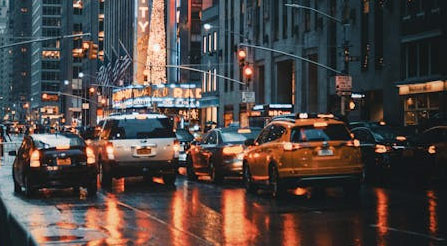
Rain is frequent in spring, summer is hot and humid, autumn is cool, and winter tends to have a lot of snow.
The average monthly precipitation shows that January has about 3.6 inches (91mm), February has 3.1 inches (79mm), March has 4.4 inches (112mm), April has 4.5 inches (114mm), May has 4.3 inches (109mm), June has 4.4 inches (112mm), July has 4.6 inches (117mm), August has 4.4 inches (112mm), September has 4.3 inches (109mm), October has 4.4 inches (112mm), November has 4.0 inches (102mm), and December has 3.8 inches (97mm), showing that there is not much variation in precipitation from month to month.
The weather in New York can be predictable yet capricious. Rain falls often, but it does not last long like a monsoon, and it usually comes in brief bursts throughout the day. Thanks to this climate, the parks and trees throughout the city maintain their vitality all year round.
However, New York experiences different natural disasters in each season. In winter, heavy snowfall and cold waves are typical. The 'Jonas Storm' that occurred in January 2016 is recorded as one of the most severe snowstorms in New York City history, with a staggering 27.5 inches, about 70cm, of snow falling. At that time, roads were paralyzed, numerous vehicles were trapped, and schools and shops closed, bringing the entire city to a standstill.
Winter in New York is romantic, but excessive snowfall can lead to practical inconveniences. Conversely, summer brings issues of heat waves and high humidity. Especially in July and August, days often see a perceived temperature exceeding 35 degrees Celsius. Due to the concrete and glass urban structure, the 'heat island effect' intensifies, making it feel even hotter.
In residences without air conditioning, dangerous levels of heat can accumulate, prompting the city to operate cooling shelters every summer. Another risk is hurricanes. While not as frequent as in the South, New York can be affected anytime between June and November during the Atlantic hurricane season.
Hurricane Sandy in 2012 is a prime example. Sandy, which struck New York, left about $19 billion in damages, causing flooding and power outages throughout the city. Coastal areas and low-lying neighborhoods suffered significant damage. Following that experience, New York City strengthened its flood prevention systems and expanded waterproofing facilities at subway entrances to enhance disaster preparedness.
Flooding can occur not only from hurricanes but also from heavy rainfall. Low-lying areas in Manhattan, Brooklyn, and Queens can experience water accumulation during heavy rains due to poor drainage. Especially when combined with rising sea levels, this can lead to significant damage. Meanwhile, during summer, intermittent thunderstorms and tornadoes are rarely reported. In 2010, an EF-1 tornado occurred in Queens, uprooting trees and damaging vehicles.
New Yorkers have thorough safety guidelines in place to prepare for these various weather situations. Residents in flood-prone areas check emergency evacuation routes and high-ground shelters in advance, and when a heat wave is expected, they utilize public shelters with air conditioning. In winter, they prepare vehicle chains and snow removal equipment, and try to avoid going out when heavy snow falls.
During hurricane season, it is standard to prepare emergency kits with food, water, and medications, and to follow evacuation orders from city authorities immediately. New York State experiences distinct seasonal changes, with rain, snow, and wind all present, but the city's infrastructure evolves accordingly.







 fortbliss |
 Folding Instructions |
 yentra |
 Cali M Law Group |
 quanta7 |
 newyorker 101 |
 Things to Do to Buy a House |
 International Court |
 U.S. Weather Bureau News |
 Lunch and Dinner Mexican Taco |
  Korean Mom |
  My NYC |
  moo moo |
  Mr Oh |
  forevergee |
  festival |
  manchester |
  constant |
  Leapfrog Move |
  vibranto |
  Tora Tora |
  yellowbutter |
  Dolly |
  US Embassy |
  NYC saladbar |
  Finding Superfoods |
  lightyear |
  song bang |
  vexomo |
  Indiana Jones |