

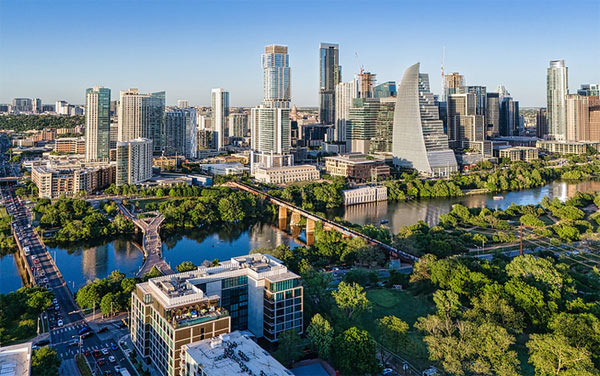
As of 2026, the Austin downtown commercial real estate market can be described as undergoing a transformation during a correction phase.
With large corporations and startups flocking in, we have moved past a period of skyrocketing prices to a stage where only truly competitive assets are surviving. It is no longer a feeling of indiscriminate increases; it is becoming clear which assets are thriving and which are being phased out.
The current keyword for Austin downtown is just one: "Quality Focus."
Recently completed office buildings like The Republic and 6 X Guadalupe are filling up faster than expected. As companies begin to call employees back to the office, they are looking for spaces that are not just simple workspaces but rather 'spaces that make you want to come to work,' equipped with gyms, lounges, rooftops, and fine dining.
Conversely, older office buildings constructed in the 1990s and early 2000s are seeing a noticeable increase in vacancies. Among developers these days, discussions about converting these buildings into residential condos or hotels are quite common. The office market has now completely split into A-class and the rest.
Downtown retail and hotels, on the other hand, are thriving. While the office market is in a correction phase, the retail and hotel sectors are experiencing a boom.
Where Rainy Street and Sixth Street used to be primarily bars, now luxury brands are entering the core commercial areas of downtown, extending beyond SoCo. This indicates that the income level of Austin households has risen significantly, and global brands are taking this market very seriously.
The hotel development is also tremendous. With events like SXSW, ACL, and various tech conferences...
Austin has now become a city that is permanently on the global event calendar, and high-end hotel brands are reimagining the downtown skyline in response to this trend.
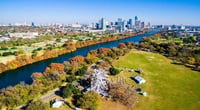
Currently, the most significant changes in Austin commercial real estate are around Rainey Street and Lady Bird Lake. Once lined with small bars converted from houses, Rainey Street has now become a forest of high-rise mixed-use buildings. The standard model has become a structure that maximizes land value, with commercial facilities below and offices and condos above.
The waterfront commercial land along Lady Bird Lake is now the most expensive land in Austin. According to the city government's waterfront development guidelines, this area will continue to upscale in the future.
In 2026, the three key points that investors are most sensitive to in Austin commercial real estate are:
First, interest rates and refinancing issues. Buildings purchased during the low-interest period are gradually coming onto the market as they face high-interest refinancing. This process is creating opportunities for price adjustments.
Second, the Project Connect light rail line. Areas with confirmed routes will see commercial real estate prices become entirely different markets.
Third, the Tesla and Samsung effect. As manufacturing facilities grow in the outskirts, the demand for professional jobs and commercial needs in downtown will increase.
Currently, the Austin downtown commercial real estate market is not one that is rising indiscriminately but rather one of selection and reorganization.
While there are concerns about oversupply, the influx of young populations, business-friendly environment, and growth in tech and manufacturing remain among the best in the U.S.
Thus, we are in a period of adjustment and leap. Only those who can read this period correctly will reap the benefits in the next cycle.
The Austin skyline seems to be quietly, yet very rapidly, being redrawn even at this moment.
Real estate is a battle against time and oneself. I hope those involved in Austin real estate do well in 2026.



 ultron78 |
 garlic bread |
 Sugar Cream Door Bulletproof Noodles |
 urbanmint |
 |
| 
 |
| 
 U.S. Weather Bureau News |
 Living with a Consistent Heart |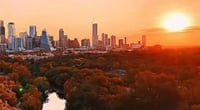
 quanta7 |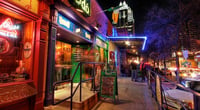
 Dallas Fort Worth DFW |
  Korean Mom |
  My NYC |
  moo moo |
  Mr Oh |
  forevergee |
  festival |
  manchester |
  constant |
  Leapfrog Move |
  vibranto |
  Tora Tora |
  yellowbutter |
  Dolly |
  US Embassy |
  NYC saladbar |
  Finding Superfoods |
  lightyear |
  song bang |
  vexomo |
  Indiana Jones |