

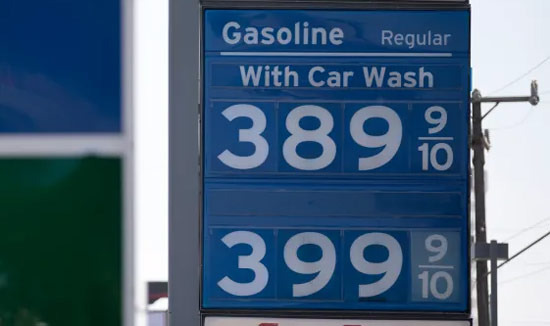
Texas is known for having low gas prices. People often drive large SUVs and pickup trucks like the F 150 because gas is cheap.
However, just a month ago, the regular price at the gas station near my house was $2.70, and today it was $3.89.
In just one month, the price has risen over $1 per gallon.
Having lived in Texas for over ten years, I've seen gas prices fluctuate many times.
But this time, the speed of the increase is different. Just a week ago, it was $3.35, and now it's $3.89. It doesn't seem to be stopping. That's the problem.
As of March 2026, the average regular price in Austin is about $3.70 per gallon, while premium is around $4.40.Austin's average price timeline:
- One month ago: about $2.55
- One week ago: $3.21
- Currently: $3.66
That's a 43% increase in just a month. If a stock dropped 43% in a month, it would make headlines.
But when gas prices rise by 43%, it quietly disappears from our wallets.
This increase is not due to domestic supply issues. The key factor is the Strait of Hormuz.About 20% of the world's oil exports pass through this strait. As tensions with Iran have escalated, market fears about supply have already been reflected in prices.
In reality, supply hasn't been blocked. The scenario of "it could be blocked" has driven prices up.
Texas is a major oil-producing state, so it might seem like "self-sufficient, so prices shouldn't be affected, right?"
However, even if oil is produced in Texas, it is traded based on international oil prices.
This means that if there are conflicts in the Middle East or supply uncertainties, Texas oil is equally affected.
Ultimately, Texas is a production site, but prices are tied to the global market.
This is why the energy market is scary. Expectations often move faster than reality. Traders price in risks ahead of time.
Experts say there is a "possibility of maintaining high prices for the time being." Translated, this means "no one knows if this is the peak."
People in California might read this and say, "$3.89 is cheap." They wouldn't be wrong.But the standards are different. For someone who experienced $2.55 a month ago, $3.66 is not cheap.
The comparison isn't with California; it's with my wallet from a month ago.
To explain for those unfamiliar with life in Austin, a round trip commute is typically 30-40 miles.
When you add grocery shopping, picking up kids, and weekend travel, the weekly driving distance adds up quickly.
Public transportation is virtually non-existent. A car is not a choice but a necessary infrastructure.
Honestly, my driving habits have changed lately. I'm reducing unnecessary trips, avoiding rapid acceleration, and calculating fuel efficiency.
I never thought I would have these thoughts while living in Texas.
There has been a noticeable increase in discussions about electric vehicles. Things are different now. It's purely a TCO (Total Cost of Ownership) calculation.
The realistic question is, "With gas prices like this, isn't the monthly charging cost of an electric vehicle cheaper?" This could truly trigger the mainstream adoption of EVs.
International affairs always translate into living costs. Understanding this is essential for properly viewing energy policy.
We still don't know where the peak is. But one thing is certain.
The days of filling up gas in Texas without a second thought are long gone.







 Lol Life |
 lavender |
 logger |
 Conflite Teacher |
 Unknown Dog Walk blog |
 Living with a Consistent Heart |
 Dallas Fort Worth DFW |
 lumix88 |

 Various Knowledge and Information in the USA |
  There Are Such Things in the World |
  Mazinger Z Rocket Punch |
  celtics |
  shinee cho |
  Kondae Garusong Blog |
  quiet river |
  alamo |
  Waiting for Godot |
  parlon |
  Say Yes in English |
  Sayonara H |
  rigid |
  Ohio Ohayoung Hello |
  U.S. Military Recruitment Information |
  You Turn Me On |
  DaeBak Electronics CNET |
  Anjollinya Blog |
  solid90 |
  elion |