

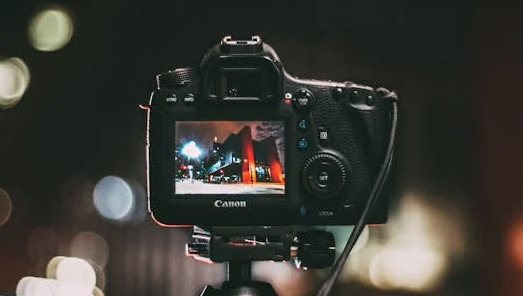
Digital cameras have significantly changed the flow of photography culture and technology since their birth. We now live in an era where anyone can easily take and share photos, but within that lies decades of accumulated advancements and intriguing future prospects. Today, we will take a step-by-step look at the history of digital cameras and their future outlook.
The origin of digital cameras dates back to 1975 when Kodak engineer Steven Sasson created a prototype. At that time, it was only capable of recording black-and-white photos using a CCD (Charge Coupled Device) sensor, and both the data recording storage and resolution had limitations. From the mid-1980s, commercialization slowly progressed, but the market share was minimal as film cameras were still overwhelmingly popular.
In the 1990s, digital cameras began to gain significant attention. Products like Apple's QuickTake and Casio's QV-10 emerged at price points and usability that were accessible to the average consumer. Of course, by today's standards, the resolution was low, and the image quality and battery life were not satisfactory, but the ability to take photos without film and check them immediately was revolutionary.
From the early 2000s, advancements in sensors, displays, and storage media (such as memory cards) rapidly improved the performance of digital cameras. Among them, DSLR (Digital Single Lens Reflex) cameras gained explosive popularity among both professionals and serious photography enthusiasts, boasting advantages like image quality, convenience of interchangeable lenses, and various manual settings. Companies like Canon and Nikon began to compete vigorously in the DSLR market, leading to a flood of high-spec products, enriching the overall photography culture during this period.
During the dominance of DSLRs, companies like Sony, Panasonic, and Olympus began to introduce mirrorless cameras. The absence of a mirror mechanism made them small and lightweight while still allowing for interchangeable lenses, which was appealing. Although early models had shortcomings in shooting speed, battery efficiency, and lens lineup, as time passed, technology improved, and mirrorless cameras have now established themselves as alternatives to DSLRs for many people.
Competition with Smartphone Cameras
As smartphones advanced, many people began to choose portable phone cameras for everyday and travel photography. Especially with the remarkable advancements in AI-based processing and multi-camera modules integrated into smartphones, more individuals started to wonder, "Is a digital camera really necessary?"
As smartphones became widespread, the compact camera market significantly shrank. However, the high pixel count, large sensors, and the possibility of interchangeable lenses remain advantages that regular smartphone cameras cannot easily match, ensuring steady demand for mirrorless and high-end cameras.
Future Outlook
The mirrorless market is expected to continue growing. Brands are introducing models with more diverse lens lineups, improved burst speeds, and video performance. The adoption of mirrorless cameras in professional shooting environments is also on the rise.
Not only is enhancing mechanical performance important, but software corrections and AI features are becoming increasingly significant. Various AI-based functions such as focus tracking, noise reduction, HDR processing, face recognition, and eye detection will be key factors in future camera performance.
To differentiate from smartphones, digital cameras are likely to evolve in a more high-spec and specialized direction. High-quality video capabilities, large format sensors, and unique depth expression are representative examples. This will allow for a continuous acquisition of users who wish to utilize photography and video for artistic or professional purposes.
In the future, cameras are expected to evolve into hybrid forms that connect with various platforms, incorporating wireless communication features and real-time streaming capabilities rather than being standalone devices. Content creation, editing, and sharing will become more convenient, and features specialized for video creators and individual media will increase.
In summary, digital cameras have continuously innovated from their inception to the present and will continue to develop in a direction that secures professionalism and convenience that does not lag behind smartphones. While in the past, the 'film camera' was all about capturing a photo with a single shutter, now 'digital cameras' with high quality, high functionality, and creative usability seem to have deeply embedded themselves in our daily lives and culture. We look forward to what new technologies will emerge to lead photography culture in the future.







 Korean Mom |
 novapixel |
 Peter Pan Pet |
 horse |
 Sunset Oregon |
 Things to know |
 U.S. Weather Bureau News |
 Texas Real Estate Blog |
 Premium Gas Camp |
 Texas Migration Story |
  Tonky |
  viroma |
  cookie |
  Live and that's it |
  Alright Twain |
  eatontown blog |
  HAWAII Korean Church News |
  Amore |
  linex |
  Balancework |
  laro90 |
  MEDBIO American Doctor Blog |
  SWAT TEAM BLK |
  DREAM BIG |
  frostbite |
  330 Forever My Love |
  El Dorado |
  dralix58 |
  Gorama Round |
  Skydiving |