

Before you start looking at homes, the first steps you need to take are prequalification and pre-approval. In order, there are three main steps. First, you provide your income, debt, and credit score to the lender to get an estimate of how much you can borrow through prequalification. Second, you submit documents to get a definitive amount you can borrow through pre-approval. Third, you take this approval letter to make an offer. If you skip this process and start looking at homes first, you may find yourself at a disadvantage in a competitive offer situation, even if you find a home you love.
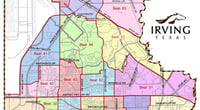
If you are a first-time homebuyer in Irving, it's important to check the price range first. According to Redfin, the median sales price for the three months leading up to May was $383,000, which is a 1.9% decrease from the previous year. Compared to Dallas or Plano, Irving has a lower entry barrier while still offering good access to downtown Dallas and DFW Airport, making it a consistently popular area for Korean families.
When deciding on the type of loan, here are the factors to consider. An FHA loan requires a credit score of 580 or higher for a 3.5% down payment, and if your score is between 500 and 579, a 10% down payment is needed. Conventional loans can start at 3% if you are a first-time homebuyer or have an income at or below 80% of the area median income, but typically, most people prepare around 5%. Remember that if your down payment exceeds 20%, you can avoid PMI, which is mortgage insurance.
Next to your credit score, you should also pay attention to your DTI, or debt-to-income ratio. This is the percentage of your income that goes towards your monthly debts, including the new mortgage principal and interest. The lower this ratio, the more favorable your pre-approval limit will be. If you have credit card debt or car loans, it's beneficial to pay those down before applying for approval.
It's also important to note that Texas has no income tax, but property tax rates are relatively high. The effective tax rate is around 1.6%, so for a home priced at $380,000, you should expect to pay over $6,000 annually in property taxes. Families moving from other states may overlook this when calculating their monthly payments, so it's wise to consider this in advance.
Lastly, check for first-time homebuyer assistance programs. The Texas Department of Housing and Community Affairs offers the My First Texas Home program, which provides up to 5% of the down payment as a grant or second lien, but requires a credit score of 620 or higher and completion of HUD-approved homebuyer education. You should also prepare for closing costs, which typically range from 2% to 5% of the loan amount, so it's a good idea to ask your loan officer for an estimate during the pre-approval stage.
Another item to check is the process after making an offer. You'll need to keep track of the timing for locking in your interest rate while going through the appraisal and home inspection. If the appraisal comes in lower than the contract price, you may need to cover the difference in cash or renegotiate, so it's wise to budget for this possibility.
If you're considering a condo or townhome, be sure to include HOA fees in your checklist. These fees can vary significantly between properties, and if you overlook them when calculating your monthly payments, your actual cost of living may be higher than expected.
Since different lenders offer varying rates and fee structures, it's a good idea to get quotes from at least two or three places for comparison.
It's also helpful to note that the process from pre-approval to closing typically takes about one to one and a half months. During this time, you'll be preparing documents and going through the appraisal and inspection in sequence.
Refer to GreatSchools ratings for school districts, but keep in mind that boundaries can change frequently, so be sure to verify the assigned school before purchasing. Tax and loan conditions can vary by county. This is not investment or legal advice, and it's recommended to consult with a professional before finalizing any contracts.
 RapidValley98
 Dyno
Dyno







 moo moo |
 ultron78 |
 garlic bread |
 Sugar Cream Door Bulletproof Noodles |
 urbanmint |
 TOUCHE NEWS |

 Waiting for Godot |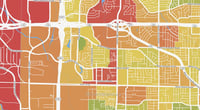
 yorvik12 |
 wexlin84 |
  My Circle |
  novapixel |
  urban legend |
  coolriver |
  Good Neighborhood, Wealthy District Information |
  Ro Ro Car |
  Amber H |
  new sugar |
  Palm 1000 |
  loran |
  donutfield |
  Tennis City |
  sunny7 |
  Questions about firearms while living in America |
  Shoot Me |
  mochifox |
  zucchini |
  Anna Life |
  Exciting FM Radio |
  pet dog |