

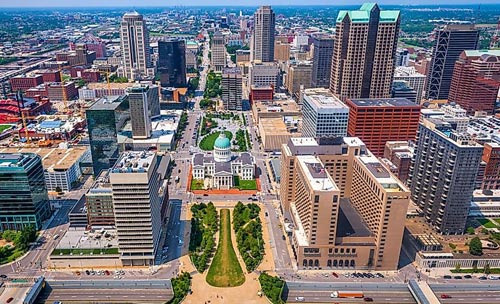
St. Louis has long served as an important economic hub in the Midwestern United States.
In the 19th century, it was a center for logistics and trade via the Mississippi River, and in the 20th century, it evolved into a manufacturing and aerospace industry powerhouse. Today, the economy of St. Louis spans various sectors, including healthcare and biotech, finance, education, logistics, and the agricultural food industry. Let's take a look at the economic structure of St. Louis by major industries.
The healthcare and biotech sector is one of the most significant pillars of the St. Louis economy. St. Louis is home to major healthcare and biotech companies such as Corteva, Monsanto (now Bayer Crop Science), BJC Healthcare, and SSM Health. Notably, Monsanto's headquarters was located in Creve Coeur, a suburb of St. Louis, and even after being acquired by the German pharmaceutical and chemical company Bayer AG in 2018, it continues to maintain a vital research and development presence. BJC Healthcare is one of the largest nonprofit hospital systems in the U.S., employing tens of thousands in the St. Louis area. The biotech cluster in the St. Louis metro area continues to grow in collaboration with Washington University School of Medicine.
The aerospace and defense industry is also a key pillar of the St. Louis economy. Boeing operates a large manufacturing facility near the eastern border of St. Louis in Illinois, where military aircraft such as the F/A-18 Super Hornet and F-15 Eagle are produced. Boeing is one of the largest employers in the St. Louis metro area, directly employing thousands of engineers and technicians. Additionally, aerospace subcontractors and supply chain companies are concentrated around St. Louis, significantly impacting the local economy.
The finance and insurance sector also holds an important position in St. Louis. Edward Jones, a large financial investment firm headquartered in Des Peres, a suburb of St. Louis, operates tens of thousands of offices across the U.S. Americo Life and ScottTrade (now acquired by TD Ameritrade) also grew from their base in St. Louis. The Federal Reserve Bank of St. Louis serves as the 8th District Federal Reserve Bank, playing a crucial role in the U.S. central banking system and contributing to St. Louis's status as a financial center in the Midwest.
The food and consumer goods industry is another essential part of the St. Louis economy. Several Fortune 500 companies, including Energizer Holdings, Emerson Electric, Public Storage, and Steelcase, are headquartered in the St. Louis metro area. Anheuser-Busch, the predecessor of Anheuser-Busch InBev, was founded in St. Louis and is the world's largest beer company, operating a Budweiser production facility in St. Louis. Even after being acquired by Belgian InBev in 2008, the St. Louis plant remains a major production site in the U.S.
Logistics and transportation are still vital in St. Louis. Located at the confluence of the Mississippi and Missouri Rivers, St. Louis has historically been a center for inland waterway transportation in the U.S. Today, several major highways (I-64, I-70, I-55, I-44) intersect here, and it serves as a key hub for rail freight routes, with Lambert-St. Louis International Airport handling air logistics for the central region. This transportation infrastructure allows logistics and distribution companies to utilize St. Louis as an important base.
In the education and research sector, institutions such as Washington University in St. Louis (commonly referred to as WashU), Saint Louis University, and the University of Missouri-St. Louis (UMSL) make significant contributions to the local economy. WashU is one of the top private universities in the U.S., excelling in research in medicine, law, engineering, and business, employing and attracting thousands of faculty and students. Educational institutions in St. Louis play a crucial role in supplying skilled talent to the local biotech and healthcare industries.
 YallaElle
 LuckyPlanet



 Rice Shop Uncle BLOG |
 Baguette Blog |
 solvix18 |
 novapixel |
 UNI Lover |
 mortrix |
 Lim Ario |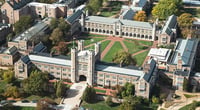
 U.S. College Admission Information |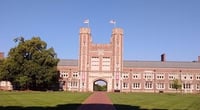

 Springs Korea |
  nixon |
  mini hometown |
  Gleeee |
  MacMorningBlog |
  ASURA |
  Elastico |
  shaket |
  vionoo |
  chocolate |
  Whisper |
  Star Voyager |
  InDiGo |
  Rocky Mountains |
  Whoever It Is, I Don't Know |
  Why Not Me |
  Plastic Rose |
  Victory 1988 |
  Gook Rule |