

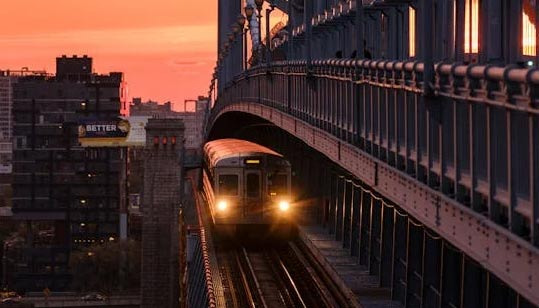
If you have lived in or traveled to Philadelphia, you have probably heard the name "SEPTA" at least once.
It stands for Southeastern Pennsylvania Transportation Authority, which is the public transportation agency for southeastern Pennsylvania. In simple terms, it is the transportation system that manages all buses, subways, trolleys, and trains in Philadelphia and its surrounding areas. Considering the complex road conditions in Philadelphia, SEPTA is essentially a vital transportation infrastructure for the city.
First, let's talk about buses. Philadelphia's bus routes are so densely connected that you can reach almost anywhere in the city with just one or two bus rides. Over 100 routes operate throughout the city and extend into the suburbs, making it possible to live without a car. Most routes run from early morning until late at night, and some operate 24 hours.
The subway, Philadelphia's representative mode of transportation, has two main lines. One is the Market-Frankford Line (MFL), commonly known as the 'Blue Line.' This line crosses the city from west to east, starting in West Philadelphia and connecting through downtown to the east. The other is the Broad Street Line (BRL), the 'Orange Line,' which runs from the northern Olney area down to the southern Sports Complex. So, it's really convenient to take this line when going to watch baseball or football games. It also passes near the University of Pennsylvania and Temple University, making it popular among students.
Next is the trolley. Philadelphia is one of the few cities in the U.S. that still has a trolley system. The trolleys run on rails and extend to the western suburbs, providing a transportation option that allows you to feel the nostalgia of the past. Routes 10, 11, 13, 34, and 36 are representative of this service.
When commuting or traveling to the suburbs, the Regional Rail is very useful. Several lines extend in all directions from 30th Street Station, with lines like the Paoli/Thorndale Line and the Trenton Line connecting to suburban cities and extending to New Jersey and Delaware. In fact, many people living in the suburbs take this train to commute to Philadelphia every day.
Operating hours generally range from 5 AM to midnight, but some bus routes operate 24 hours, and trains typically stop around 11 PM. Fares vary slightly by transportation mode, with buses and subways costing about $2.50 per ride, while regional rail fares can range from $4.50 to over $10 depending on the distance. If you travel frequently, purchasing a One Day Travel Pass or weekly/monthly pass is much more economical.
Nowadays, the SEPTA Key card has made things much more convenient. In the past, you had to use cash or tokens, but now you can use this rechargeable card to ride buses, subways, trolleys, and trains. You can tap once and transfer as well. Moreover, contactless payments like Apple Pay and Google Pay are supported, so having just your smartphone makes traveling much easier.
What is especially useful for travelers is that SEPTA connects directly to Philadelphia International Airport (PHL). Taking the Regional Rail to the airport from 30th Street Station or Jefferson Station takes less than 30 minutes. It is faster and cheaper than airport shuttles, making it popular among locals.
And the SEPTA app is essential. It allows you to check real-time arrival information, purchase tickets, and get route guidance all in one place. Sometimes it is even more accurate than Google Maps, so many locals use it. It is particularly useful for checking late-night bus operations or train schedules.
Of course, it is not a perfect system. Trains can occasionally be delayed during rush hour, and there are still issues with old vehicles and infrastructure. However, considering how old the city of Philadelphia is, it is quite impressive that various transportation modes are organically connected within this structure.
Ultimately, living in Philadelphia reveals that SEPTA is not just a transportation agency but a 'vein' that connects the daily life and history of the city. A city where you can live comfortably without a car is one of the charms of Philadelphia.



 moo moo |
 ultron78 |
 garlic bread |
 Sugar Cream Door Bulletproof Noodles |
 urbanmint |
 Nationally Certified Lightning Charcoal Review |
 Northeastern |
 sparkling |
 Pennsylvania Information News |
 U.S. Weather Bureau News |
  Tonky |
  viroma |
  cookie |
  Live and that's it |
  Alright Twain |
  eatontown blog |
  HAWAII Korean Church News |
  Amore |
  linex |
  Balancework |
  laro90 |
  MEDBIO American Doctor Blog |
  SWAT TEAM BLK |
  DREAM BIG |
  frostbite |
  330 Forever My Love |
  El Dorado |
  dralix58 |
  Gorama Round |
  Skydiving |