
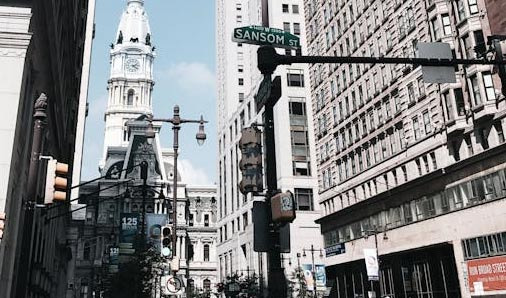
Philadelphia and Lansdale are both located in Pennsylvania, but they represent two sides of a typical city and suburb relationship. While Philadelphia is the center of history and industry, Lansdale symbolizes a suburb where life slows down, allowing families to live together. However, they are not disconnected; they are deeply connected through railroads and roads that link their daily lives.
Historically, the starting points of the two cities are entirely different. Philadelphia is literally the city that made American history. It is where the Declaration of Independence was signed, the center of the 18th-century Revolutionary War, and served as the capital of the United States until 1790. Since its founding by William Penn in 1682, it has retained its symbol as the 'City of Freedom.'
Lansdale began to make a name for itself much later, in the mid-19th century. The arrival of the railroad in the 1850s brought people to the area, and workers seeking jobs in Philadelphia began to settle, transforming a small village into a city. At that time, it was a transportation hub for those who found it too far to go to Philadelphia and too cramped to live in the countryside.
Economically, the two cities fulfill each other's needs. Philadelphia, as the largest city in Pennsylvania, is an economic hub where almost all industries, including finance, healthcare, education, technology, and manufacturing, are concentrated. Major hospitals and prestigious universities are densely located here, attracting countless commuters daily, and international companies have their headquarters in the city.
In contrast, Lansdale is a satellite city on the outskirts of this metropolis, smaller in size but with a solid economic structure. It primarily consists of manufacturing, service, and distribution industries, with a mix of local small businesses and medium-sized enterprises. As workers commuting to Philadelphia establish homes in Lansdale, it has become a popular residential area, and commercial facilities are increasing as suburban development progresses. In simple terms, while Philadelphia is a workplace, Lansdale serves as a refuge.
There is a clear difference in population size as well. Philadelphia is a large city with about 1.6 million residents, boasting the largest population in Pennsylvania. It is a multicultural city where various races and cultures coexist, and it is regaining vitality due to urban redevelopment and an influx of young people. In contrast, Lansdale is much smaller, with a population of around 17,000, but it has been steadily growing each year.
Particularly, many young families choose Lansdale to escape Philadelphia's high living costs. The reasons include good school districts, stable safety, and a warm community.
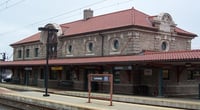
Geographically, the two cities are about 30 kilometers, or 20 miles, apart. It takes about 40 minutes by car and an hour by train to reach each other. The SEPTA Regional Rail's Lansdale/Doylestown Line connects the two cities, making commuting convenient. As a result, the pattern of 'working in Philadelphia and living in Lansdale' has become established. In fact, the morning trains to Philadelphia are crowded, and the evening trains in the opposite direction are packed.
In summary, Philadelphia is the center of America's founding and the heart of Pennsylvania's economy, while Lansdale is a city that breathes the essence of suburbia connected to that heart. If Philadelphia exudes dynamic energy, Lansdale is closer to a sanctuary where one can unwind after a long day. Thus, many say, "During the day, Philadelphia is my workplace, and at night, Lansdale is my home."
Ultimately, the two cities are not in competition but rather exist as a pair that completes each other. Philadelphia, alive with history and industry, and Lansdale, where family, nature, and leisure coexist. The harmony between these two reflects the realistic landscape of Pennsylvania.






 conte |
 Then you must be spring |
 Northeastern |
 laro90 |
  MEDBIO American Doctor Blog |
  SWAT TEAM BLK |
  DREAM BIG |
  frostbite |
  330 Forever My Love |
  El Dorado |
  dralix58 |
  Gorama Round |
  Skydiving |
  dreamport |
  Yellow Snowman |
  Toaster Pizza Magic Show |
  velvetnom |
  Anytime Journey |
  Mrs. Duluth |
  jaxter |
  Atlanta Mama |
  Baguette Blog |
  Tan Sol |