

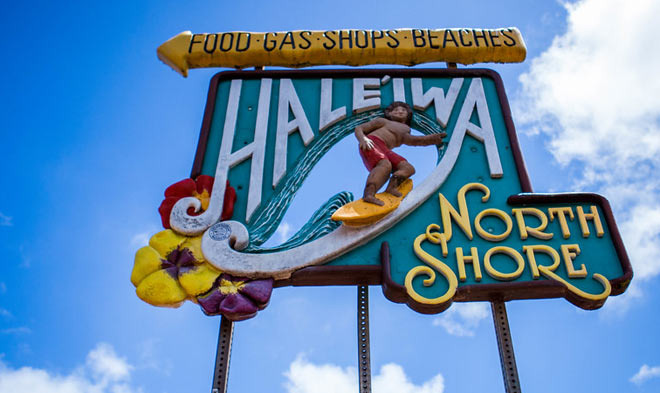
As you head to the northern tip of Oahu, Hawaii, there is a place where time seems to slow down. It is a small town called 'Haleʻiwa'. Unlike the glamour of Waikiki or the urban atmosphere of Honolulu, this is where you can feel the real Hawaii of Oahu.
This place is the central town of the North Shore area, a representative local town of Hawaii where surfing, art, and leisure coexist.
Haleʻiwa may appear to be a quiet and simple rural town, but within it lies the culture and spirit of Hawaii. The wooden sign shops lined along the road, the old wooden buildings, and the cafes with red roofs feel like a movie set. However, all of this is a local business that has been maintained for decades.
In the early 20th century, it was a hub for sugar plantation workers, and since then, this area has been a melting pot of various races and cultures. Now, with travelers from around the world coming to enjoy surfing, a unique atmosphere is created where local and global cultures naturally blend.
The North Shore is famous for its world-class surfing spots. In winter, huge waves come crashing in, and professional surfers from around the world compete and train at 'Waimea Bay' or 'Banzai Pipeline'.
These waves can exceed 10 meters, leaving first-time viewers speechless. You can often see surfers at Haleʻiwa Beach as well. The waves are much higher in winter than in summer, but there are calm areas where beginners can enjoy, giving everyone a chance to stand on a board at least once.
In the town center, there is the Haleʻiwa Bridge. Crossing this bridge, the scenery of the North Shore unfolds. As you drive along that road, the blue sea is on the right, and fields filled with palm trees are on the left. Local food trucks line the way, and there is always a long line of people in front of the 'Garlic Shrimp' truck. Especially, 'Giovanni's Shrimp Truck' is so famous that you must stop by when you visit Haleʻiwa. The strong smell of butter and garlic makes it hard to pass by.
Another charm of Haleʻiwa is its artistic vibe. Galleries and craft shops scattered throughout the town sell paintings, sculptures, necklaces, and pottery made by Hawaiian artists. These are not mass-produced souvenirs, but rather works that convey the 'real Hawaiian touch' made by the artists themselves. Therefore, many people refer to this place as 'the town of artists'.
Although Haleʻiwa attracts many tourists, it has not lost its identity as a 'local town'. Most shop owners have been doing business here for generations, and they know each other's names and greet one another. Signs saying "Support Local" are posted everywhere on the streets. Here, it is more fitting to slowly stay and feel the people and nature together rather than quickly consume and leave.
Every time I visit Haleʻiwa, I feel like time flows slowly. There are no flashy hotels like in Waikiki, and the streets quickly become quiet at night. But that very tranquility is the charm of this town. During the day, young people with surfboards and bicycles roam the streets, and in the afternoon, the red sunset envelops the sea and the entire town. The only sounds you hear then are the waves and the laughter of people.



 candytip |
 Gold Bar |
 Pirate Ship Popcorn Maker |
 Montgomery Mom |
 Anjollinya Blog |
 victoria 68 |
 Hawaii Tourist Information |

 TEX MEX STAR |
 Vacation on Hawaii |
  DREAM BIG |
  frostbite |
  330 Forever My Love |
  El Dorado |
  dralix58 |
  Gorama Round |
  Skydiving |
  dreamport |
  Yellow Snowman |
  Toaster Pizza Magic Show |
  velvetnom |
  Anytime Journey |
  Mrs. Duluth |
  jaxter |
  Atlanta Mama |
  Baguette Blog |
  Tan Sol |
  US Embassy |
  Korean Mom |
  My NYC |