

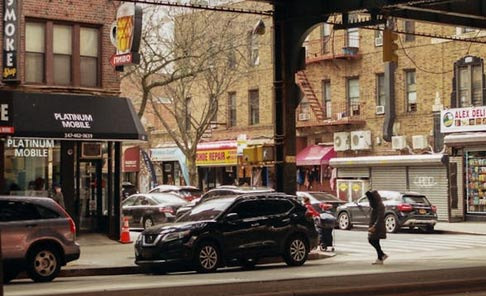
When people talk about New York, most think of Manhattan's skyscrapers, Times Square, and Central Park first. However, if I had to recommend a neighborhood that truly showcases New York's diversity and immigrant history, it would be Flushing. Located in the northeastern part of Queens, Flushing is not just a neighborhood with a large Asian population; it is a representative multicultural community of New York where cultures from around the world blend to create a unique urban culture.
The history of Flushing goes back further than one might think. A settlement was first established in the mid-17th century during the Dutch colonial period, and at that time, it was merely a small agricultural village. As railroads and transportation networks developed, it began to grow into an important residential area of New York City. Particularly after the immigration law reforms in the 1960s, a large influx of Asian immigrants transformed Flushing into what it is today.
Flushing holds significance in American history as well. The 'Flushing Remonstrance,' published in 1657, is known as a document advocating for religious freedom. It is regarded as an early example of the spirit of religious freedom that would later be reflected in the U.S. Constitution, placing Flushing in an important position in American history beyond just being an immigrant town.
Today, Flushing has grown into one of the largest Asian communities in the United States. On the streets, you can hear not only English but also Chinese, Korean, Hindi, Bengali, and various other languages. The high percentage of Chinese residents creates an atmosphere reminiscent of New York's Chinatown. In fact, many people consider Flushing to be the largest Chinese commercial area on the East Coast of the United States.
However, Flushing is not just a neighborhood for the Chinese community. Korean residents have also played a significant role in the area's development over the years. Around Northern Boulevard and Union Street, you can find a concentration of Korean restaurants, bakeries, markets, hospitals, pharmacies, hair salons, real estate companies, and accounting offices. The infrastructure for the Korean community is so well established that one can live here speaking only Korean, making it an important hub for the Korean community in New York.
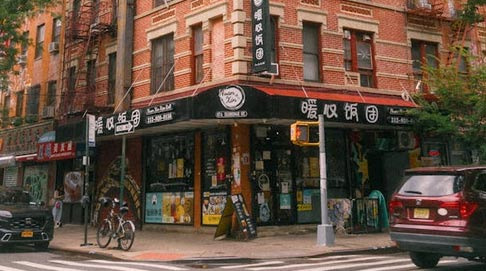
When you visit Flushing, the first thing that stands out is the food culture. Chinese dim sum restaurants, hot pot places, Taiwanese bubble tea shops, Korean fried chicken joints, tofu specialty shops, Japanese ramen houses, and Indian restaurants coexist on the same street. You can experience a wider variety of Asian cuisine here than in any other part of New York, attracting both locals and tourists alike.
Economically, Flushing is a very active area. Countless immigrants run their own businesses, driving the local economy. Various industries, including restaurants, grocery stores, real estate, finance, and medical services, have grown, establishing Flushing as a vital part of Queens' economy. Particularly, the prevalence of small family-run businesses creates a unique vibrancy and community atmosphere.
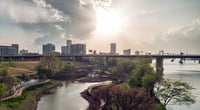
One of Flushing's main attractions is Flushing Meadows-Corona Park. This area is famous for being the site of the 1964 World's Fair, with the massive Unisphere serving as a symbol. The park features wide open spaces, walking paths, sports facilities, and lakes, making it a beloved recreational area for local residents.
Additionally, the Queens Botanical Garden is known as a space where you can enjoy nature in the city. Visitors can appreciate a variety of flowers and plants throughout the seasons, making it popular among families. The Flushing Library is also one of the busiest branches in the New York Public Library system, hosting various educational programs and cultural events.
Another charm of Flushing is its constant evolution. New apartments and commercial facilities are being built, and the influx of younger generations continues steadily. The coexistence of the traditional immigrant community atmosphere and modern urban development creates a unique urban landscape.
Ultimately, Flushing is not just a neighborhood with a large Asian population. It is a space where countless immigrants start new lives, different cultures meet, and new opportunities are created. It offers a different charm from New York's flashy tourist attractions and serves as a living example of how the country has grown through the fusion of diverse ethnicities and cultures. If you want to experience the true diversity of New York, don't just explore Manhattan; make sure to take a walk through the streets of Flushing.
 ShataForce
 CoinGirl
 BalanceWork




 ultron78 |
 garlic bread |
 Sugar Cream Door Bulletproof Noodles |
 urbanmint |
 |
| 
 Whisper |
 MintO |
 nova nova |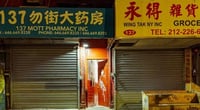
 TwinBee |
 Living in the Eastern United States |
  Finding Superfoods |
  lightyear |
  song bang |
  vexomo |
  Indiana Jones |
  meloncat |
  novapixel |
  mortrix |
  Esther 1983 |
  fortbliss |
  Moscow Kim |
  My Two Way |
  toastyfox |
  FLORIDA Acus |
  tracker |
  TONTON COFFEE |
  sunrise |
  uplifted |
  Folding Instructions |