

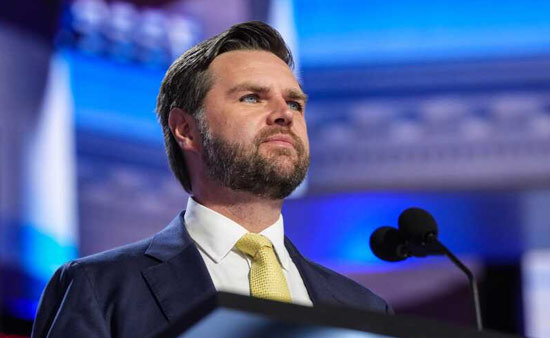
The Turning Point USA annual event is a large political gathering where conservative-leaning youth and activists come together. Held annually, it features lectures, discussions, and rallies primarily focused on college students and young voters. Politicians, conservative journalists, and activists take the stage to discuss topics such as American values, the economy, education, religion, and freedom of expression. This event is not just a meeting but is also seen as a place to gauge the direction of the conservative movement and its future leaders. Especially during the lead-up to primaries, it serves as an important stage to show who is gaining attention and which messages are resonating.
Looking at the current state of the American conservative movement, it may outwardly seem united, but there are significant internal conflicts.
This atmosphere was well illustrated at the Turning Point USA annual event held in Phoenix, Arizona. At this event, Vice President JD Vance stated that the conservative movement should be open to everyone. This means that anyone who loves America can join, regardless of their background. However, he did not provide a clear stance on the ongoing issues of anti-Semitism within the Republican Party.
The most frequently discussed topic at the event was what comes after Trump. Due to constitutional constraints, Trump cannot run for president again. While his influence remains significant, everyone knows that eventually, someone else must step forward.
The question is, who will that be? During this process, prominent figures in the conservative movement are expressing their thoughts strongly, and this event showcased that competition. In his opening speech, Ben Shapiro emphasized the need to uphold principles and strongly criticized those spreading conspiracy theories or hate speech. He specifically mentioned Tucker Carlson for featuring Nick Fuentes. However, about an hour later, Carlson took the stage and stated that there is no civil war within the Republican Party. Instead, he suggested that the current debate seems to be an effort to prevent JD Vance from rising. This alone illustrates how complex the factional dynamics within the conservative movement are.
JD Vance's perspective is relatively straightforward. He aims to embrace as many people as possible rather than divide them. He stated that as long as one loves America, it does not matter what their race, religion, or background is. At the same time, he argued that DEI policies are no longer necessary and claimed that America is a nation built on Christian values, which received significant applause. This statement encapsulates a message that resonates well with the MAGA base while also discussing inclusivity.
Erika Kirk, who leads Turning Point USA, supporting JD Vance as a potential presidential candidate is also significant. This organization is not just a student group but a large organization with many volunteers nationwide. In the early stages of the primary elections, the support of such organizations is crucial. Trump has also mentioned Vance and Marco Rubio as potential candidates, keeping the possibilities open.
The conclusion drawn from this event is that the Republican Party will not automatically unite after Trump. There are ongoing conflicts regarding freedom of expression and hate issues, religion, and national identity, as well as who will be accepted. JD Vance claims he will embrace everyone, but it remains uncertain whether that choice will create greater strength or exacerbate conflicts in the future.
However, it is clear that in the future, after Trump steps down, the Republican Party will not have an easy path ahead.







 Victory 1988 |
 El Dorado |
 lightyear |
 Moscow Kim |
 coloradoman |
 US Home Buying Information Home Insurance |
 The Day the Sun Rises |
 Esther 1983 |
 Information on All Regions of the United States |
  Bushing Around Life |
  Active |
  Cherokee Rose |
  Kor. Master |
  Holey Moley |
  Conflite Teacher |
  Hodong Prince Over Flex |
  Mist inn |
  citrus pop |
  Onion Ring |
  phoenixia |
  viewtop |
  loverun |
  Kim Do Sun |
  SEVEN SEVEN |
  yentra |
  Make My Day |
  Tonky |
  viroma |