
Hawaii holds a very special significance in the history of Korean immigration.
In the early 1900s, thousands of Koreans crossed over to Hawaii in search of a better life.
Their stories were not just about moving to a new land, but a journey filled with hope, challenges, and perseverance.
Today, I would like to talk about the beginning of Korean immigration to Hawaii, its historical background, and the traces they left behind.
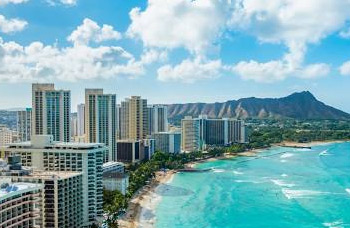
Korean immigration to Hawaii began in January 1903, when 102 immigrants crossed the Pacific to work on Hawaii's sugar plantations. They left their homeland in search of a better life amidst the chaotic society and severe economic hardships of late Joseon. At that time, Hawaii's sugar industry was the main industry and required a large labor force. The immigrants arrived in Hawaii after a long voyage filled with excitement and fear of a new environment.
Upon arriving in Hawaii, Korean immigrants began hard labor on the sugar plantations. Working long hours of over ten hours a day for low wages in an environment with completely different languages and cultures was not easy. However, they relied on each other and adapted to their new surroundings.
Especially as a community centered around Korean churches formed, the bonds among Koreans grew stronger. The Hawaii Korean Christian Church, established in 1903, became not just a place of worship but a center for meetings and cooperation within the Korean community.
Koreans worked hard for their children's education even amidst the grueling labor on the Hawaiian plantations. They taught their children the Korean language and traditional culture, striving to not forget their roots, and focused on sending their children to Sunday school at the Korean church or Korean language schools to help them maintain their identity as Koreans.
The Koreans in Hawaii were not just immigrants seeking a new life but also patriots dedicated to the independence of their homeland. After Korea was forcibly annexed by Japan in 1910, Koreans residing in Hawaii established the Korean National Association of Hawaii and actively supported the independence movement. Although they were away from their homeland, they raised funds for the independence movement and sent them back to Korea despite their difficult economic situation.
The dedication of these Korean immigrants in Hawaii plays an important role in the history of the Korean independence movement.
Today, over 20,000 Koreans reside in Hawaii, and the descendants of the early immigrants contribute to Hawaiian society in various fields. It is thanks to the sacrifices and efforts of the early immigrants that the Korean community in Hawaii could establish itself. The history of Korean immigration to Hawaii is not just a story of the past but a record of lives built on dreams, hope, and perseverance.
The traces they left in Hawaii still hold great significance for Hawaiian society and Korean descendants today.
The stories of Korean immigrants who struggled and pioneered in a foreign land evoke a sense of gratitude.








 victoria 68 |
 Hawaii Tourist Information |
 HAWAII Korean Church News |
 TEX MEX STAR |
  Tonky |
  viroma |
  cookie |
  Live and that's it |
  Alright Twain |
  eatontown blog |
  Amore |
  linex |
  Balancework |
  laro90 |
  MEDBIO American Doctor Blog |
  SWAT TEAM BLK |
  DREAM BIG |
  frostbite |
  330 Forever My Love |
  El Dorado |
  dralix58 |
  Gorama Round |
  Skydiving |