


The biggest advantage of retiring in Hawaii is undoubtedly the climate and natural environment.
The weather is mild year-round, with no extreme cold or heat.
This makes it a great environment for health management and outdoor activities after retirement.
With plenty of natural spaces like beaches, mountains, and parks, activities like walking, swimming, and fishing can be enjoyed as part of daily life.
Another advantage is the relaxed lifestyle. Hawaii has a slower pace of life compared to major cities on the mainland, resulting in relatively less stress. Many people wish to escape the hectic city life after retirement and seek a more peaceful existence. In that regard, Hawaii offers an attractive environment for retirees.
Moreover, Hawaii is a culturally unique region within the United States. It blends Asian, American, and Polynesian cultures, resulting in diverse food and lifestyle options. Especially for Korean retirees, Korean food and Asian ingredients are readily available, making life relatively comfortable. For these reasons, Hawaii has long been considered one of the preferred areas for American retirees.
This leads to a common question.
"After working hard on the mainland, I want to retire in Hawaii, but realistically, how much money do I need?"
Every time I hear this question, I honestly chuckle a bit inside. This is because most people think of Hawaii as a travel destination when they ask.
Visiting for a few days as a tourist, seeing the ocean, having a cocktail in Waikiki, and thinking, "Oh, it would be nice to live here" is completely different from actually living here.
First and foremost, the most important factor is the cost of living. Hawaii consistently ranks among the most expensive places in the U.S. for living expenses. Basic living costs like groceries, electricity, and housing are significantly higher than on the mainland. A trip to the grocery store makes this immediately apparent. When you see the prices of milk, eggs, and vegetables, you realize, "Ah, this is an island."
According to recent standards, it is said that a retiree needs about $3,500 to $5,000 per month to live relatively comfortably in Hawaii. For a couple, you should budget around $6,000 to $8,000 per month. Of course, this is just an average estimate. There can be considerable differences depending on lifestyle.
For example, if you dine out frequently and rent a condo right by the beach, costs will rise quickly. Conversely, if you live frugally, you can reduce expenses a bit. However, it's best to abandon the thought of "I can live cheaply in Hawaii."
Next, let's talk about housing costs. This is actually the biggest factor. Housing prices in Hawaii are quite high. On Oahu, condo prices typically range from $500,000 to $900,000. If the location is good, the price goes up even more. Single-family homes often exceed $1 million.
As a result, many retirees buy a condo to live in, while others choose to rent. For rentals, a one-bedroom apartment on Oahu usually costs between $2,000 and $3,000 per month. Again, prices increase with better locations.
And when discussing retirement, we cannot overlook healthcare costs. As you age, the need for hospital visits increases. Medicare kicks in after age 65, but insurance premiums and additional medical expenses continue to accrue. Many retirees set aside several thousand dollars annually for healthcare costs.
Now, let's return to the most pressing question: how much should you save?
There is a common guideline used by financial experts in the U.S.
It's often referred to as the 4% rule.
This calculation suggests that if you withdraw about 4% of your retirement funds annually for living expenses, you can maintain your assets for a relatively long time.
For example, let's assume your annual living expenses are $70,000.
Then, a simple calculation shows that you would need about $1.75 million in retirement funds.
If a couple's annual living expenses are estimated at $80,000, you would need roughly $2 million.
If you have Social Security benefits, the situation changes a bit. For instance, if a couple receives about $30,000 annually in Social Security, the amount you need to withdraw from your investment assets decreases. This could lower your target retirement fund to around $1.5 million.
However, since living costs in Hawaii can vary significantly, it's wise to calculate with a bit of cushion. Personally, I believe that having at least $1.5 million to $2 million in assets is a reasonable benchmark for feeling "somewhat secure." Of course, this varies greatly depending on whether you already own a home or need to rent.
Another realistic point is that investment returns are also important. Even if you have retirement funds, low investment returns can derail your plans. Therefore, many retirees mix assets like IRAs, 401(k)s, dividend stocks, and bonds.
Living in Hawaii makes one thing clear: this place is truly beautiful. The weather is great, the ocean is wonderful, and the natural environment is fantastic. However, it is also one of the most expensive areas to live in the U.S.
So, when I hear the phrase "retiring in Hawaii," I always say this.
Don't calculate based on dreams; calculate based on numbers.
To retire relatively securely in Hawaii, having around $1.5 million to $2 million in retirement assets is a realistic standard. While it varies by lifestyle, many financial experts suggest similar figures.
Hawaii is a great place for travel, but it is also an attractive place for retirement. However, if you come without preparation, it can lead to stress rather than romance. If you work hard on the mainland, gradually build your assets, and prepare thoughtfully, retiring in Hawaii is definitely achievable.







 MEDBIO American Doctor Blog |
 Burbank Lee |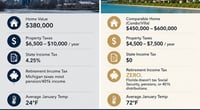
 vibranto |
 sparkling |
 oh my salami |
 HAWAII Korean Church News |
 Hawaii Tourist Information |


 Unknown Dog Walk blog |
  hot chocolate |
  SODA MAKER |
  james kim |
  All About Cars |
  lomira98 |
  calmbridge |
  oneonly |
  Brighto |
  racuse |
  Total Beauty |
  crystal |
  Good Hotels |
  raspberry7 |
  Que que |
  Well Done Sir |
  dance dance |
  sweetpepe |
  vegas mom |
  Olivia's Blog |
  cathywhite |