
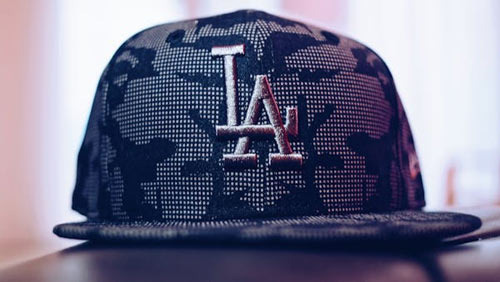
When thinking of hip hop, one might first recall the Bronx in New York, but today, Los Angeles is undoubtedly a place that can be called 'another heart of hip hop.'
As the bass and snare flow through the palm trees, and you listen to freestyle sessions, you can't help but wonder, "Why has this city become a hip hop hub?"
The first reason is the unique social and demographic conditions of South LA. In the early to mid-1980s, the Compton and South Central areas were densely populated with African American families who had migrated from Detroit and Chicago, and due to the economic recession, jobs and public services rapidly disappeared.
As police brutality and gang conflicts became commonplace, young people expressed their reality through rap, creating "street news." N.W.A.'s 1988 album Straight Outta Compton brought this anger to the forefront, establishing the narrative of West Coast hip hop, and songs like "Fuck tha Police" became slogans for social movements.
Secondly, the presence of KDAY (AM 1580), the first all-hip hop radio station in the U.S., in LA was also crucial. Since 1983, KDAY played hip hop 24 hours a day, showcasing not only East Coast artists but also local newcomers, airing demo tapes live and broadcasting "our neighborhood sound" nationwide. As a result, the heavy and funky beats unique to the West gradually became familiar to listeners, and for teenagers, the radio booth became a more familiar hangout than their homes.
Thirdly, the rapid establishment of independent and major label infrastructure played a significant role. Ruthless, founded by Ice Cube and Eazy-E, and Death Row, established by Dr. Dre and Suge Knight, brought Drew League and G-funk sounds to the mainstream with unprecedented production costs and marketing.
As Snoop Dogg and Tupac topped the Billboard charts, a virtuous cycle was established: "When money gathers, talent comes, and when talent gathers, money grows again."
Fourthly, the synergy with Hollywood has been significant. Films like John Singleton's Boyz N the Hood (1991), which translated hip hop sensibilities to the screen, became box office successes, allowing musicians to expand their activities as actors, producers, and fashion icons. The fact that Dre and Cube expanded into film and headphone businesses can also be attributed to the entertainment ecosystem that this city possesses.
Finally, multicultural fusion and generational change in the 2020s keep LA in a 'current' state. With a large Latin and Asian community, artists like Kendrick Lamar, Tyler, the Creator, and Doja Cat, who easily cross genres, are emerging, and streaming platforms are launching mixtapes created in bedroom studios in the San Fernando Valley to the world. Open mics and battles are held weekly throughout the city, and K-pop, bass music, and local band sounds mix, continuously redefining the "LA sound."
In summary, the unique narrative born from inequality, the amplifying effects of radio, labels, and the film industry, and the endlessly incoming immigrant culture have intertwined to make LA an eternal laboratory for hip hop.
Today, somewhere in the back alleys of Crenshaw, Melrose, and Little Tokyo, new beats are likely being born.





 Weekend Movie Blog |
 Beauty, Health, Lifestyle Blog |
 coloradoman |
 Superman Cat Blog |
 Noodle Noodle |
  Tonky |
  viroma |
  cookie |
  Live and that's it |
  Alright Twain |
  eatontown blog |
  HAWAII Korean Church News |
  Amore |
  linex |
  Balancework |
  laro90 |
  MEDBIO American Doctor Blog |
  SWAT TEAM BLK |
  DREAM BIG |
  frostbite |
  330 Forever My Love |
  El Dorado |
  dralix58 |
  Gorama Round |
  Skydiving |