

When I first mentioned moving to Las Vegas, my Korean friends all had the same reaction.
"Isn't that a gambling city? It's not a place to raise kids."
However, living here reveals that half of that is true and half is not. The Strip is a tourist area, while the Las Vegas where residents like us live is a different city altogether.
And surprisingly, that real city is packed with museums and cultural facilities. More importantly, there's great value for money.
Since Nevada has no state income tax, cultural facilities here almost universally offer "Nevada Resident" discounts. You can think of it as a benefit that comes back to residents.
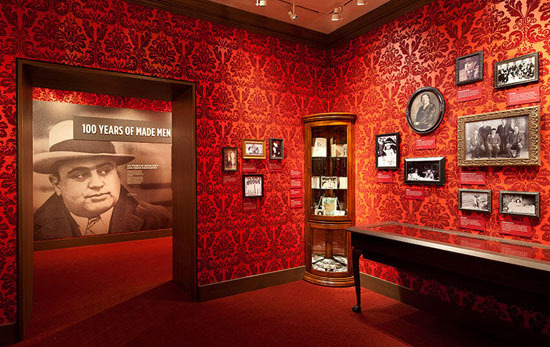
The Mob Museum (officially the National Museum of Organized Crime and Law Enforcement).
It's located in a remodeled former federal courthouse in downtown. It directly addresses the history of organized crime in America and the responses from law enforcement agencies, including the FBI.
Actual bricks from the St. Valentine's Day Massacre site and artifacts related to Al Capone are on display.
In the basement's Prohibition-era style Speakeasy (The Underground), you can even sample moonshine that is distilled on-site.
Here's a tip for residents. If you have a Nevada ID, you get discounts year-round, and the general admission fee is about $20 for residents.
Crucially, on February 14th, the anniversary of the Valentine's Day Massacre, they hold a free admission event for Nevada residents.
Children under 10 are always free. It's a great place to take visiting friends, and if you arrive before 11 AM or after 5 PM, non-residents also get a $7 discount on tickets.
Note that the content can be quite hardcore, so the Crime Lab experience is only available for those 11 and older. It's not a place for young kids.
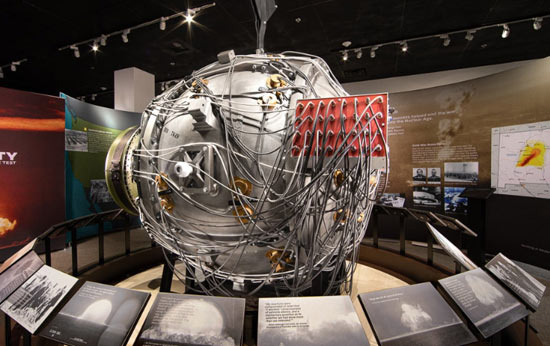
The National Atomic Testing Museum is also in the same vein as "adult-oriented" attractions.
It covers the history of nuclear testing in Nevada and the development of atomic energy in the U.S. during the Cold War, and since it's affiliated with the Smithsonian, the quality of the exhibits is high.
If you grew up as a Cold War kid or are genuinely interested in technology and history, you could easily spend half a day here.
The Neon Museum (The Neon Boneyard) is a place where over 200 large neon signs symbolizing Las Vegas's golden age (1950s-80s) are gathered outdoors.
Each sign has its own story, giving you a sense of the city's rise and fall through its signage.
The night tour 'Brilliant!' is a type of media art featuring special lighting and sound, and it's also famous as an Instagram hotspot.
There are also resident discounts here. Nevada residents get a $5 discount on general admission and guided tours, and programs like Photo Walk can be discounted by as much as $25. This is quite significant for those who enjoy photography. However, the night tour requires advance reservations. Be cautious, as many people end up making a wasted trip if they go spontaneously.
Springs Preserve. Personally, if I could only buy one membership in Las Vegas, I would definitely recommend this one. It's a 180-acre complex that includes a natural history museum, a desert botanical garden, and the Nevada State Museum on-site. There's no better place for education on desert ecology, Las Vegas's water history, and documentaries about the construction of the Hoover Dam.
Non-resident adults pay about $18.95, while Nevada residents pay $9.95. That's half the price.
Our family purchased a $60 family membership, which allows unlimited entry for a year, so just two or three visits make it worth it. Plus, there's a 10% discount at the café. Additionally, those with SNAP, EBT, or WIC cards can enter for just $3 for up to four people through the Museums for All program.
On Nevada Day, October 30th, they also offer free admission for residents. Note that this is a cashless facility, so be sure to bring a card or mobile payment.
The Discovery Children's Museum is a hands-on science museum for kids located in downtown Symphony Park.
With nine themed areas like Summit, Water, and Eco City, children learn about STEAM (science, technology, engineering, arts, and mathematics) through interactive experiences. It's conveniently located next to the Las Vegas Library, making it a great half-day outing. Here, Nevada ID holders can get a local discount of about $14.50, and children under 2 are free. Parents looking for weekend activities should consider getting a membership.
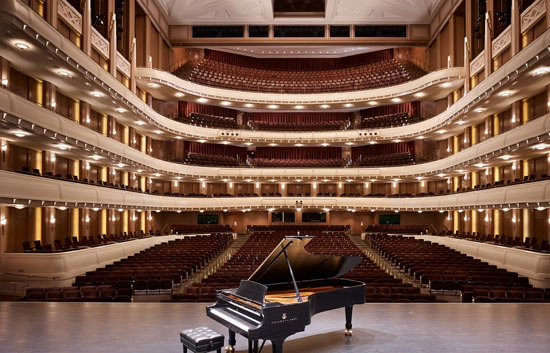
Finally, The Smith Center for the Performing Arts. This is a true performing arts hub that is completely different from the magic and dinner shows on the Strip.
Broadway tours, orchestras, ballet, opera, and jazz performances take place year-round. Reynolds Hall, with about 2,050 seats, has excellent acoustics, and there is also a Cabaret Jazz venue in a cabaret style. It's also the home of the Las Vegas Philharmonic.
They also run educational programs for children's performances, so if you want to pass on cultural capital to your children, I recommend checking out the seasonal schedule.
Viewing Las Vegas solely as a casino city is a tourist's perspective, while residents know about the city's second layer.
With museums, nature, performances, and resident discounts, family cultural activities can surprisingly be quite affordable if you want them to be.
Many residents are unaware that a Nevada ID serves as a discount card, and they end up paying full price.
The value I see in LV comes not from the flashy signs but from the infrastructure that benefits residents.
Las Vegas is a neighborhood with more cultural facilities than you might expect. I can confidently say that it's not a city you should judge solely based on casino advertisements.
 HandelSaid
 foxforestbuilder1974
 SilverStone87


 Good World Good Thoughts |
 celtics |
 candytip |
 Gold Bar |
 Pirate Ship Popcorn Maker |
 neroyo |
 Folding Instructions |
  vegas mom |
 celion78 |
 memorabilia |
  Giant Squid and Sweet Potato Soup |
  Valley Hong |
  The Gelaton |
  Twist Kim |
  berlon93 |
  Physical Laws and Science |
  good thinking |
  Solo Yolo |
  Mr Oh |
  laro90 |
  San Diego TOP Idol |
  Round and Round Children's Song Kingdom |
  American Golf Course Travelogue |
  MEDBIO American Doctor Blog |
  Hot Seat Driver |
  bryvexi |
  koala organic farm |
  riverstone |
  My Antonio |
  California Information News |