

San Francisco is a world-renowned city located in Northern California, rich in history and diverse culture. The area was originally inhabited by the Ohlone Native American tribe, and in 1776, Spanish explorers arrived and established Mission San Francisco de Asís, marking the beginning of colonization. After Mexico's independence in 1821, it became part of Mexican territory, but was annexed by the United States following the Mexican-American War in 1848.
Native Era and Early Settlement
The Ohlone tribe inhabited the San Francisco area for about 10,000 years. They gathered food from the sea and rivers, living in harmony with nature. The San Francisco Bay area provided abundant resources, offering a stable living environment for the natives, who developed a unique language and culture.
Spanish Colonial Era
In 1776, the arrival of Spanish explorers marked the beginning of a new chapter in the history of the San Francisco Bay. Spanish missionaries established Mission San Francisco de Asís (commonly known as 'Dolores Mission') as part of Spain's strategy to spread Christianity to the natives and colonize the California region. During this period, agriculture and ranching developed, but the natives suffered greatly due to Spanish domination and disease.
Mexican Rule and American Annexation
In 1821, as Mexico gained independence from Spain, San Francisco became part of Mexican territory. During this time, large ranchos were established, and livestock and trade became the center of the local economy. However, in 1846, during the Mexican-American War, U.S. troops occupied San Francisco, and it was officially annexed to the United States in 1848 through the Treaty of Guadalupe Hidalgo.
Gold Rush and Population Boom
In 1848, the discovery of gold in California brought worldwide attention to San Francisco. The Gold Rush attracted thousands of immigrants, and San Francisco began to grow rapidly. The population was only 1,000 in 1848, but it surged to 36,000 by 1852. During this time, it developed as a port and trade center, achieving economic prosperity.
1906 Earthquake and Reconstruction
In 1906, San Francisco experienced a disaster when a massive earthquake and fire destroyed much of the city. Approximately 3,000 people died, and over 250,000 lost their homes. However, the city's reconstruction occurred remarkably quickly, incorporating modern architectural techniques and urban planning to emerge as a stronger and safer city.
20th Century and Modern San Francisco
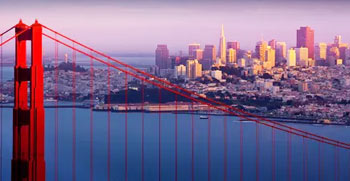
In the early 20th century, San Francisco established itself as a center of finance and culture. The world-famous Golden Gate Bridge was completed in 1937, becoming a landmark of the city, and in 1939, the World's Fair was held on Treasure Island, solidifying its status as an international city. In the 1960s, it emerged as a center of hippie culture and civil rights movements, leading progressive social changes.
Today, San Francisco is a hub of technology, finance, and tourism. Through its connection with Silicon Valley, it has grown into a global center of innovation, beloved by countless tourists for its diverse culture, arts, and world-renowned landmarks.
The history of San Francisco has been a continuous series of changes and challenges. From Native land to Spanish colony, Mexican rule, and transformation into a major American city, San Francisco has developed into a vibrant and diverse city through historical events and economic prosperity.

 Magic Cabbage School of Martial Arts |
 Vacation on Hawaii |
 morvex37 |
 Ari Songhan American Immigration Life |
 Bearded Strawberry Smoothie |
 Peter Pan Pet |
 Nuchuhan Exploration BLOG |
 Sugar Cream Door Bulletproof Noodles |
 Moscow Kim |
 Korean Mom |
  My NYC |
  moo moo |
  Mr Oh |
  forevergee |
  festival |
  manchester |
  constant |
  Leapfrog Move |
  vibranto |
  Tora Tora |
  yellowbutter |
  Dolly |
  US Embassy |
  NYC saladbar |
  Finding Superfoods |
  lightyear |
  song bang |
  vexomo |
  Indiana Jones |