

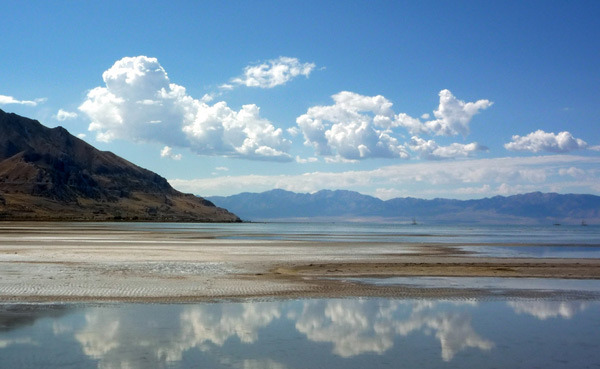
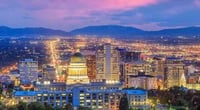
The Salt Lake is located about a 15-minute drive northwest of Salt Lake City. Between the city center and the lake, there are industrial areas and railroads that naturally connect, creating a structure where a massive lake appears suddenly on the outskirts of the city. It is also very close to the airport, with the Salt Lake City International Airport runway just to the west of the lake.
However, there is surprisingly little knowledge about the Salt Lake itself, which shares its name with Salt Lake City. Most people only know it as a large, salty lake that is good for taking pictures.
This lake is a living record of the history of the western United States' geography. The current Salt Lake is a remnant of the massive ancient Lake Bonneville that existed about 15,000 years ago. At that time, it was a huge freshwater lake that covered most of Utah and was much deeper than it is now, with water reaching into what is now downtown Salt Lake City. As the climate became increasingly dry, the water evaporated, and this lake, trapped without an outlet, became concentrated with salt and minerals, resulting in the current salt lake.
Currently, the average depth of the Salt Lake is only about 4 to 5 meters, and even the deepest point is just over 10 meters. From above, it appears vast like an ocean, but in reality, it has a wide, shallow structure. This shallow structure makes it extremely sensitive to changes in water level. In years with little rain, the lake's area shrinks rapidly, while in wet years, it expands again. Over the past few decades, due to climate change and increased usage of nearby rivers, the water level has dropped to historic lows, resulting in a higher concentration of salinity.
Most first-time visitors to the Salt Lake ask just two questions: "Are there boats here?" and "Are there fish?"
First of all, there are no tourist boats here. It is too shallow and the water level changes too much to make boating feasible. Instead, the photo-taking docks are particularly famous. And there are actually no fish at all. Instead, brine shrimp and small flies are the main inhabitants.
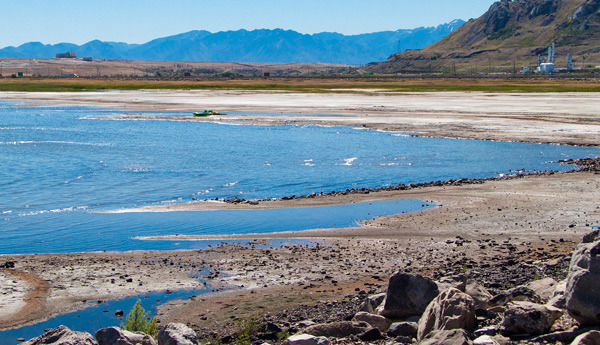
So what happens if you drink this water? You can tell just by putting a small amount in your mouth. It is much saltier than seawater, and it feels like your throat is burning. Drinking this water directly can lead to worse dehydration, vomiting, and severe electrolyte imbalances. In fact, in cases of people who have been rescued, many have experienced a rapid decline in their condition after drinking the lake water in extreme thirst.
So what do the people around here drink? Salt Lake City and the nearby towns do not use the lake water at all. Their water source is entirely from melted snow from the Wasatch Mountains and freshwater streams in the mountain valleys. The Provo River, Jordan River, and several reservoirs are responsible for the city's drinking water. While freshwater streams flow naturally between the lake and the city, that water is treated and managed separately.
Ironically, one of the saltiest lakes in the world exists next to some of the cleanest mountain water sources in the West.
The Salt Lake itself is a nature reserve and lake center, so there are not many large restaurants right next to it, but within a 10 to 30-minute drive, you can easily find restaurants, rest areas, and gas stations. Here are some representative places in the area:
Places to eat (Salt Lake City center)
Just a short drive to nearby cities offers a variety of restaurants. If you go to downtown Salt Lake City, the options are much more abundant.
The Copper Onion – A popular American restaurant
Red Iguana – A highly recommended Mexican-style place by locals
Skillets – Great for breakfast and brunch
Slackwater - Salt Lake City – Pizza and sandwiches
From Scratch – A casual American eatery
Log Haven – A restaurant with beautiful natural scenery
In addition, there are various restaurants with different atmospheres throughout the city, such as Salt & Olive, Franklin Ave. Cocktails & Kitchen, and The Salt Republic. Just from this, you can see that the Salt Lake is not just a tourist spot but a huge system intertwined with nature reserves, water resources, ecosystems, and the survival of the city.


 candytip |
 Gold Bar |
 Pirate Ship Popcorn Maker |
 Montgomery Mom |
 Anjollinya Blog |
 Enjoyable American Life Diary |
 morvex37 |
 Utah, the Most Livable State |

 DREAM BIG |
  frostbite |
  330 Forever My Love |
  El Dorado |
  dralix58 |
  Gorama Round |
  Skydiving |
  dreamport |
  Yellow Snowman |
  Toaster Pizza Magic Show |
  velvetnom |
  Anytime Journey |
  Mrs. Duluth |
  jaxter |
  Atlanta Mama |
  Baguette Blog |
  Tan Sol |
  US Embassy |
  Korean Mom |
  My NYC |