
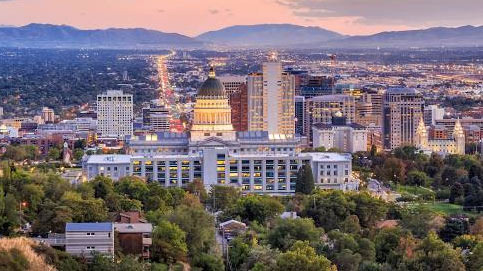
Salt Lake City is the capital of Utah and experiences a variety of climatic phenomena and weather changes. The state of Utah itself has a dry continental climate and a mountainous climate, and Salt Lake City is influenced by these factors, resulting in distinct seasonal changes. This article will detail the climatic characteristics of Salt Lake City, the weather influenced by air masses, and storms.
Climate Characteristics of Salt Lake City
Salt Lake City is located in western Utah and has characteristics of both continental climate and mountainous climate. This results in very cold weather in winter and hot, dry weather in summer. The city is situated near the Great Salt Lake, which affects the local climate. Particularly, due to the overlapping characteristics of mountainous areas and low plains, temperatures and weather can vary greatly.
1.1. Seasonal Characteristics
Spring (March to May)
- Temperature: In spring, temperatures gradually rise. The average temperature in March ranges from 5°C to 15°C, with still cold weather persisting, but from April, temperatures rise further to a mild range of 10°C to 20°C. By May, temperatures rise to between 15°C and 25°C, marking the full arrival of spring.
- Precipitation: Spring is relatively dry, but occasional rain can occur, and especially in mountainous areas, snow may fall. Spring is a time when snow in the mountains and rain in the plains occur together.
Summer (June to August)
- Temperature: Summer is characterized by hot and dry weather. From June to August, temperatures rise to an average of 30°C to 38°C, with areas around the Great Salt Lake being even hotter. During summer, temperatures can exceed 40°C, and with strong sunlight and winds, very hot weather continues.
- Precipitation: Summer is a season with little rain, but sudden showers or thunderstorms can occur. Most of Utah is dry, but during summer, unstable atmospheric conditions can lead to frequent showers accompanied by thunder and lightning.
Fall (September to November)
- Temperature: Fall is a time when temperatures gradually drop. In September, hot weather still persists, but in October, temperatures drop sharply to a mild range of 15°C to 20°C. By November, the average temperature decreases to between 0°C and 10°C, marking the onset of cold weather.
- Precipitation: Fall generally has relatively dry weather, but occasional rain can occur in September and October. Precipitation remains low, and Utah's dry characteristics persist into fall.
Winter (December to February)
- Temperature: Winter is the coldest time in Salt Lake City. From December to February, temperatures average between -5°C and 5°C. At night, temperatures can drop below -10°C, especially in mountainous areas where it gets very cold.
- Precipitation: Winter sees significant snowfall, and Utah has many ski resorts that receive a lot of snow. Most of the precipitation during this time is snow, and blizzards and cold waves can occur in Salt Lake City and its surrounding areas.
Influence of Air Masses
Air masses are important factors that determine the weather in a specific area. Salt Lake City is influenced by various air masses, including continental air masses, maritime air masses, and arctic air masses. These air masses cause changes in weather and have a significant impact on temperature and precipitation.
2.1. Continental Air Mass
- Winter: In winter, Utah is affected by continental air masses descending from the north. These air masses bring cold air, causing temperatures to drop sharply and can lead to cold waves. Particularly when arctic air masses influence Utah, temperatures can drop below -10°C, leading to blizzards.
- Summer: Continental air masses also influence Utah in summer. These air masses bring hot, dry winds, significantly raising temperatures and creating hot, dry summer weather.
2.2. Maritime Air Mass
- Maritime air masses are moist air masses originating from the Atlantic or Pacific Oceans, and their impact on Utah is relatively minor. However, in winter, when moist air masses from the Pacific enter Utah, temperatures can become somewhat milder, and precipitation may increase.
2.3. Arctic Air Mass
- Winter: Arctic air masses descending from the polar regions bring strong cold to Utah. These air masses cover Salt Lake City, causing temperatures to drop sharply and can lead to extreme cold and heavy snowfall. Particularly in mountainous areas, extreme weather changes can be experienced.
3. Storm Information
Salt Lake City can be affected by storms and strong winds. Storms can frequently occur, especially in summer and winter.
3.1. Summer Storms
- In summer, storms can frequently occur due to strong atmospheric instability. Utah's summer begins with very hot weather, and strong heat winds can lead to thunderstorms or showers. Storms accompanied by lightning and hail can occur, and these storms can sometimes be accompanied by strong winds and gusts.
3.2. Winter Storms
- In winter, Utah is often affected by blizzards and winter storms. These storms are characterized by strong winds and heavy snowfall, causing roads to freeze and making travel very difficult. Winter storms primarily occur between December and February, and very strong storms frequently occur in mountainous areas.
3.3. Blizzards
- Salt Lake City can be affected by blizzards, which are characterized by heavy snowfall accompanied by very strong winds. Visibility becomes very low, and road conditions worsen, so caution is needed when going out. These storms can be particularly severe in mountainous areas and are more pronounced near ski resorts.
Salt Lake City has distinct seasonal changes, and the climate and weather changes can be extreme. Summers are characterized by hot, dry weather, while winters can bring heavy snowfall and cold waves. The city is influenced by various air masses, and storms frequently occur in summer and winter. Understanding and preparing for these climatic characteristics will help in living in Salt Lake City.
Salt Lake City, Utah has four distinct seasons, with hot, dry summers and cold, snowy winters:
Summer: Hot and dry with temperatures often reaching over 100°F. July and August are the warmest months.
Winter: Cold and snowy, with temperatures rarely falling below 0°F.
Spring: Warming temperatures in the valley, while snow is still common in the mountains. Skiing is usually available until mid-April.
Fall: A time of transition.
Here are some other weather facts about Salt Lake City:
The average annual temperature is 54°F, with a range of 23–93°F.
The average annual precipitation is 20 inches of rain and 54 inches of snow.
The average annual number of sunny days is 222.
The semi-arid nature of the region means temperatures can fluctuate widely, so it's a good idea to dress in layers.
The Rocky Mountains to the east and north usually block powerful polar highs from affecting the state during the winter.
The nearby canyons and mountains can be as much as 20° cooler than the valley.



 Enjoyable American Life Diary |

 morvex37 |
 Utah, the Most Livable State |

 Tonky |
  viroma |
  cookie |
  Live and that's it |
  Alright Twain |
  eatontown blog |
  HAWAII Korean Church News |
  Amore |
  linex |
  Balancework |
  laro90 |
  MEDBIO American Doctor Blog |
  SWAT TEAM BLK |
  DREAM BIG |
  frostbite |
  330 Forever My Love |
  El Dorado |
  dralix58 |
  Gorama Round |
  Skydiving |