

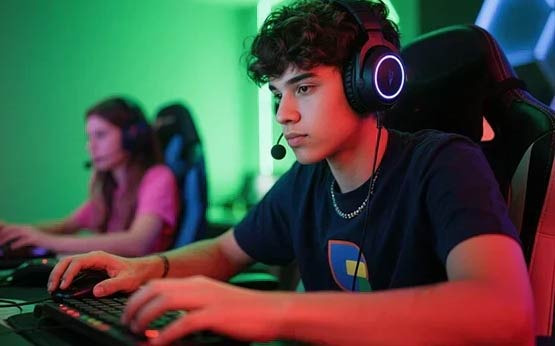
When looking at the MZ generation in America who are immersed in gaming, there is always a certain image that comes to mind.
Energy drink cans piled up around the room, delivery pizza boxes, and monitors that are on all day.
In fact, this scene existed 20 years ago, and even 30 years ago, there were similar young people glued to MTV.
Back then, people simply called them losers. In any society, there will always be individuals who are lazy or lack motivation.
This was the typical American image of a dropout, unable to adapt to society and hiding away in their rooms to escape reality.
But how does the current MZ generation view this image of themselves?
The biggest difference from the past is self-awareness.
While past gaming-addicted youths generally carried feelings of guilt or defeat, today's MZs at least claim not to think that way.
They perceive themselves not as failures, but rather as individuals who simply have not made a choice yet.
Even after graduating from college, stable jobs are not guaranteed, housing prices are unimaginably high, and there is no certainty that hard work will lead to a better life, prompting them to first question whether there is any reason to jump into the race.
For them, gaming is not just a simple escape but a controllable world.
In reality, effort and results do not always connect well, but in games, the rules are clear and achievements are visible.
Levels increase, rankings are recorded, and skills receive immediate feedback. Thus, unlike the external perception that achievements in games are fake, for them, it symbolizes order and fairness that is hard to obtain in reality.
With the addition of streaming and community culture, even if they seem to be alone in their rooms, they feel less isolated. In spaces like Discord or Twitch, they meet friends, feel a sense of belonging, and sometimes even earn small amounts of real money.
However, this does not mean that all of them are confident about a bright future. Many MZ gamers do not envision a long-term future. Instead of picturing their lives 10 or 20 years down the line, they focus on how to get by in the next few years. Traditional American success stories like stable jobs, marriage, and home ownership have already lost much of their feasibility.
Instead, they feel that a more realistic goal is to earn just enough to cover basic living expenses, maximize free time, and live doing what they want. There is certainly an awareness of being pushed out of society in this process. However, they tend to interpret that alienation not as personal failure but as a structural issue.
Ironically, they are not a completely defeated generation. Rather, the way they challenge the system has changed.
Instead of climbing the corporate ladder, they create content and dream of freelancing or short-term projects instead of full-time positions. Even knowing the odds of success are low, they at least believe that the game is fair.
Thus, the future of the American MZ immersed in gaming is dual-faceted.
On one hand, there is certainly stagnation and instability waiting, but on the other hand, there is a quiet resistance to not conforming to the existing order.
They do not call themselves losers. They believe they are buying time in a world where their own rules apply, still holding off on making choices.
In the midst of this, what remains unchanged is the heartache of parents, which is a universal truth that is both funny and sad.







 Magic Cabbage School of Martial Arts |
 Vacation on Hawaii |
 morvex37 |
 Ari Songhan American Immigration Life |
 Bearded Strawberry Smoothie |
 U.S. Weather Bureau News |
 Things to know |
 Premium Gas Camp |
 Texas Real Estate Blog |
 action blog 101 |
  dralix58 |
  Gorama Round |
  Skydiving |
  dreamport |
  Yellow Snowman |
  Toaster Pizza Magic Show |
  velvetnom |
  Anytime Journey |
  Mrs. Duluth |
  jaxter |
  Atlanta Mama |
  Baguette Blog |
  US Embassy |
  Korean Mom |
  My NYC |
  moo moo |
  Mr Oh |
  forevergee |
  festival |
  manchester |